British History Heroes
Take your class back in time to explore the lives and achievements of some of the people who we now consider to be ‘British history heroes’.
This scheme of work is also part of a Topic Bundle. Perfect if you are teaching 'Achievers and Inventors' as a cross-curricular topic.
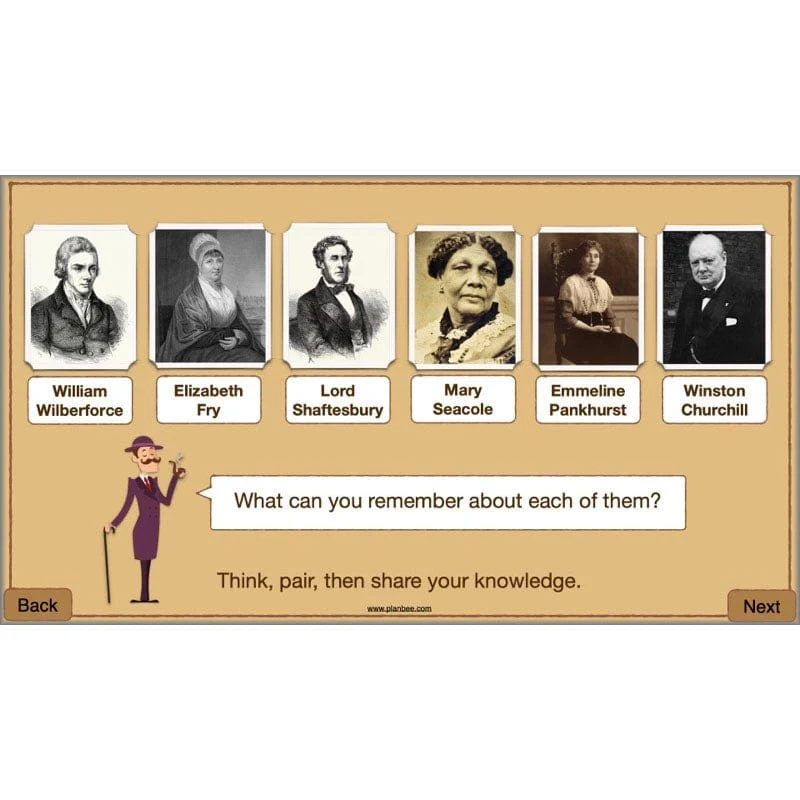
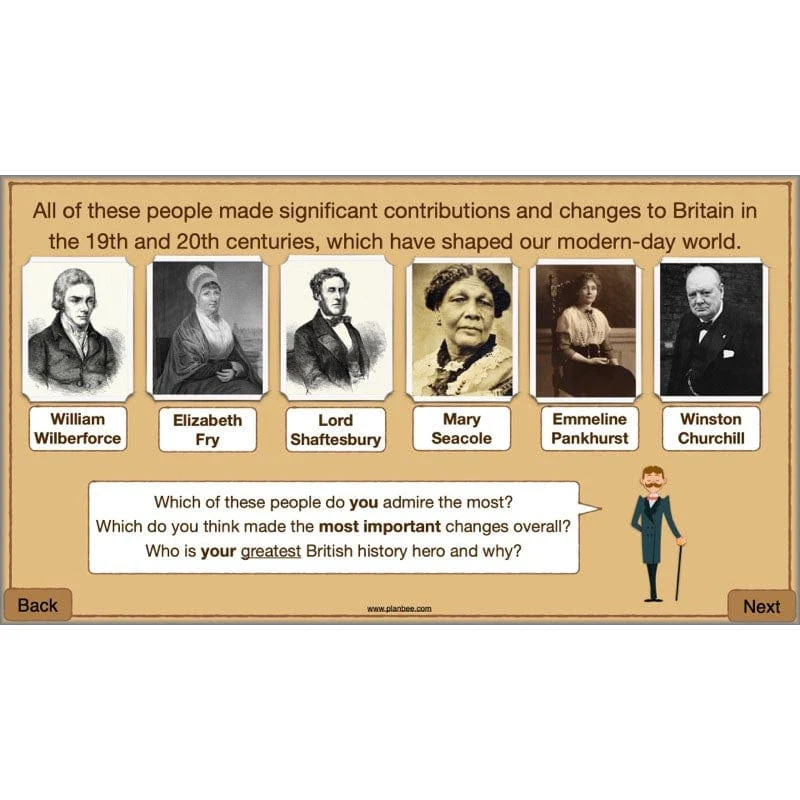
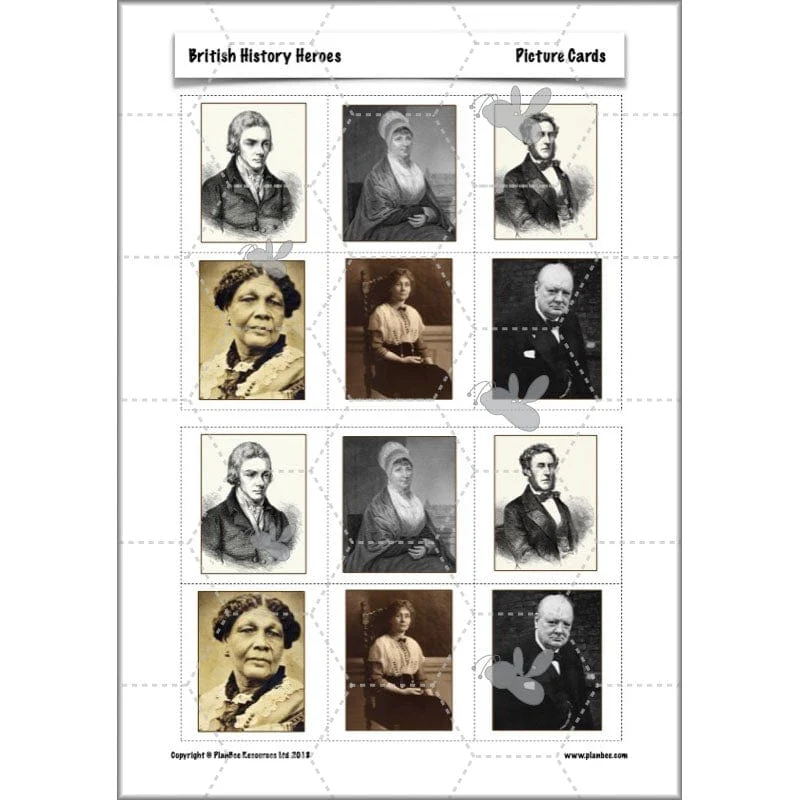
Your class will explore the impact that the following people have had on our modern-day world: William Wilberforce, Elizabeth Fry, Lord Shaftesbury, Mary Seacole, Emmeline Pankhurst and Winston Churchill. They will be encouraged to review evidence and give their own opinions of these people and their work.
With lesson plans, informative slides, activity ideas, differentiated worksheets and much more, these Year 3 and 4 history lessons contain everything you need to teach your children about some of the most famous British heroes.
You may also be interested in our World War Two History lesson pack for lower KS2.
William Wilberforce
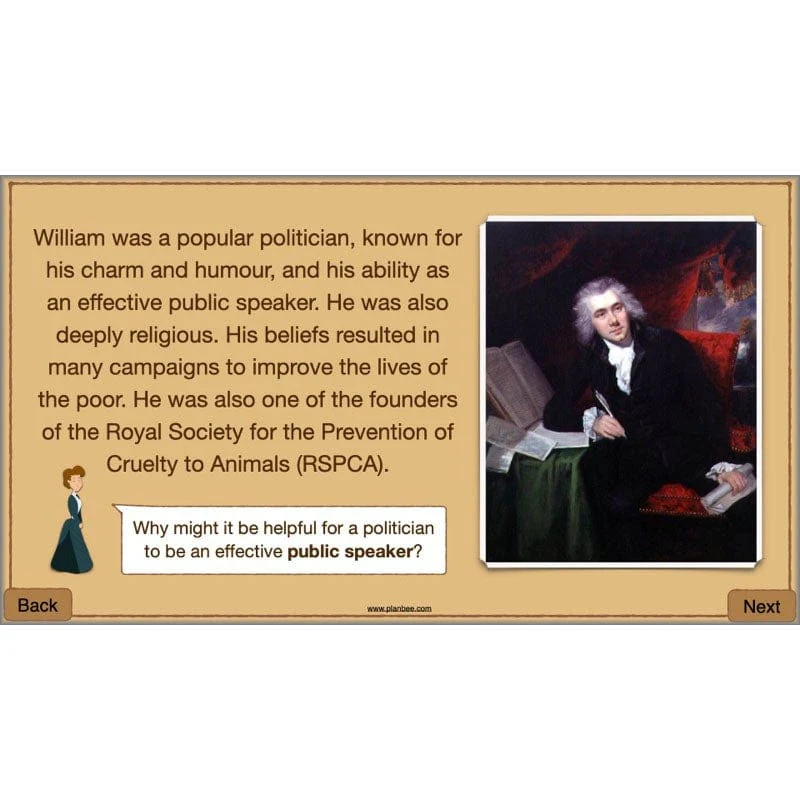
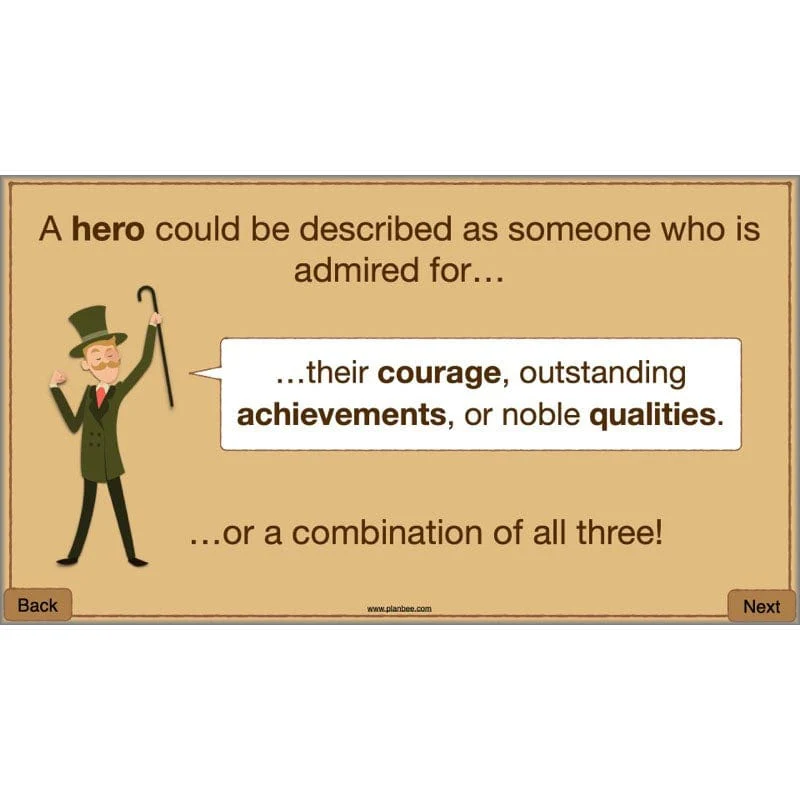
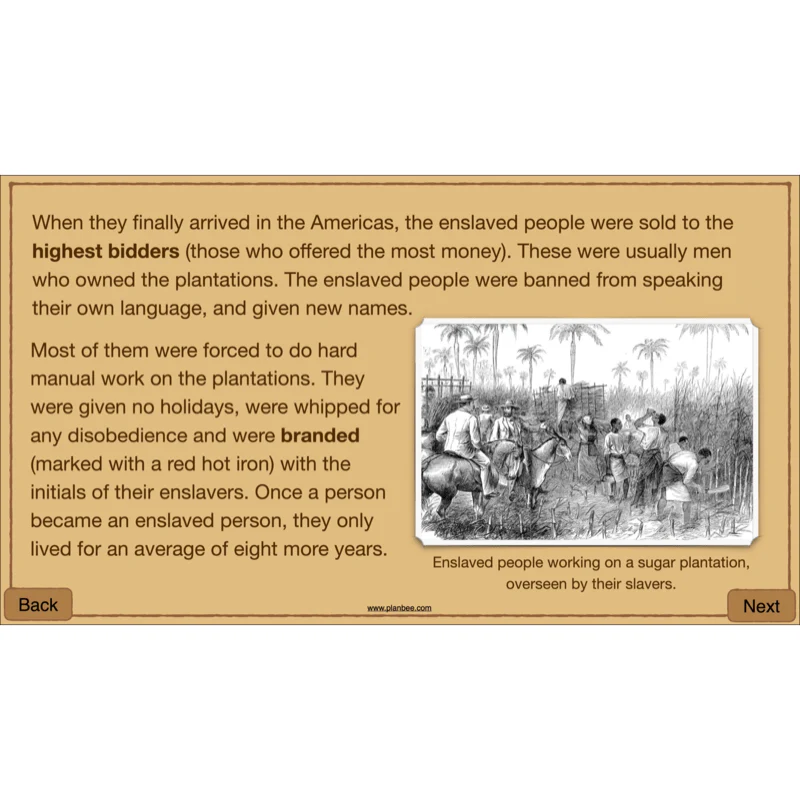
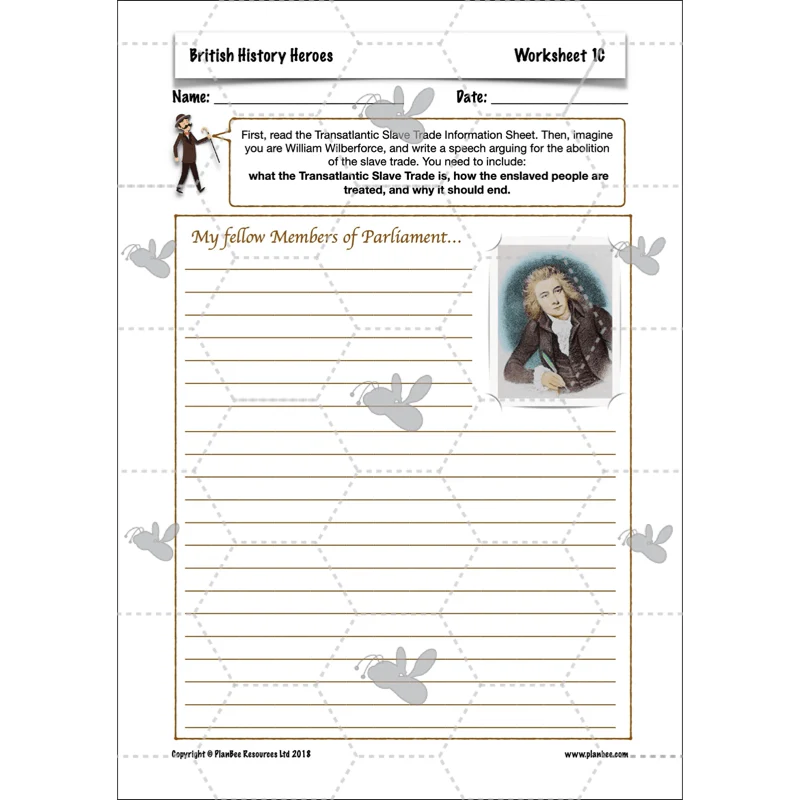
In this first lesson, children discuss their definitions of a hero. They are then introduced to William Wilberforce, and explore how he became involved in the campaign to abolish the slave trade. Children find out what the slave trade involved, and how and why Wilberforce and his supporters tried to stop it. In their independent work, children create posters, leaflets and speeches to support Wilberforce’s campaign. In the alternative activity, children hold a debate over the question; should slavery be abolished?
What's included:
- Lesson plan
- Slides
- Activity ideas
- Differentiated worksheets
- Transatlantic Slave Trade Information Sheets
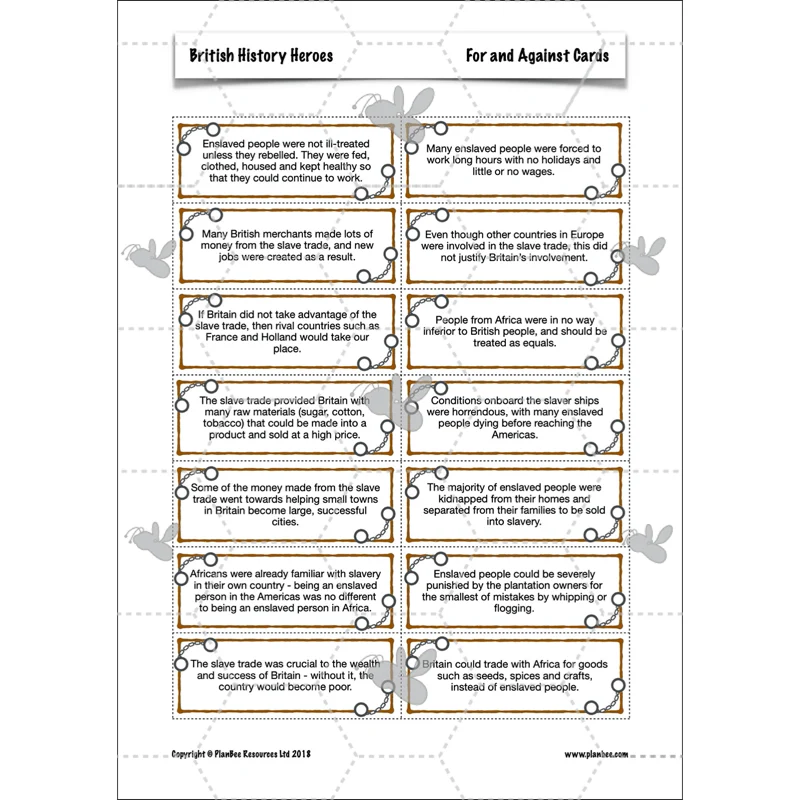
- For and Against Slavery Cards
View Lesson 1
Elizabeth Fry
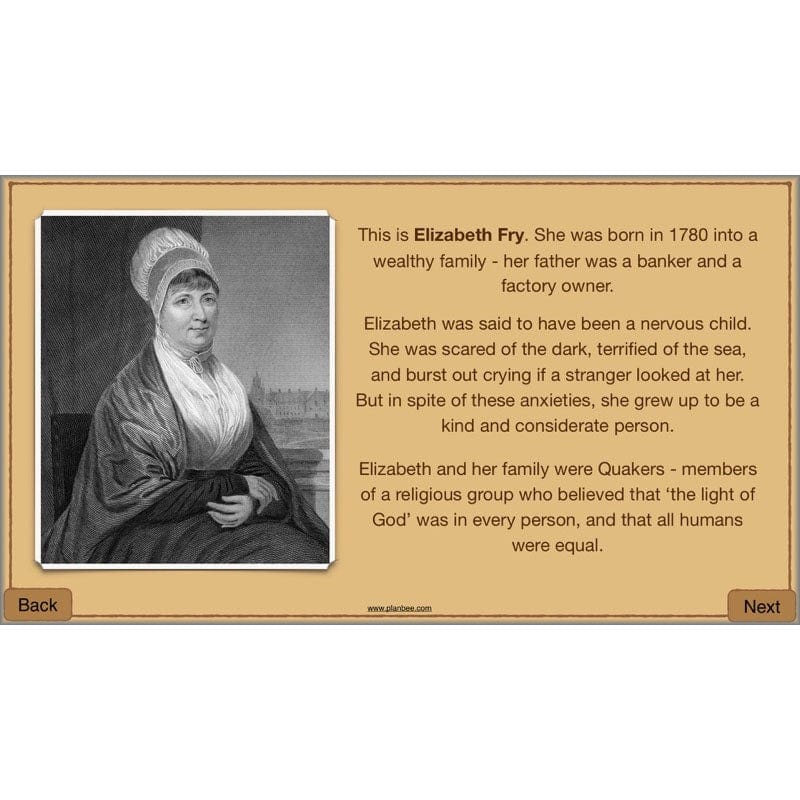
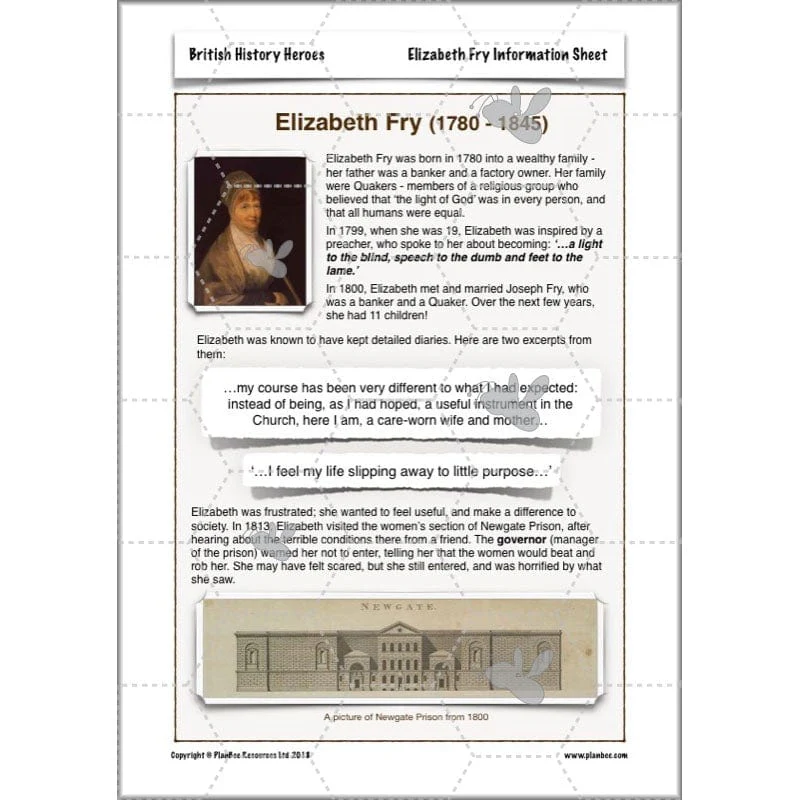
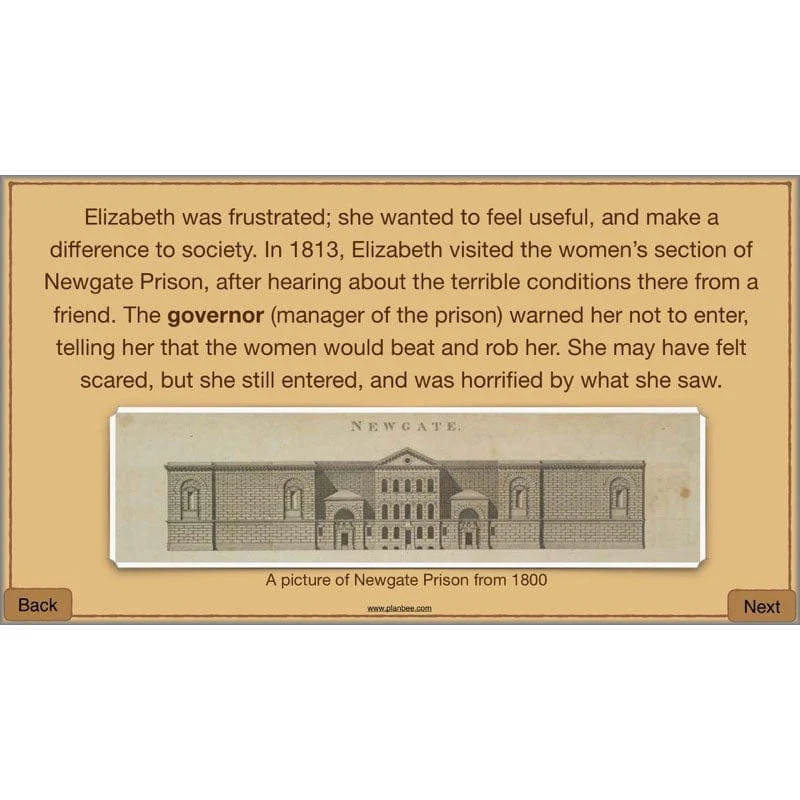
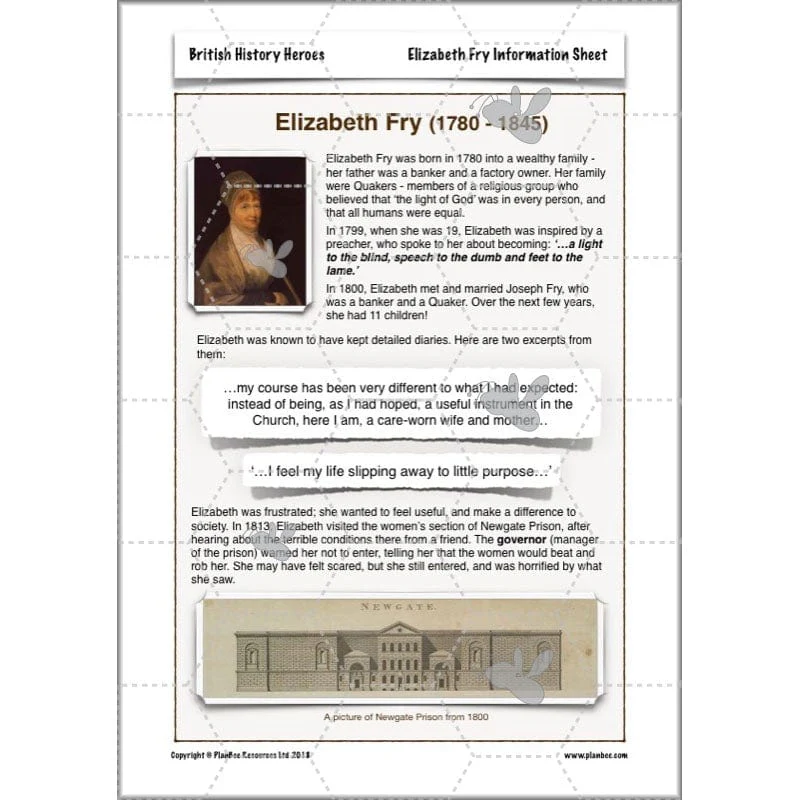
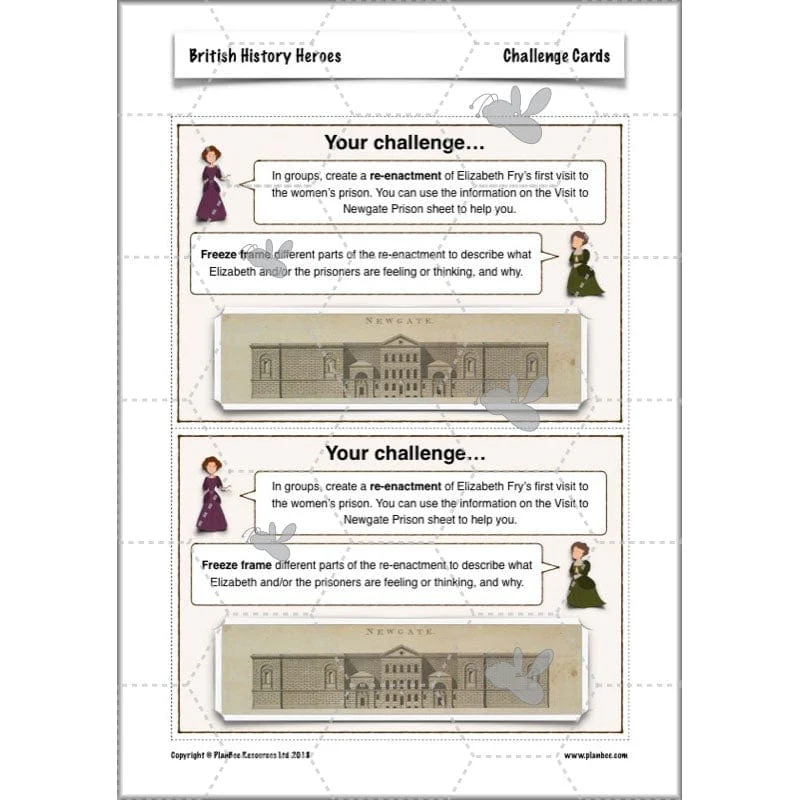
Children first learn about the effects of the Industrial Revolution on the population of, and crime levels in, towns and cities, and find out what prisons were like during this time. They are then introduced to Elizabeth Fry, and learn how her charity work led to the improved treatment of prisoners. In their independent activities, children further explore the causes and effects of Elizabeth’s actions. Alternatively, they are challenged to create a re-enactment of Elizabeth’s visit to Newgate Prison.
What's included:
- Lesson plan
- Slides
- Activity ideas
- Differentiated worksheets
- Cause and Effect Cards
- Life Events Cards
- Elizabeth Fry Information Sheet
- Visit to Newgate Prison Sheet
- Challenge Cards
View Lesson 2
Lord Shaftesbury
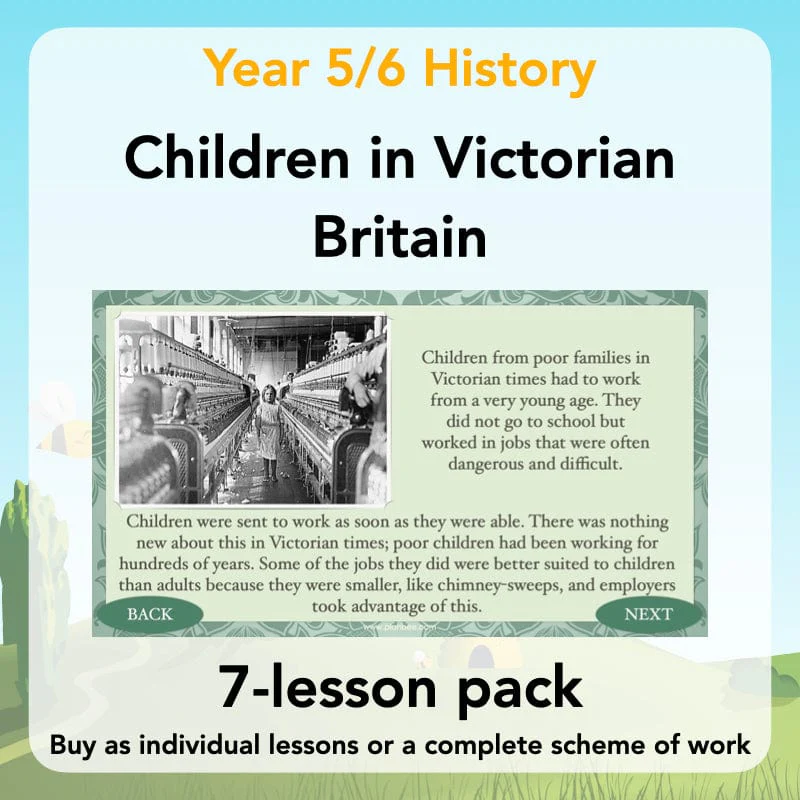
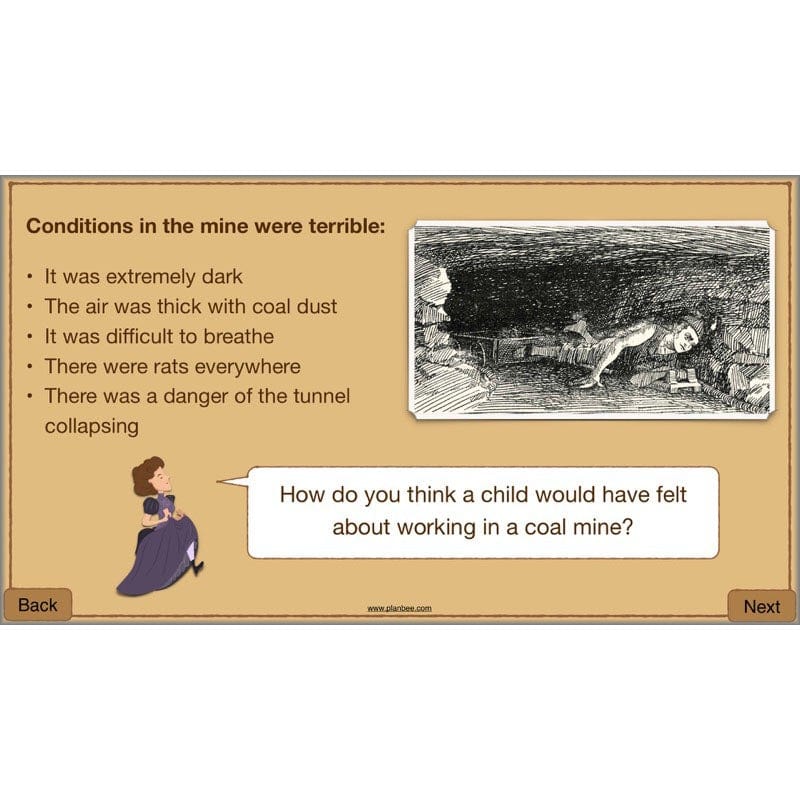
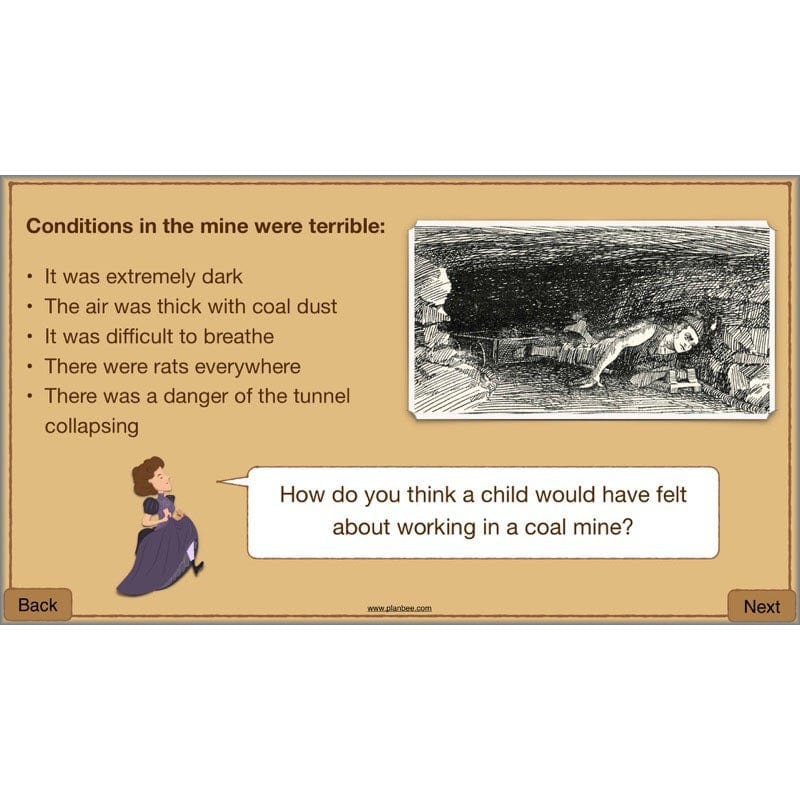
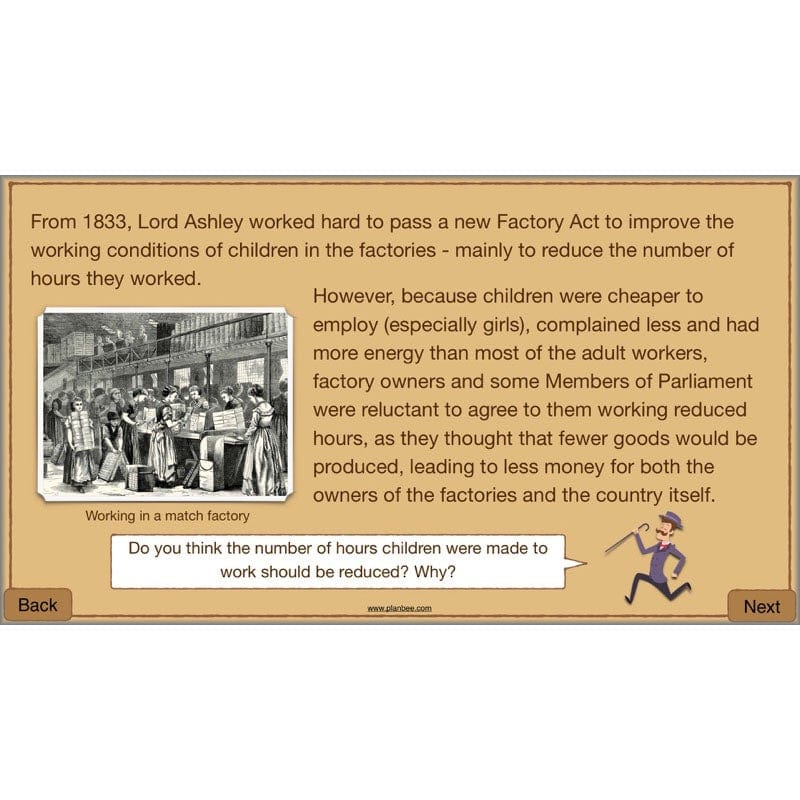
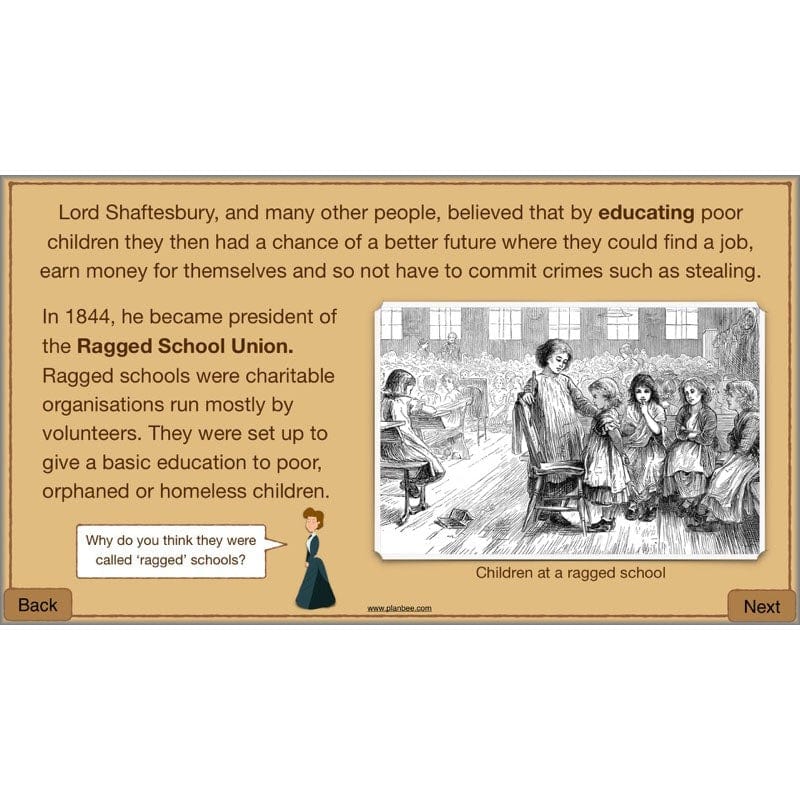
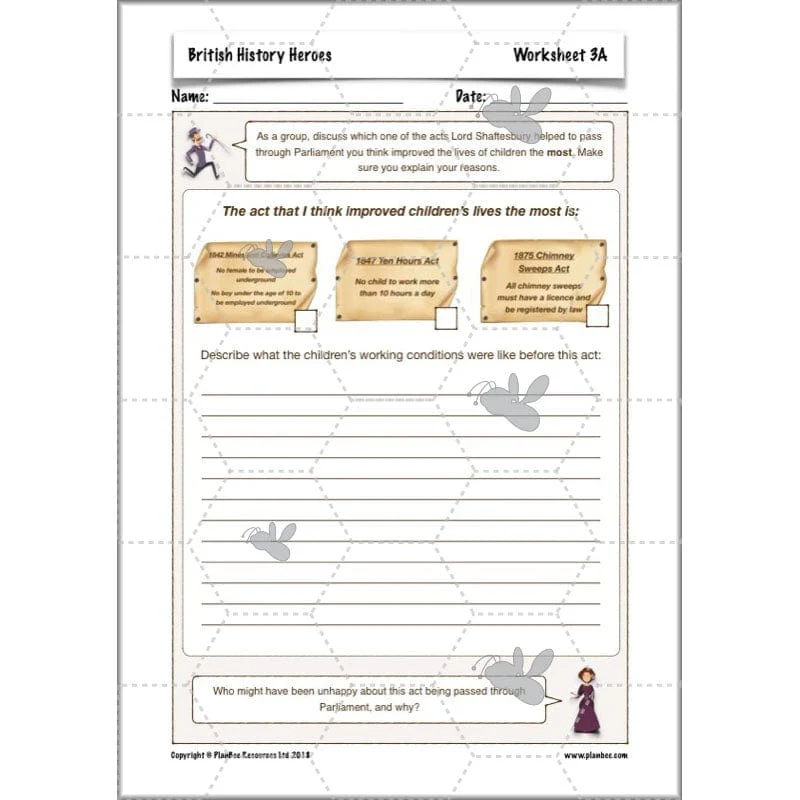
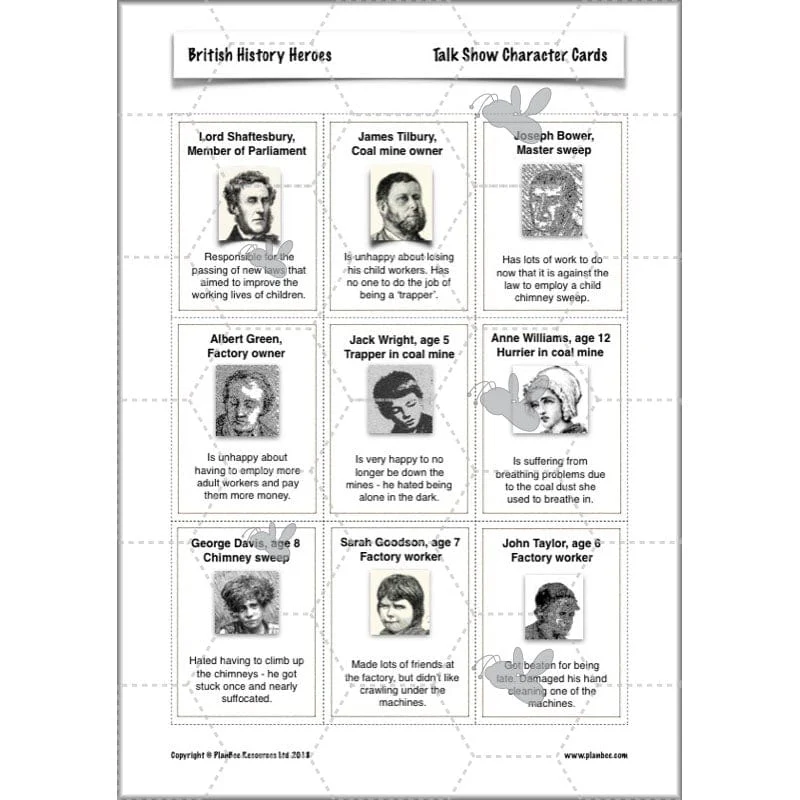
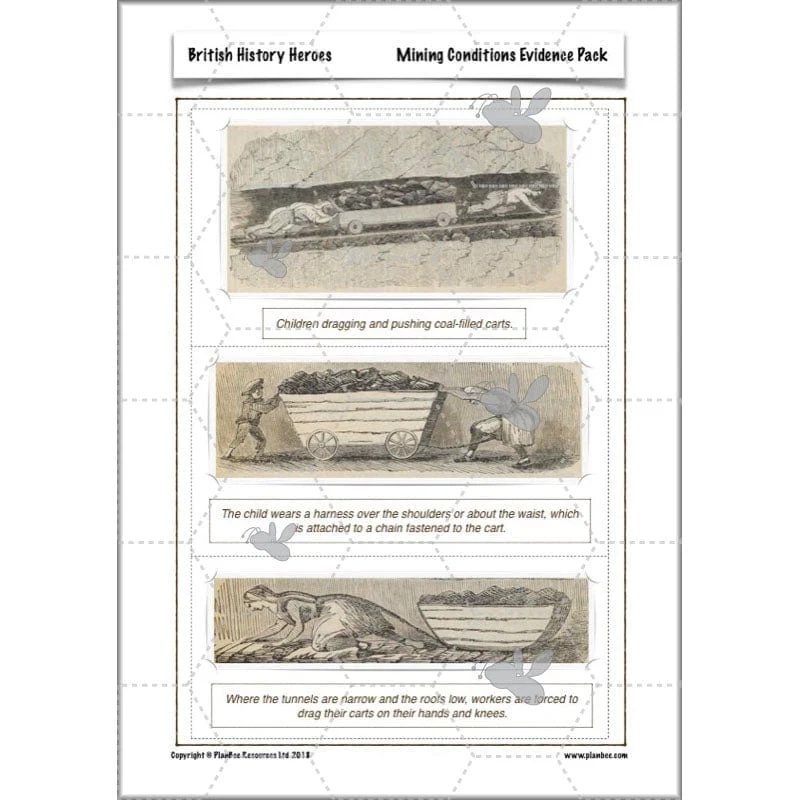
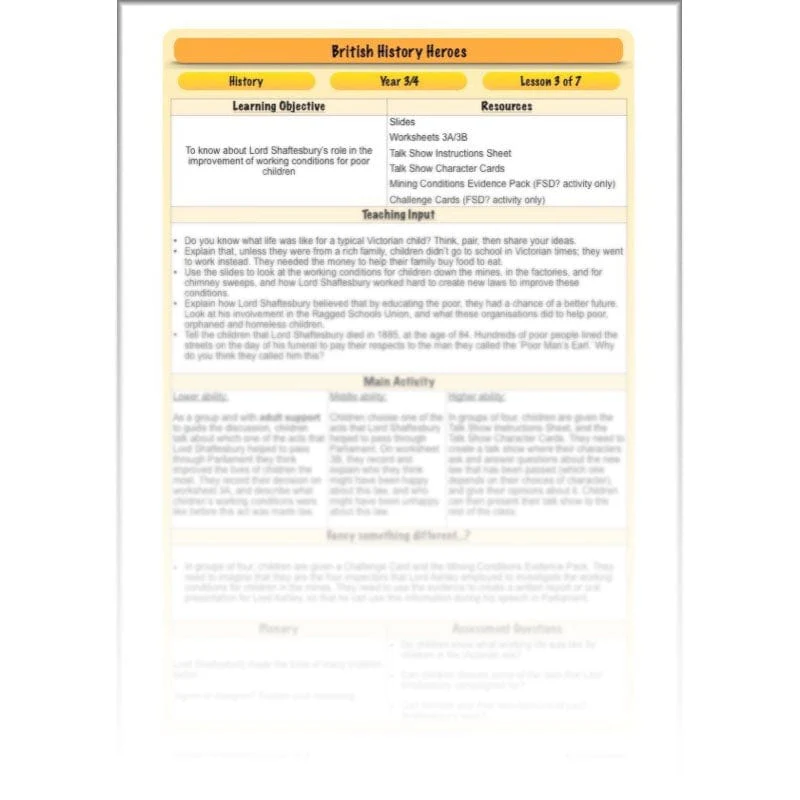
Children find out about the working conditions of Victorian children who were employed in the coal mines, in factories, and as chimney sweeps. They learn about Lord Shaftesbury’s role in trying to improve these conditions, and look at three important laws that he helped to pass. They also learn about ragged schools, and Lord Shaftesbury’s beliefs about, and involvement in, them. In their independent activities, children are encouraged to explore how different people may have felt about the passing of these laws at the time. In the alternative activity, children create a presentation using evidence packs about the working conditions of children in the mines.
What's included:
- Lesson plan
- Slides
- Activity ideas
- Differentiated worksheets
- Talk Show Instructions Sheet
- Talk Show Character Cards
- Mining Conditions Evidence Pack
- Challenge Cards
View Lesson 3
Mary Seacole
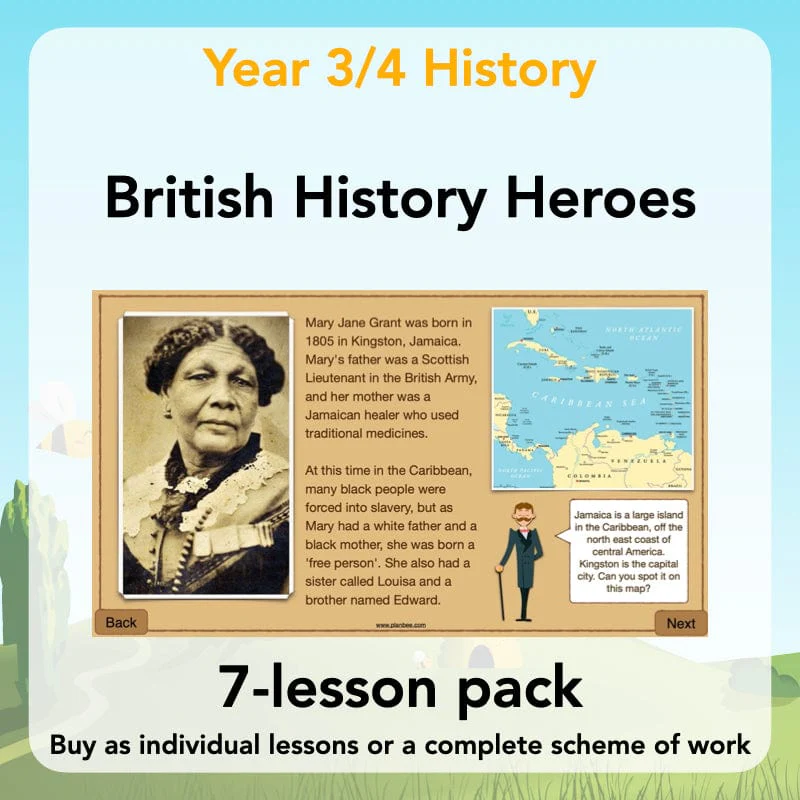
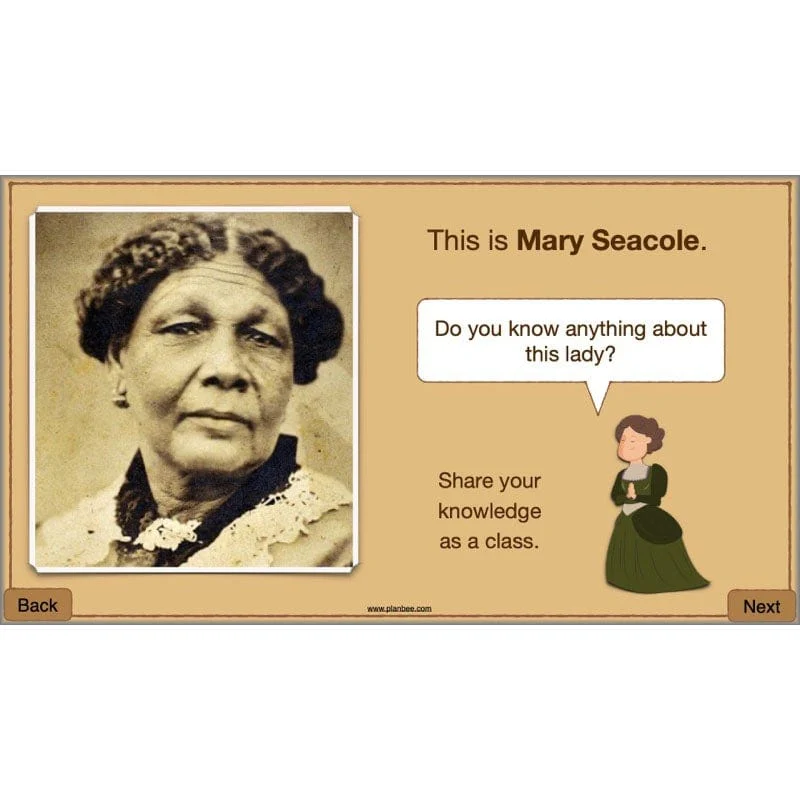
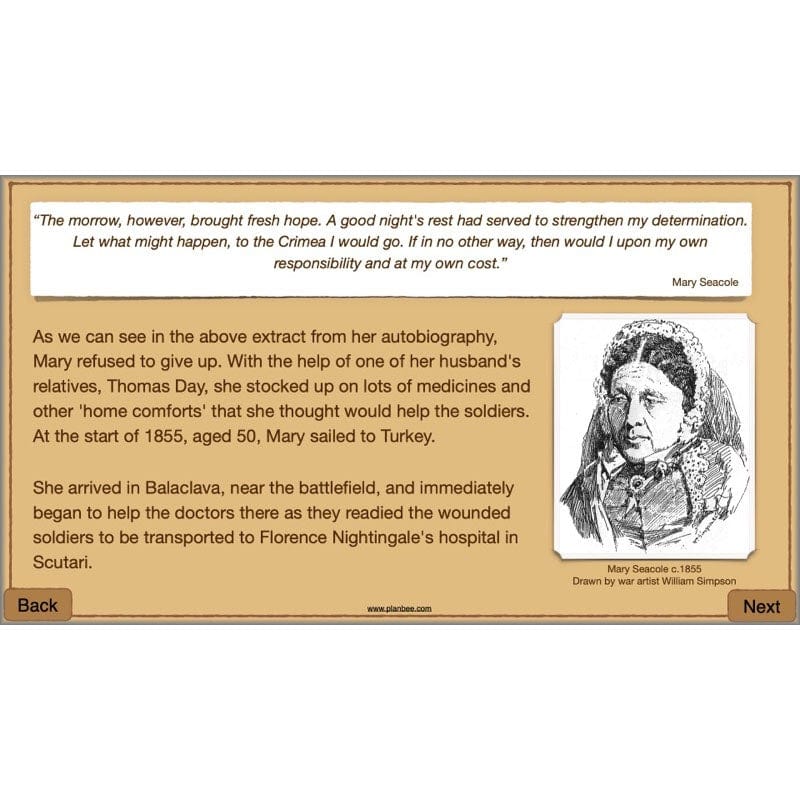
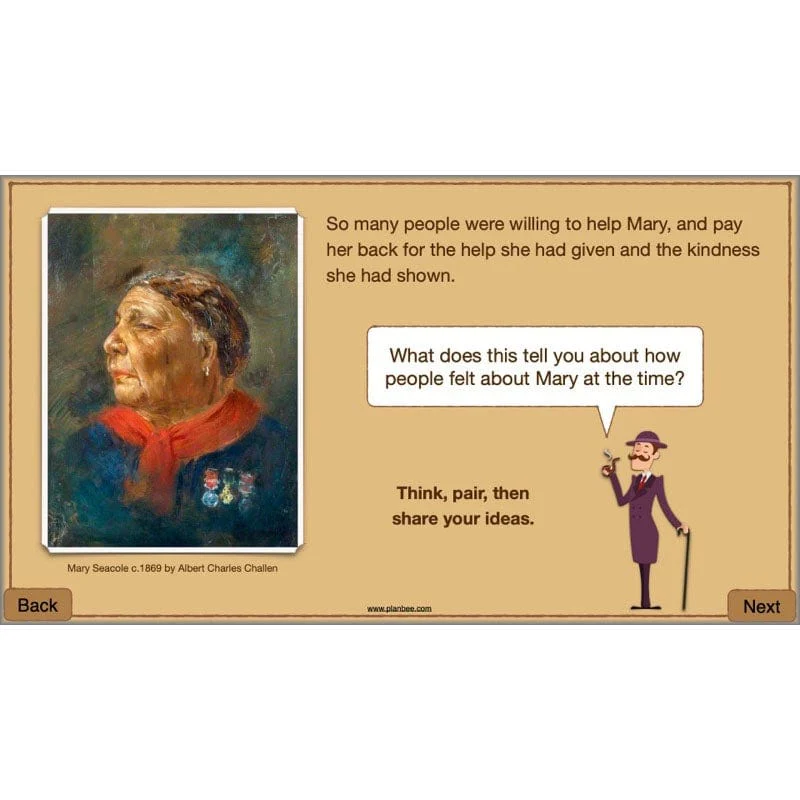
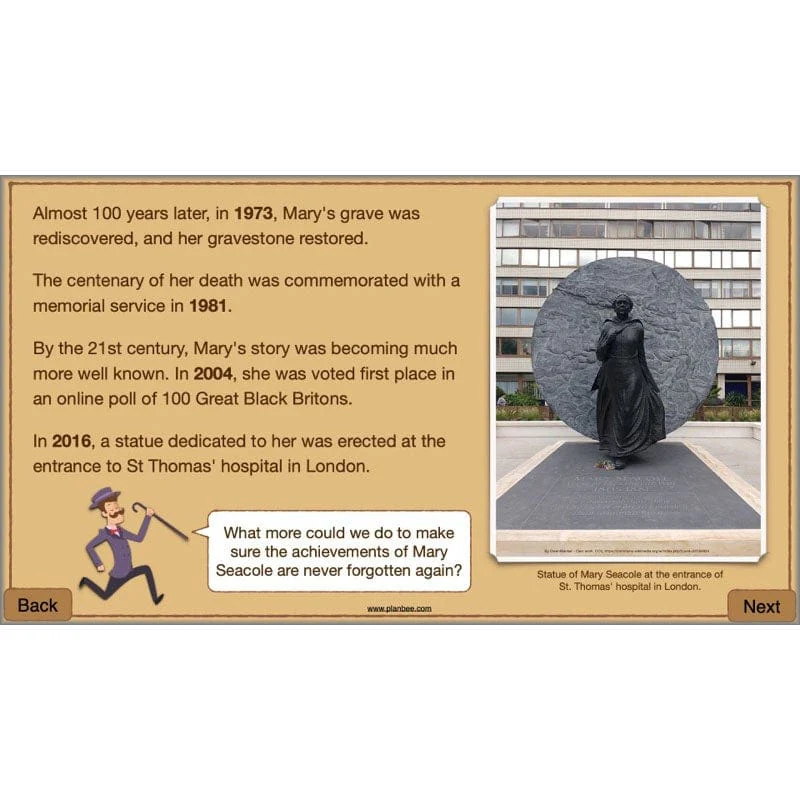
In this Mary Seacole KS2 lesson, your class will find out about the life and achievements of this remarkable British-Jamaican woman who aided the British Army during the Crimean War.
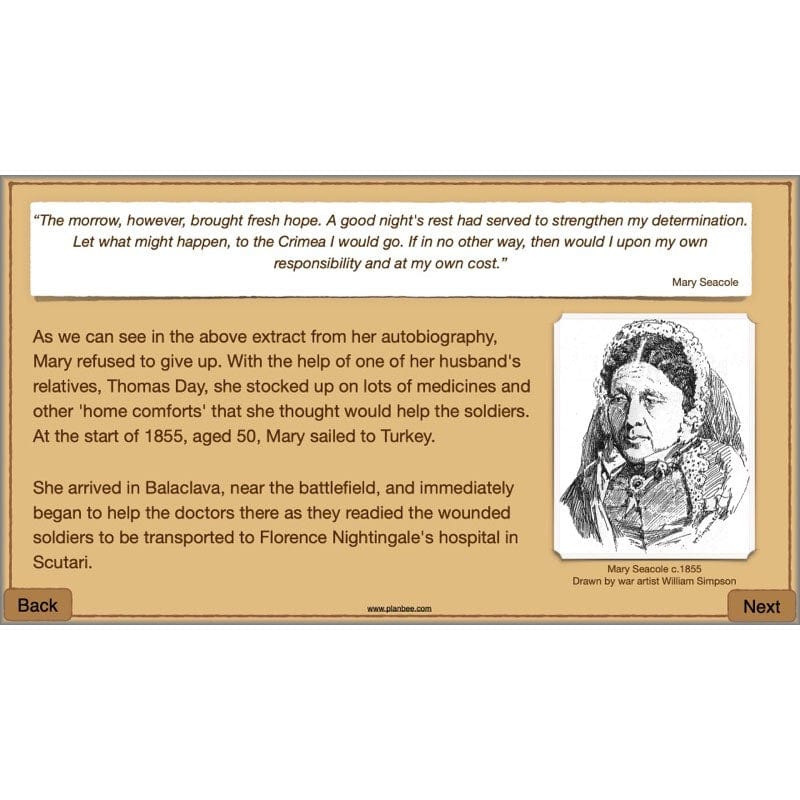
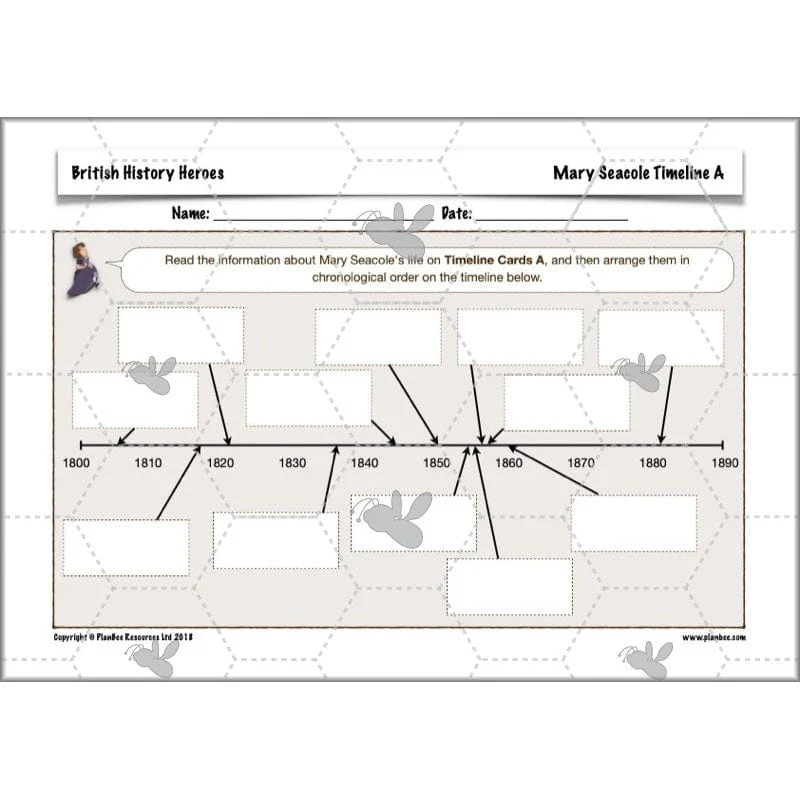
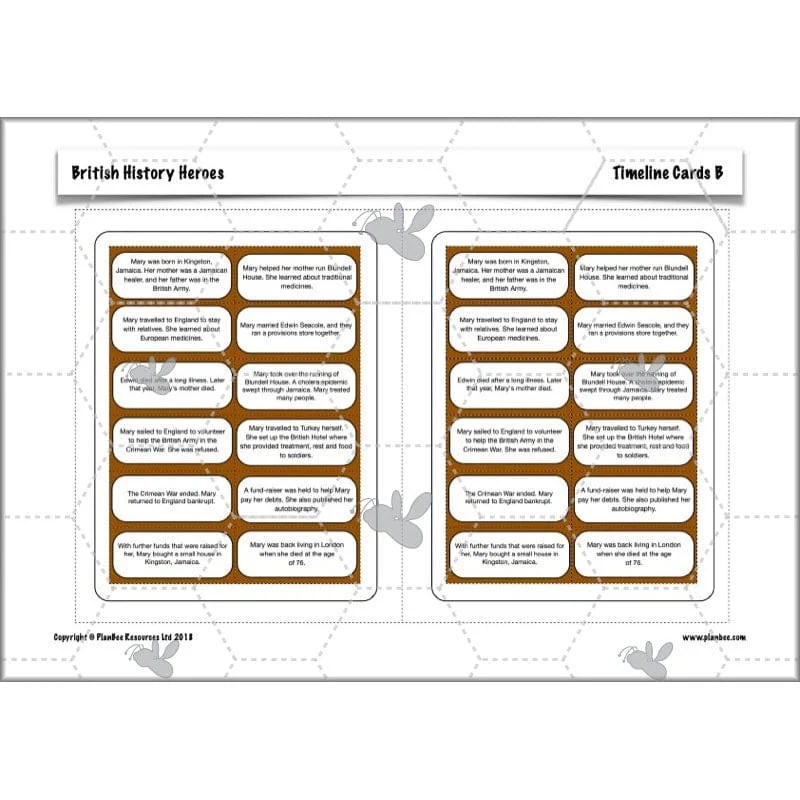
Children will discover how she became proficient at making and using natural remedies to help cholera sufferers, and how she funded her own passage to Turkey to give aid to those fighting in the Crimean War after being rejected as a volunteer by the British War Office. Activities include completing a timeline of Mary Seacole's life, or writing a speech explaining what Mary Seacole's achievements were, and why she should never be forgotten.
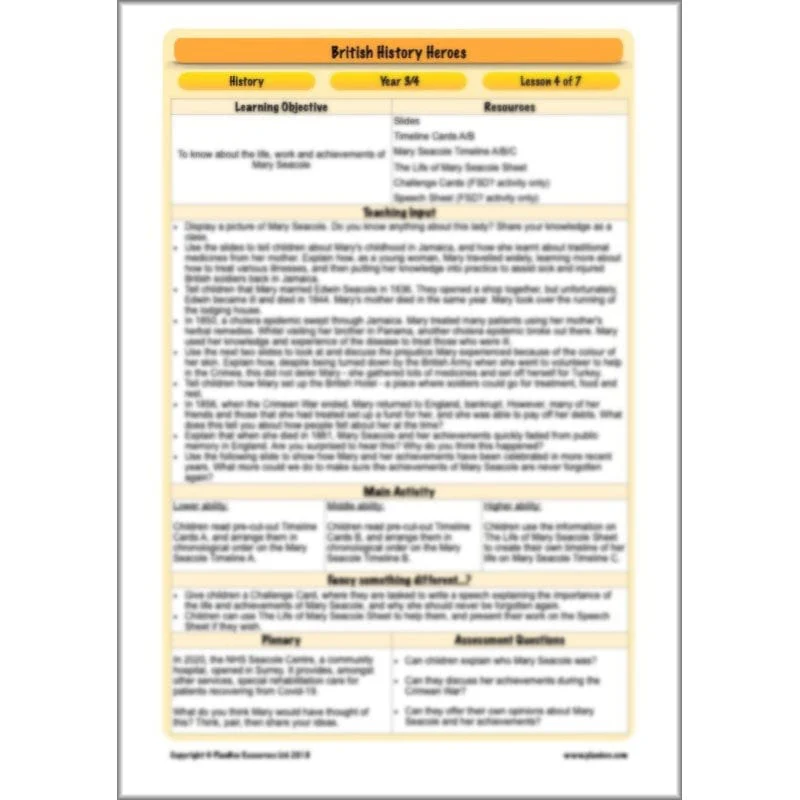
This Mary Seacole KS2 lesson pack includes a detailed plan, an informative slide show, differentiated activity ideas and printable resources - everything you need for a successful lesson!
What's included:
- Lesson plan
- Slides
- Activity ideas
- Timeline Cards
- Mary Seacole Timeline
- The Life of Mary Seacole Sheet
- Challenge Cards
- Speech Sheet
View Lesson 4
Emmeline Pankhurst
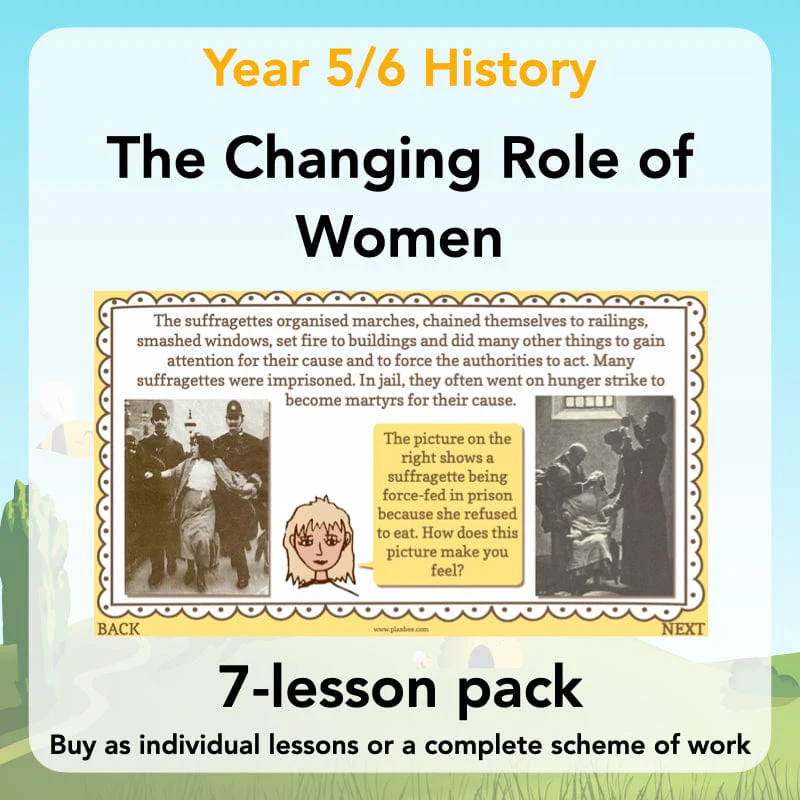
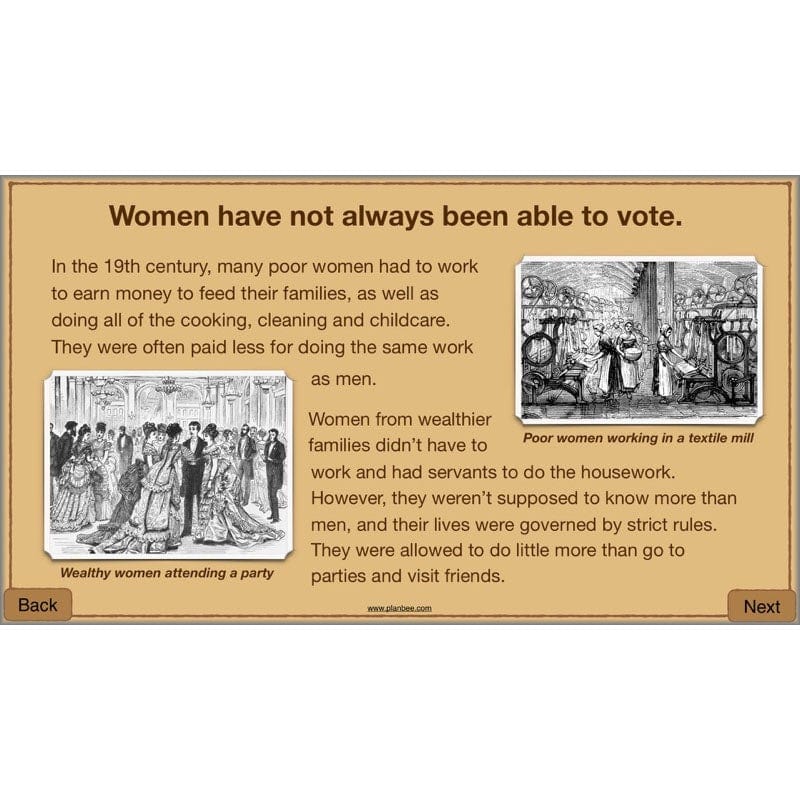
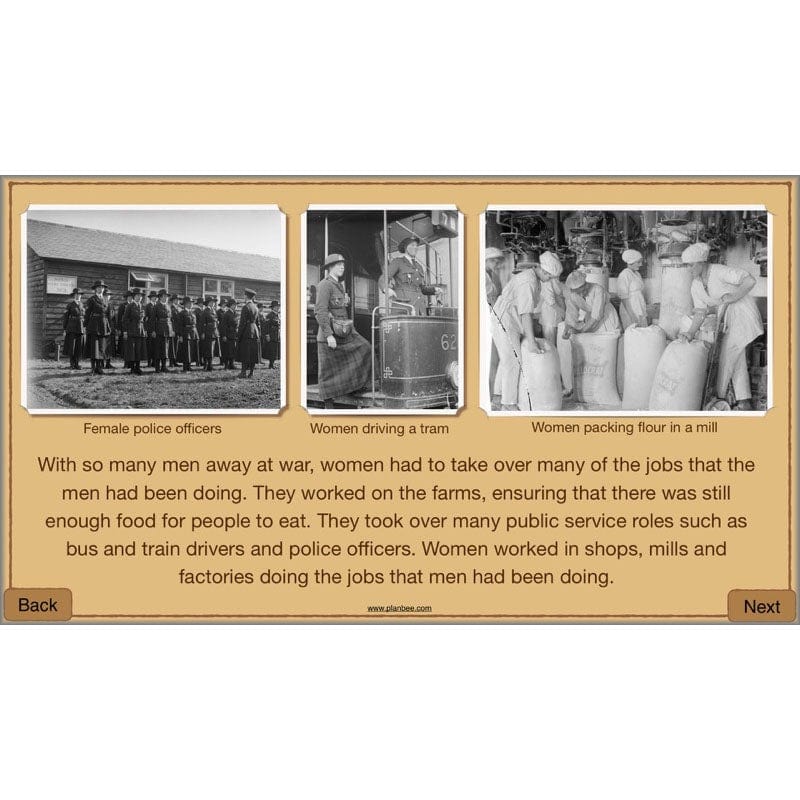
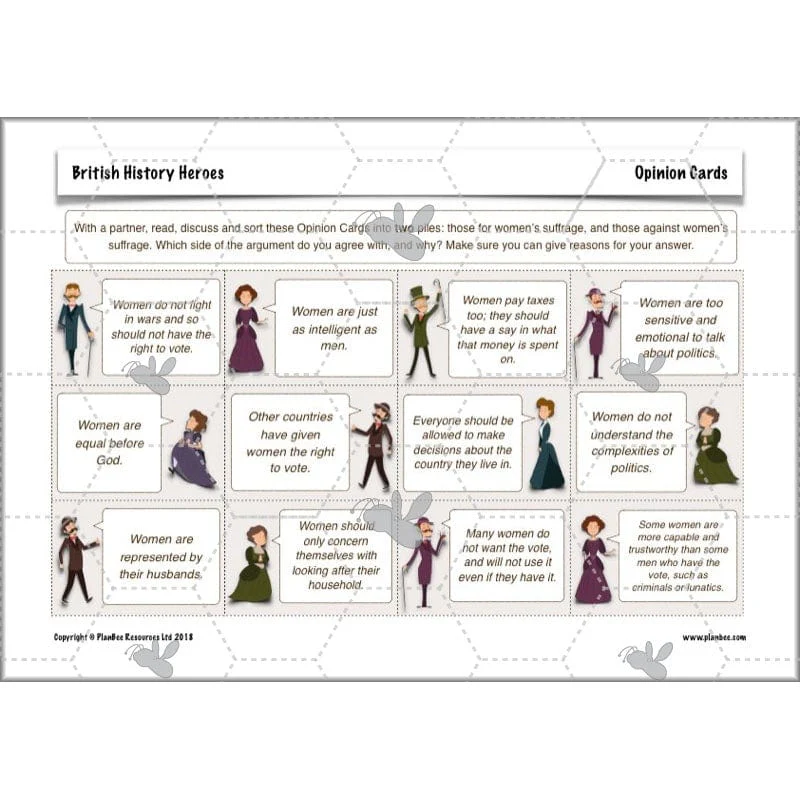
This lesson begins with children learning about the role of women in the 19th century. They find out how women began to speak out against their inequality with men, and in particular, how they wanted the right to vote. As a class, they explore and discuss the work of Emmeline Pankhurst and the WSPU, as well as looking at the role of women during the First World War. In their independent activities, children look in more detail at the different viewpoints of people at the time. In the alternative activity, children compare the actions of the WSPU and the actions of women during the war, and decide which had the most influence on women winning the vote.
What's included:
- Lesson plan
- Slides
- Activity ideas
- Opinion Cards
- Challenge Cards
- Character Cards
- Different Viewpoints Sheet
- How Women Won the Vote Sheet
View Lesson 5
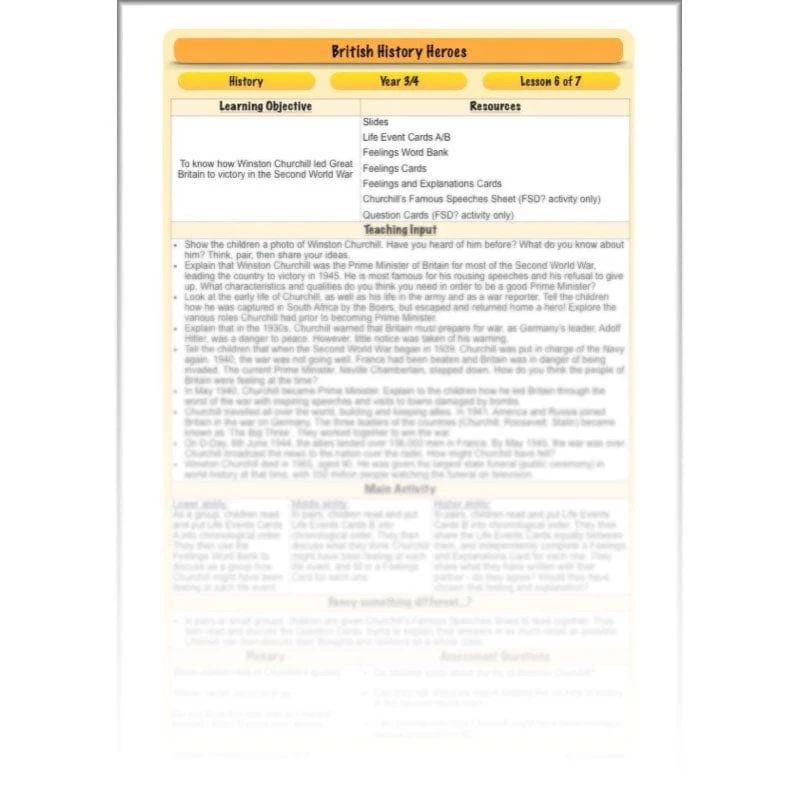
Winston Churchill
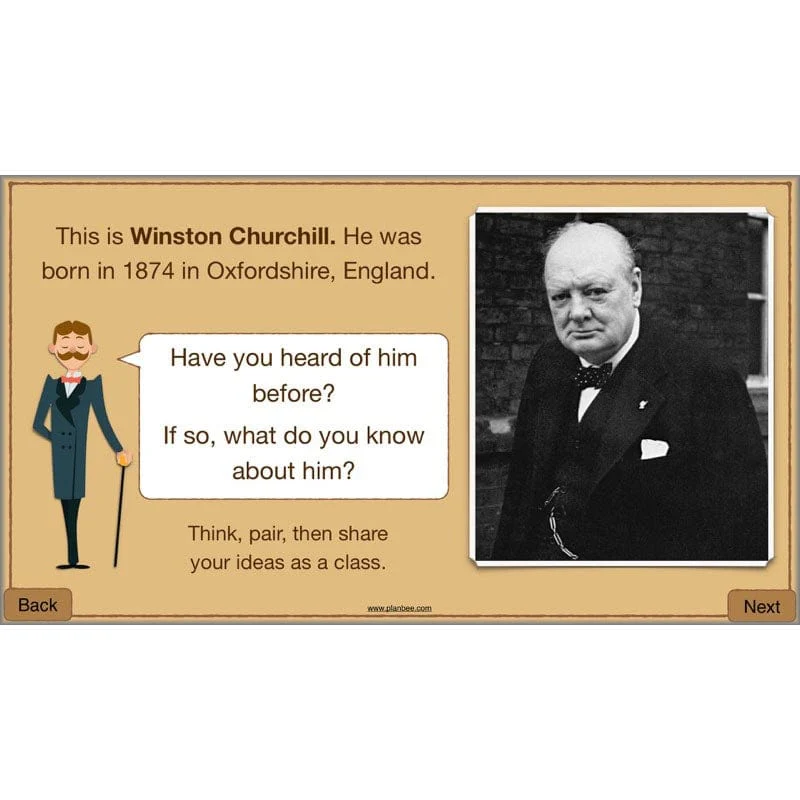
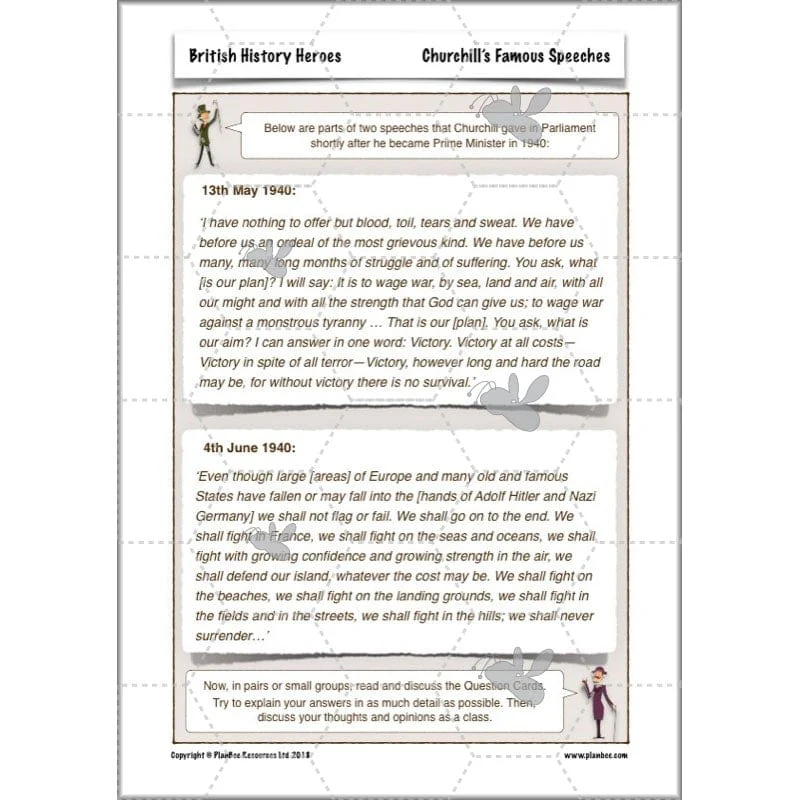
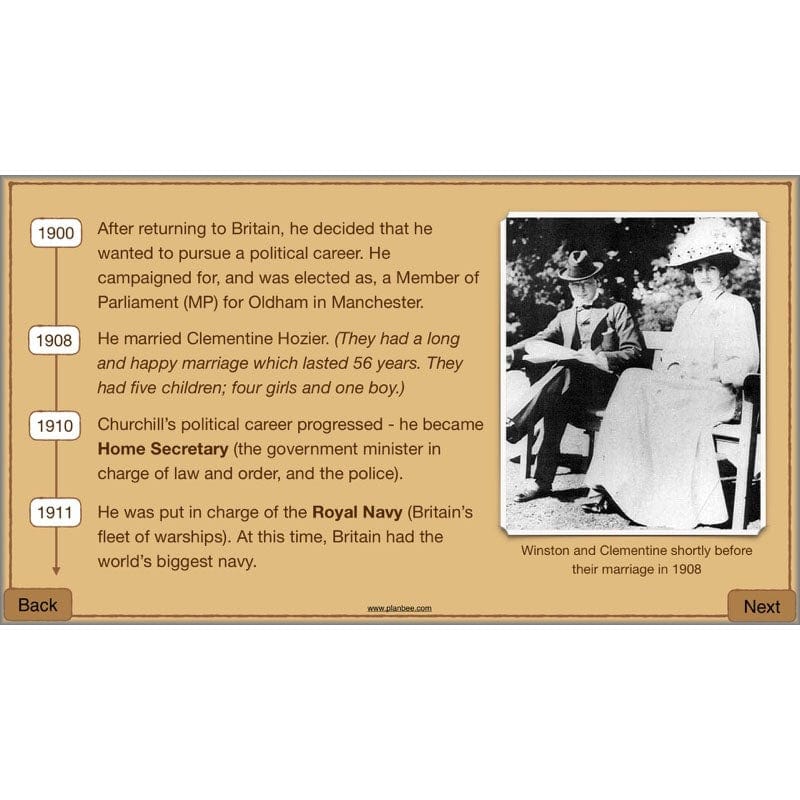
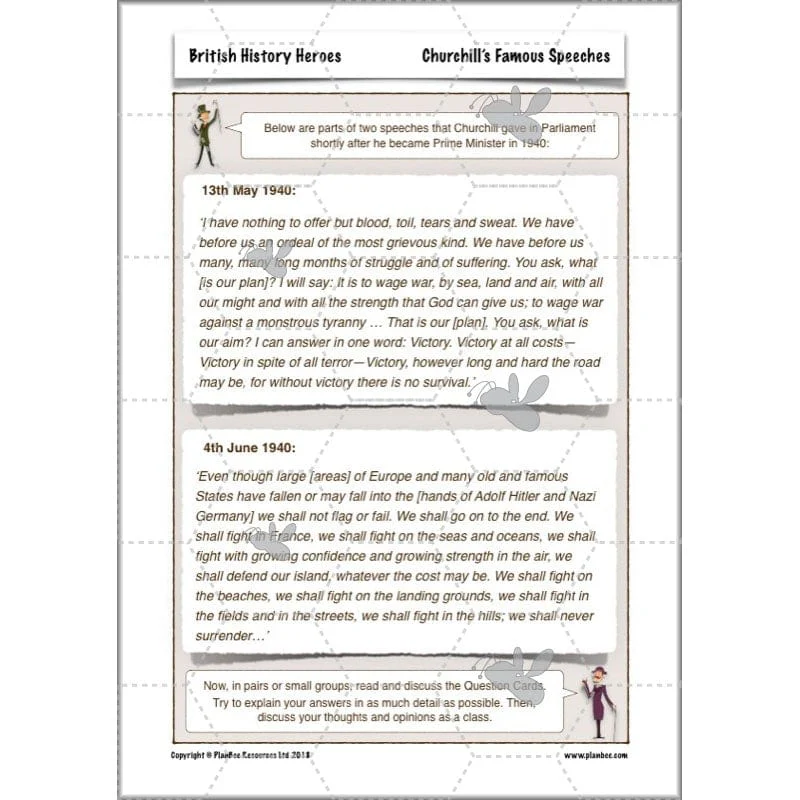
Children first find out about the life of Winston Churchill before he became Prime Minister. They are encouraged to discuss his actions and how he might have been feeling at various points in his life. Children then look at Churchill’s actions during the Second World War, and find out how victory was finally achieved in 1945. In their independent activities, they arrange Churchill’s life events in chronological order, and infer his feelings for each event. Alternatively, children look at parts of Churchill’s famous speeches, and use question prompts to discuss them.
What's included:
- Lesson plan
- Slides
- Activity ideas
- Life Event Cards
- Feelings Word Bank
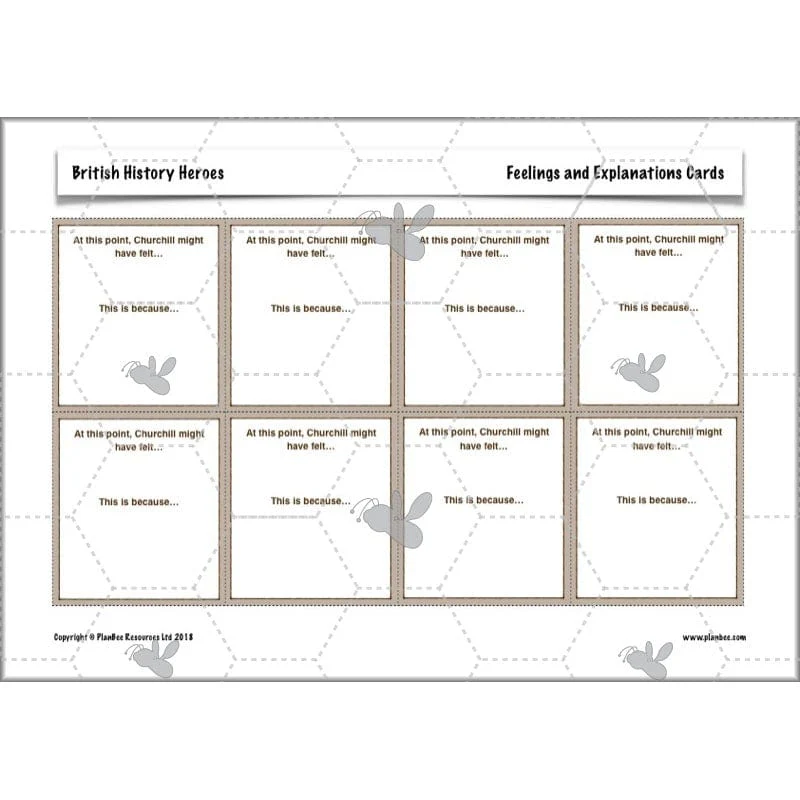
- Feelings and Explanations Cards
- Churchill’s Famous Speeches Sheet
- Question Cards
View Lesson 6
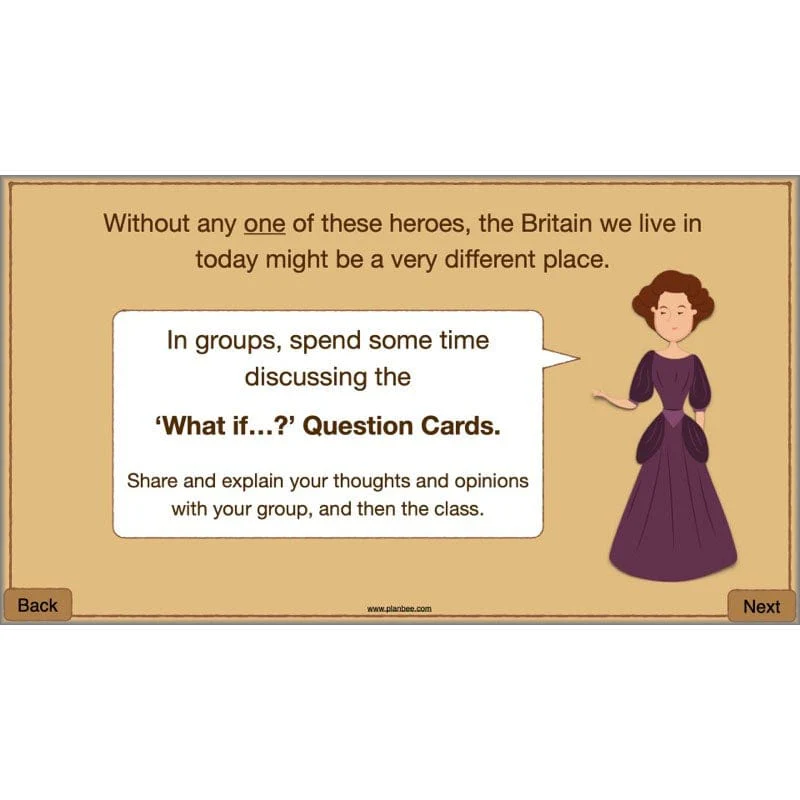
Who is the Greatest of Them All?
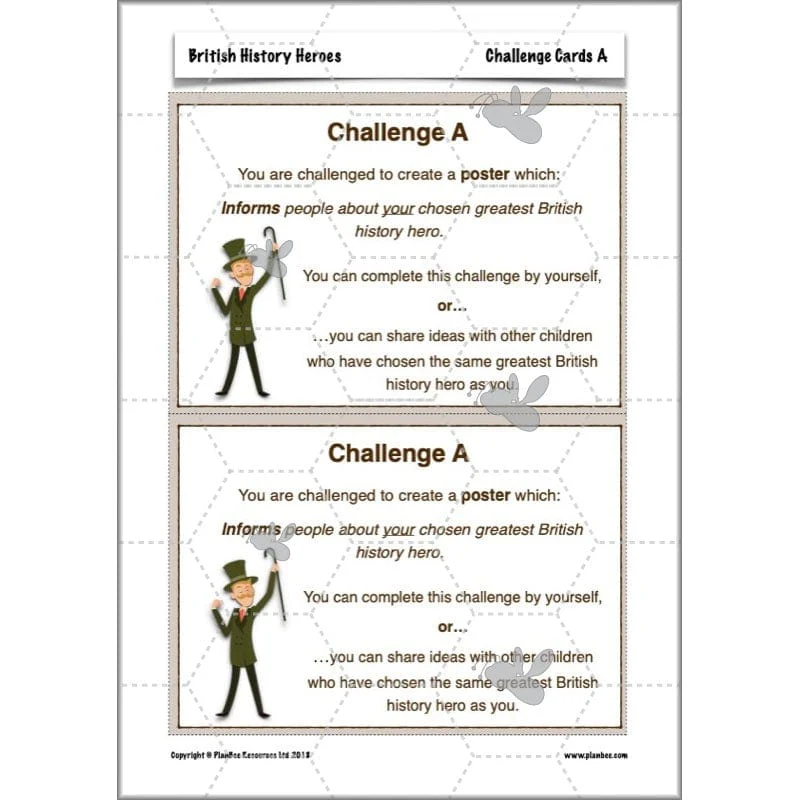
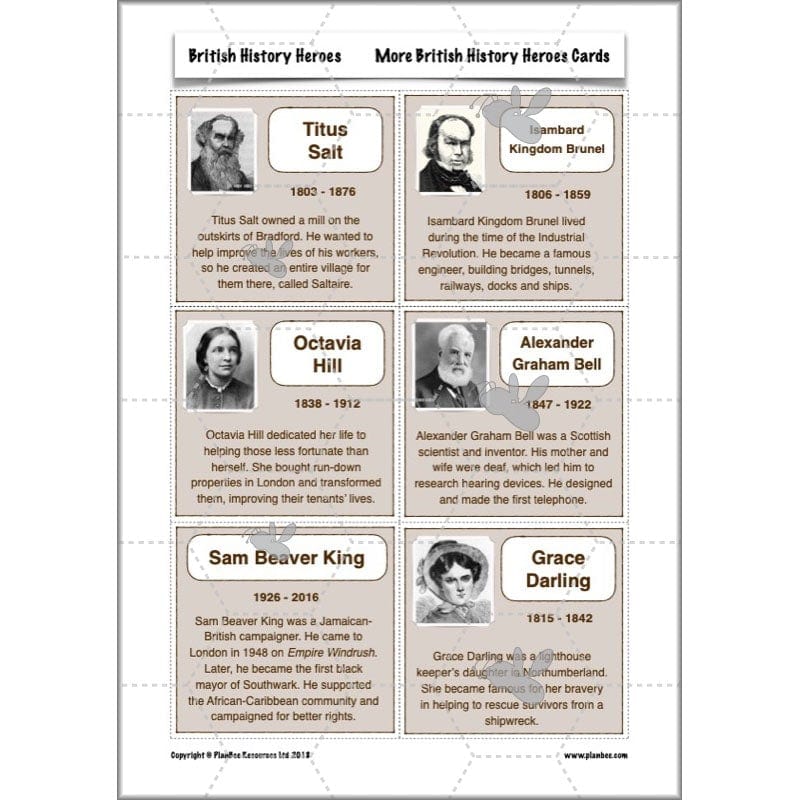
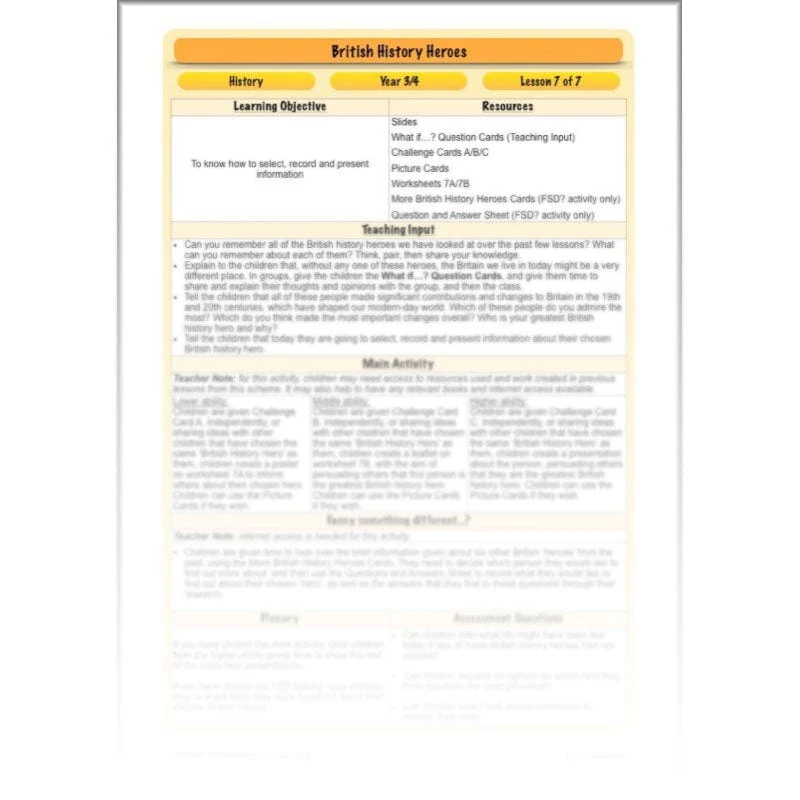
In this final lesson, children review the information they have learnt about the British history heroes from the previous lessons, and then explore which one of them they think is the ‘greatest’ in terms of the significance of the changes they made that impact on our lives today. In their independent work, children then create posters, leaflets or presentations to inform and persuade others that their chosen ‘hero’ is the greatest. Alternatively, children are briefly introduced to six more British history heroes, and choose one to research in more depth.
What's included:
- Lesson plan
- Slides
- Activity ideas
- Differentiated worksheets
- What if…? Question Cards
- Challenge Cards
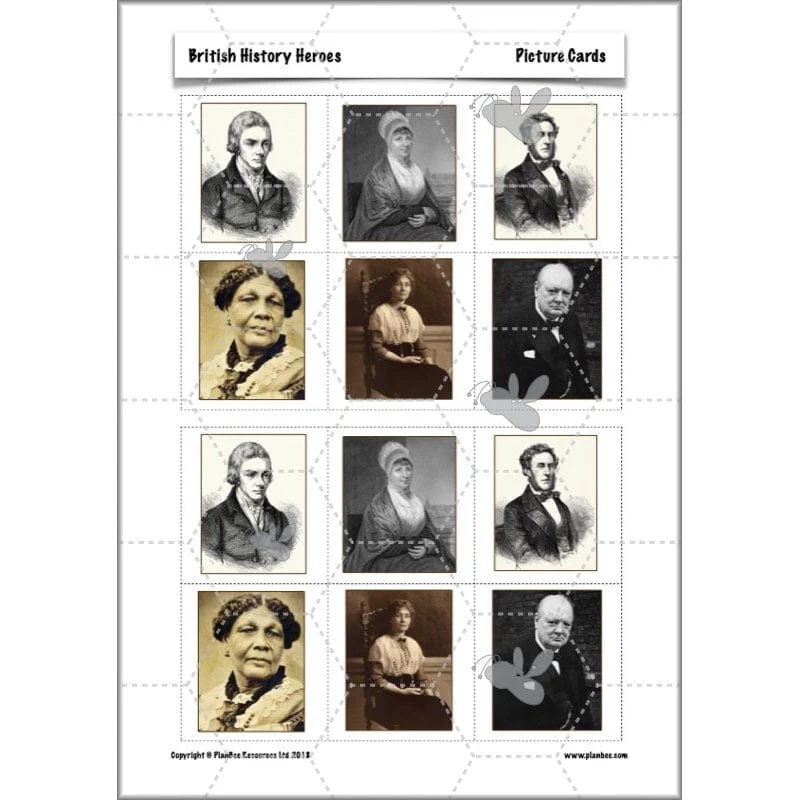
- Picture Cards
- More British History Heroes Cards
- Question and Answer Sheet
View Lesson 7




















Description
Take your class back in time to explore the lives and achievements of some of the people who we now consider to be ‘British history heroes’.
This scheme of work is also part of a Topic Bundle. Perfect if you are teaching 'Achievers and Inventors' as a cross-curricular topic.
Your class will explore the impact that the following people have had on our modern-day world: William Wilberforce, Elizabeth Fry, Lord Shaftesbury, Mary Seacole, Emmeline Pankhurst and Winston Churchill. They will be encouraged to review evidence and give their own opinions of these people and their work.
With lesson plans, informative slides, activity ideas, differentiated worksheets and much more, these Year 3 and 4 history lessons contain everything you need to teach your children about some of the most famous British heroes.
You may also be interested in our World War Two History lesson pack for lower KS2.
William Wilberforce
In this first lesson, children discuss their definitions of a hero. They are then introduced to William Wilberforce, and explore how he became involved in the campaign to abolish the slave trade. Children find out what the slave trade involved, and how and why Wilberforce and his supporters tried to stop it. In their independent work, children create posters, leaflets and speeches to support Wilberforce’s campaign. In the alternative activity, children hold a debate over the question; should slavery be abolished?
What's included:
- Lesson plan
- Slides
- Activity ideas
- Differentiated worksheets
- Transatlantic Slave Trade Information Sheets
- For and Against Slavery Cards
View Lesson 1
Elizabeth Fry
Children first learn about the effects of the Industrial Revolution on the population of, and crime levels in, towns and cities, and find out what prisons were like during this time. They are then introduced to Elizabeth Fry, and learn how her charity work led to the improved treatment of prisoners. In their independent activities, children further explore the causes and effects of Elizabeth’s actions. Alternatively, they are challenged to create a re-enactment of Elizabeth’s visit to Newgate Prison.
What's included:
- Lesson plan
- Slides
- Activity ideas
- Differentiated worksheets
- Cause and Effect Cards
- Life Events Cards
- Elizabeth Fry Information Sheet
- Visit to Newgate Prison Sheet
- Challenge Cards
View Lesson 2
Lord Shaftesbury
Children find out about the working conditions of Victorian children who were employed in the coal mines, in factories, and as chimney sweeps. They learn about Lord Shaftesbury’s role in trying to improve these conditions, and look at three important laws that he helped to pass. They also learn about ragged schools, and Lord Shaftesbury’s beliefs about, and involvement in, them. In their independent activities, children are encouraged to explore how different people may have felt about the passing of these laws at the time. In the alternative activity, children create a presentation using evidence packs about the working conditions of children in the mines.
What's included:
- Lesson plan
- Slides
- Activity ideas
- Differentiated worksheets
- Talk Show Instructions Sheet
- Talk Show Character Cards
- Mining Conditions Evidence Pack
- Challenge Cards
View Lesson 3
Mary Seacole
In this Mary Seacole KS2 lesson, your class will find out about the life and achievements of this remarkable British-Jamaican woman who aided the British Army during the Crimean War.
Children will discover how she became proficient at making and using natural remedies to help cholera sufferers, and how she funded her own passage to Turkey to give aid to those fighting in the Crimean War after being rejected as a volunteer by the British War Office. Activities include completing a timeline of Mary Seacole's life, or writing a speech explaining what Mary Seacole's achievements were, and why she should never be forgotten.
This Mary Seacole KS2 lesson pack includes a detailed plan, an informative slide show, differentiated activity ideas and printable resources - everything you need for a successful lesson!
What's included:
- Lesson plan
- Slides
- Activity ideas
- Timeline Cards
- Mary Seacole Timeline
- The Life of Mary Seacole Sheet
- Challenge Cards
- Speech Sheet
View Lesson 4
Emmeline Pankhurst
This lesson begins with children learning about the role of women in the 19th century. They find out how women began to speak out against their inequality with men, and in particular, how they wanted the right to vote. As a class, they explore and discuss the work of Emmeline Pankhurst and the WSPU, as well as looking at the role of women during the First World War. In their independent activities, children look in more detail at the different viewpoints of people at the time. In the alternative activity, children compare the actions of the WSPU and the actions of women during the war, and decide which had the most influence on women winning the vote.
What's included:
- Lesson plan
- Slides
- Activity ideas
- Opinion Cards
- Challenge Cards
- Character Cards
- Different Viewpoints Sheet
- How Women Won the Vote Sheet
View Lesson 5
Winston Churchill
Children first find out about the life of Winston Churchill before he became Prime Minister. They are encouraged to discuss his actions and how he might have been feeling at various points in his life. Children then look at Churchill’s actions during the Second World War, and find out how victory was finally achieved in 1945. In their independent activities, they arrange Churchill’s life events in chronological order, and infer his feelings for each event. Alternatively, children look at parts of Churchill’s famous speeches, and use question prompts to discuss them.
What's included:
- Lesson plan
- Slides
- Activity ideas
- Life Event Cards
- Feelings Word Bank
- Feelings and Explanations Cards
- Churchill’s Famous Speeches Sheet
- Question Cards
View Lesson 6
Who is the Greatest of Them All?
In this final lesson, children review the information they have learnt about the British history heroes from the previous lessons, and then explore which one of them they think is the ‘greatest’ in terms of the significance of the changes they made that impact on our lives today. In their independent work, children then create posters, leaflets or presentations to inform and persuade others that their chosen ‘hero’ is the greatest. Alternatively, children are briefly introduced to six more British history heroes, and choose one to research in more depth.
What's included:
- Lesson plan
- Slides
- Activity ideas
- Differentiated worksheets
- What if…? Question Cards
- Challenge Cards
- Picture Cards
- More British History Heroes Cards
- Question and Answer Sheet
View Lesson 7