Japan Today
In this KS2 Geography scheme of work for Y5 and Y6, children will investigate the position, human and physical geography of Japan.
They begin by investigating the use of latitude and longitude when referring to a location and using this knowledge to identify Japan, and other countries’ positions around a world map. They then go on to explore the physical geography of earthquakes and the amazing features of Japan including mountains and volcanoes. The children then focus on making comparisons of Japan’s culture and schools with their own culture and experiences.
You might also be interested in our Japan Topic Bundle - perfect if you are looking for a cross-curricular approach!
Where is Japan?
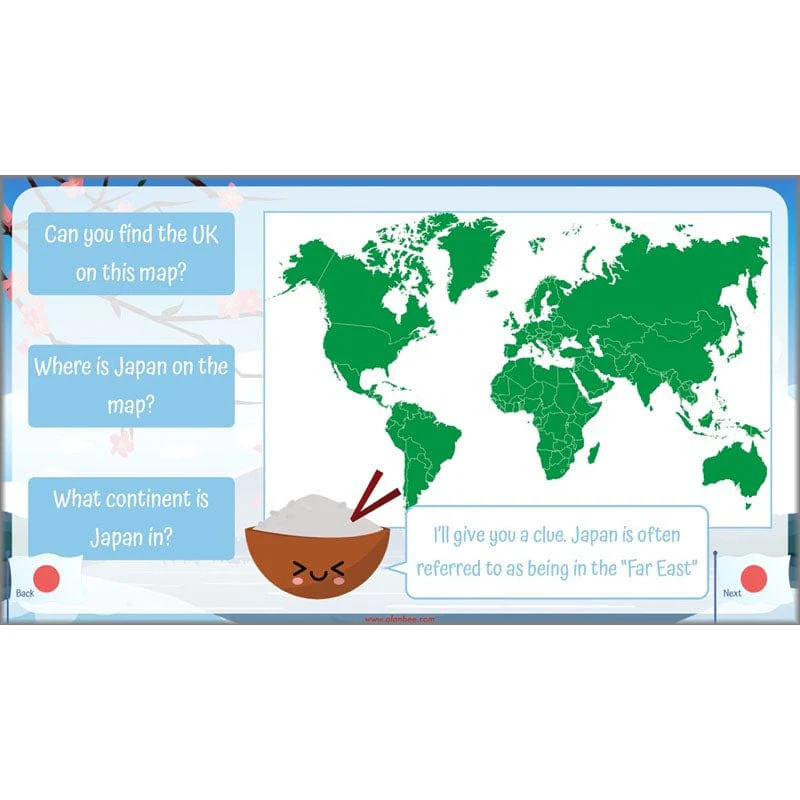
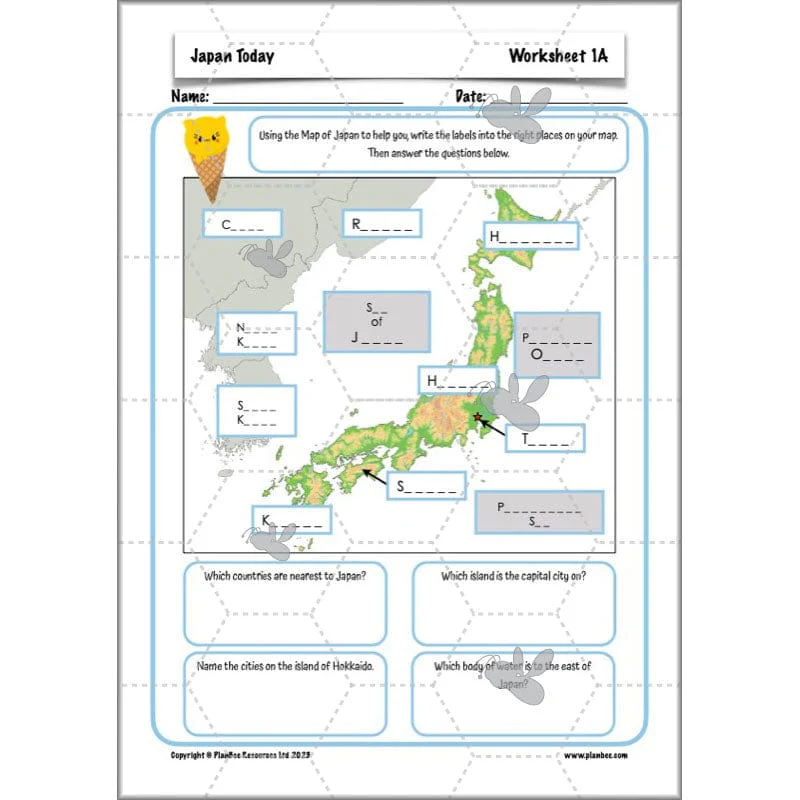
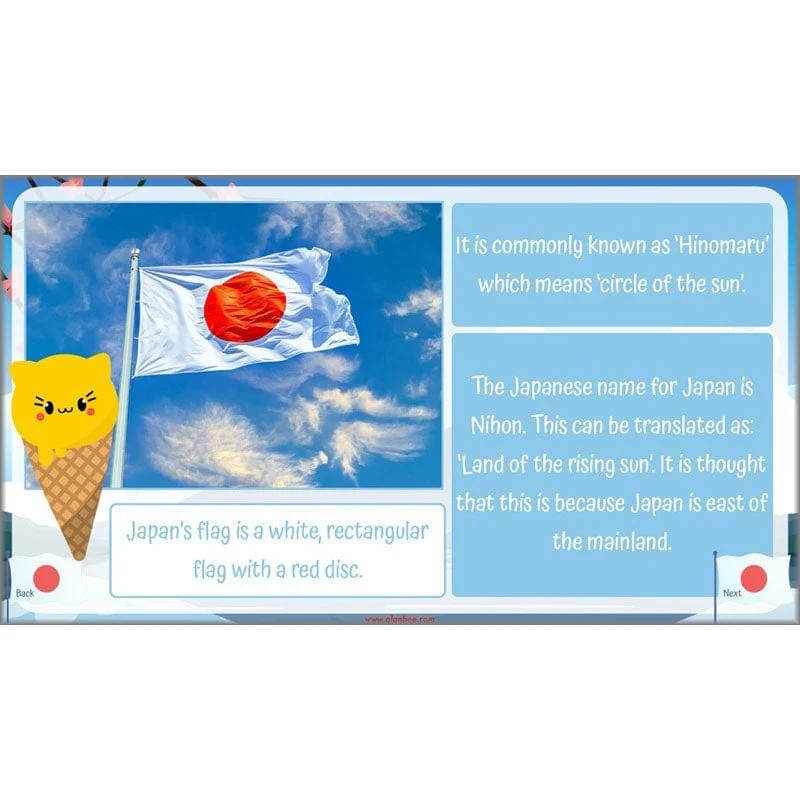
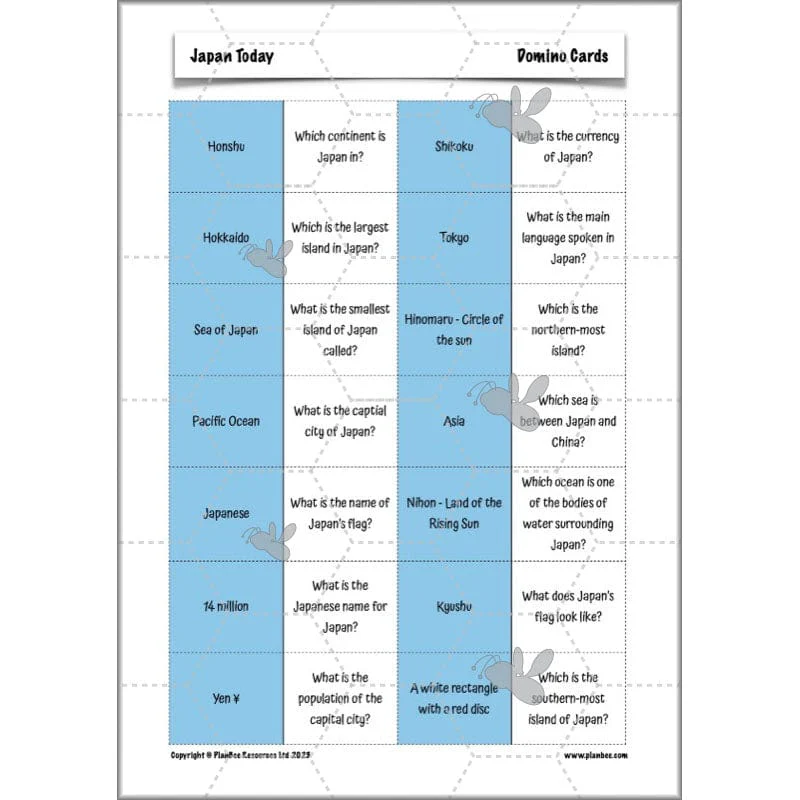
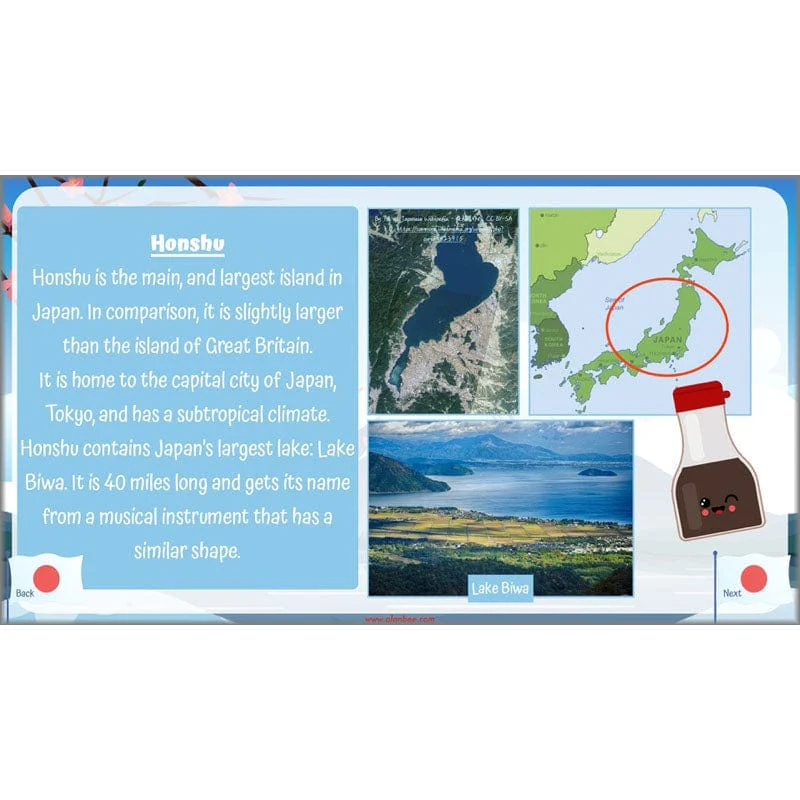
Where in the world is Japan? Children begin by finding Japan on a world map. They then look in more detail at the country, and find out about the location of the surrounding countries, the seas and oceans and the islands that are part of Japan. Children record what they have learnt on their own maps of Japan, or use the facts they have learnt to play a dominoes game to test their memory.
What's included:
- Lesson plan
- Slides
- Activity ideas
- Differentiated worksheets
- Map of Japan
- Japan Domino cards
View Lesson 1
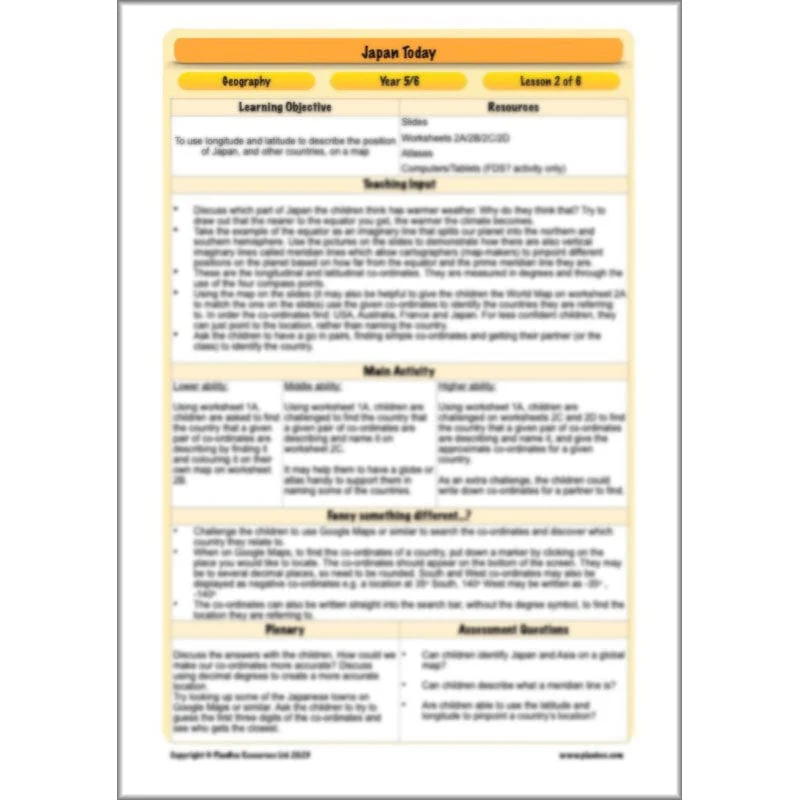
Latitude and Longitude
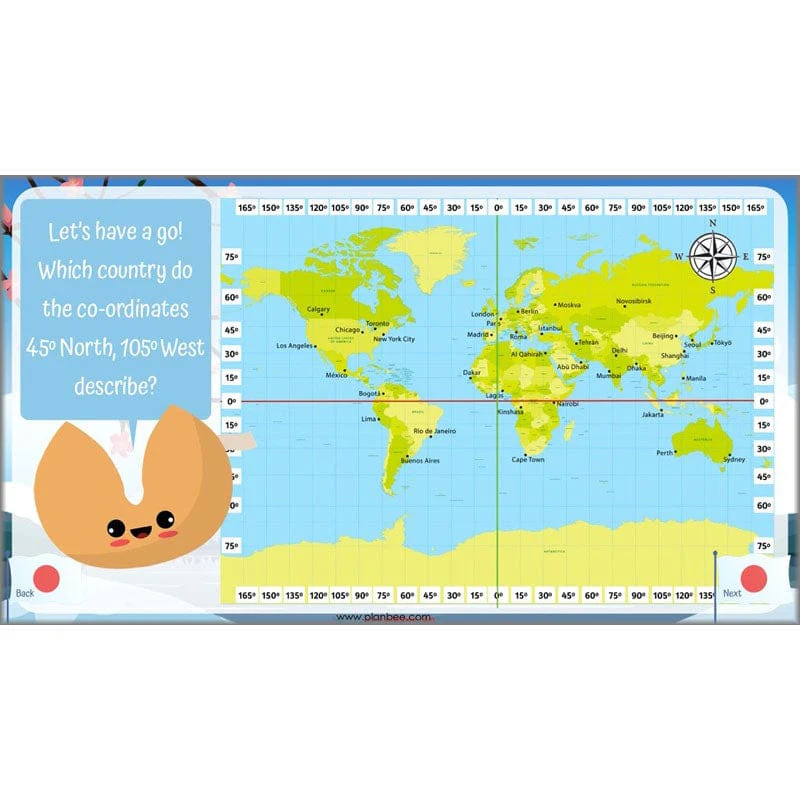
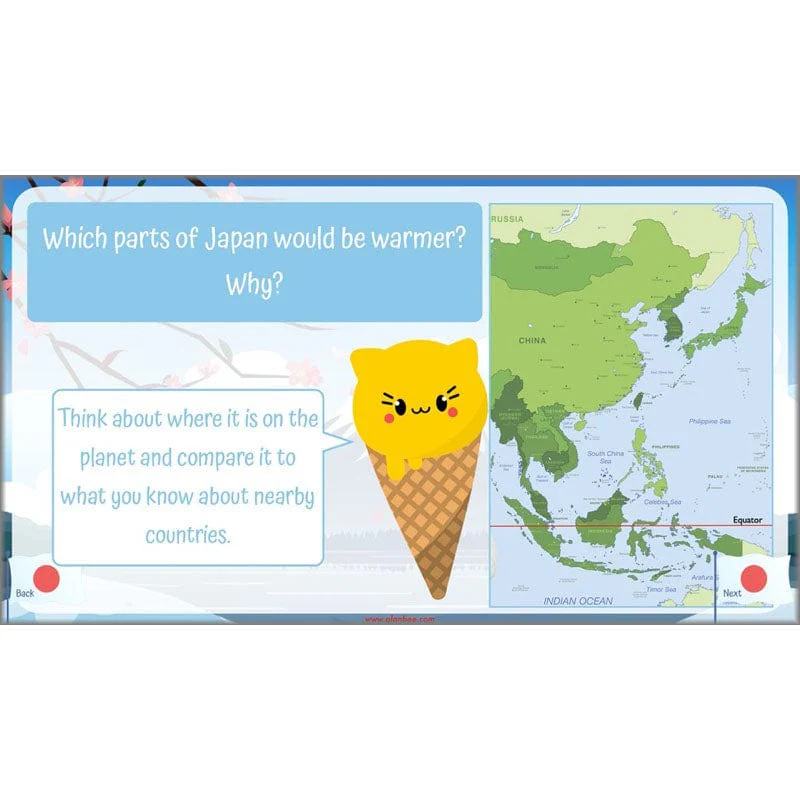
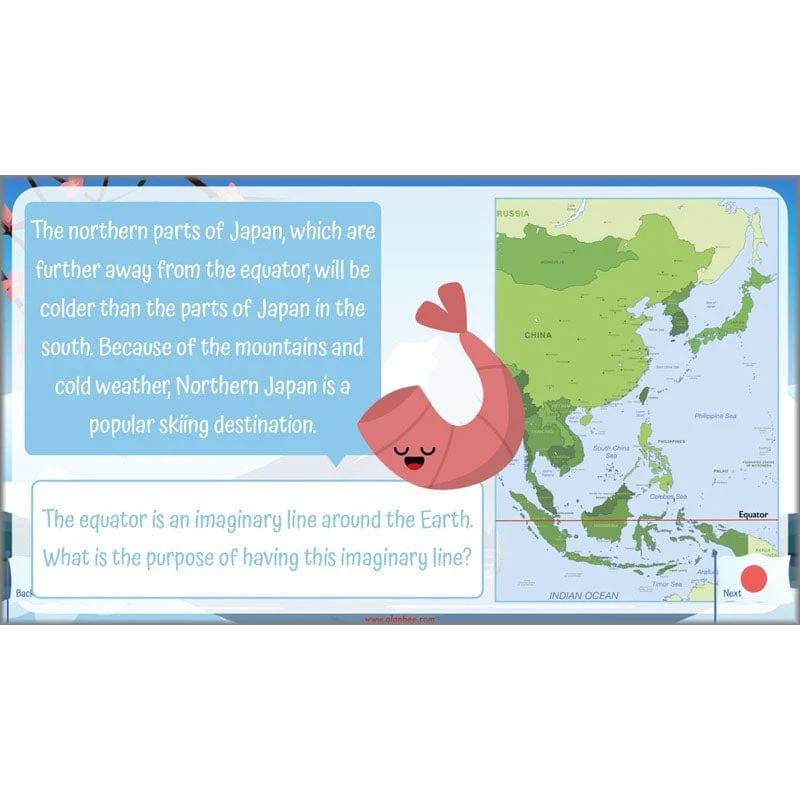
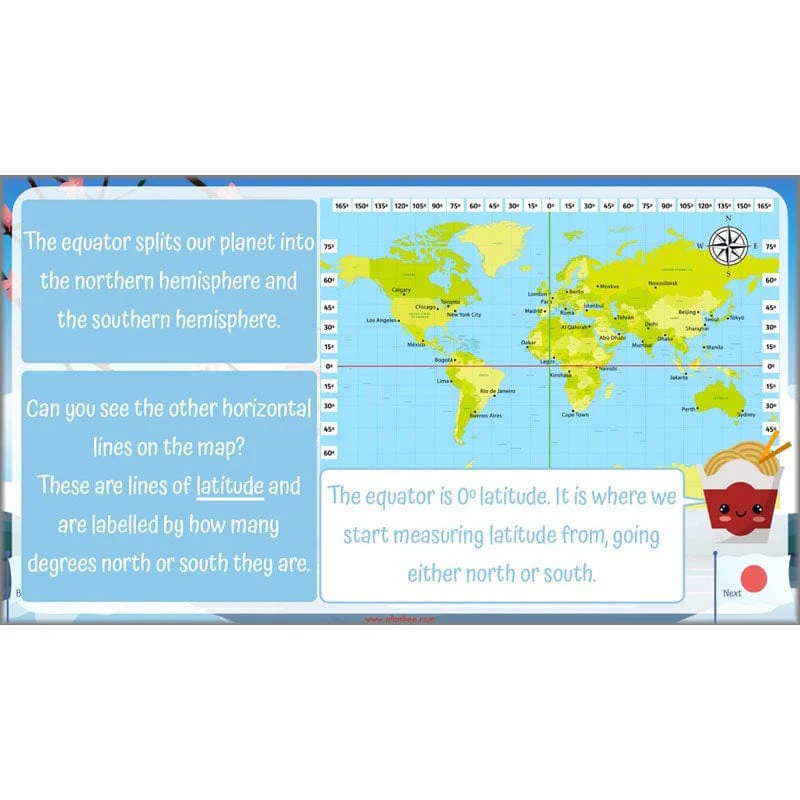
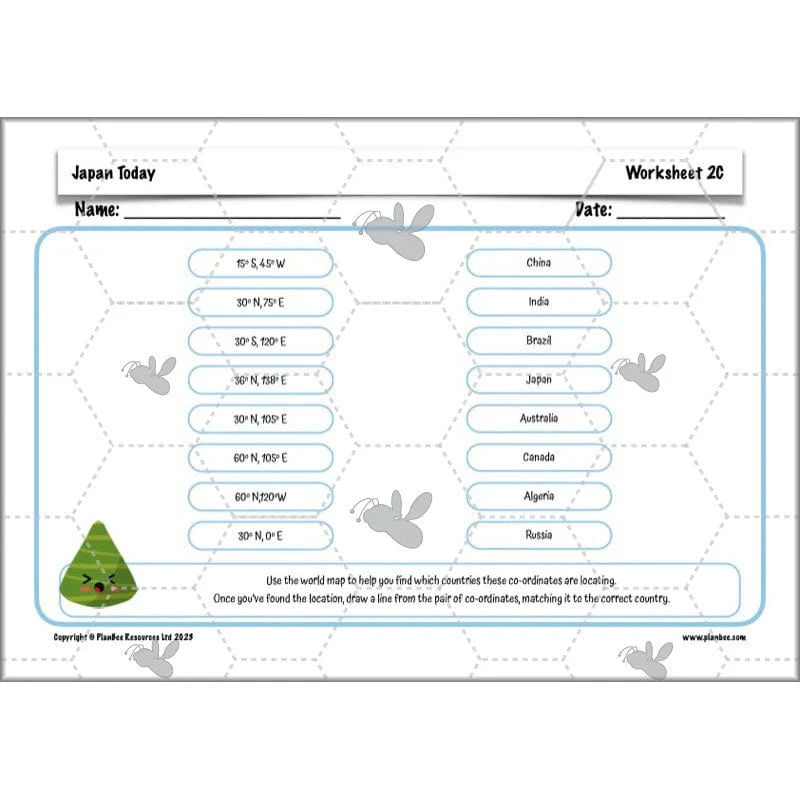
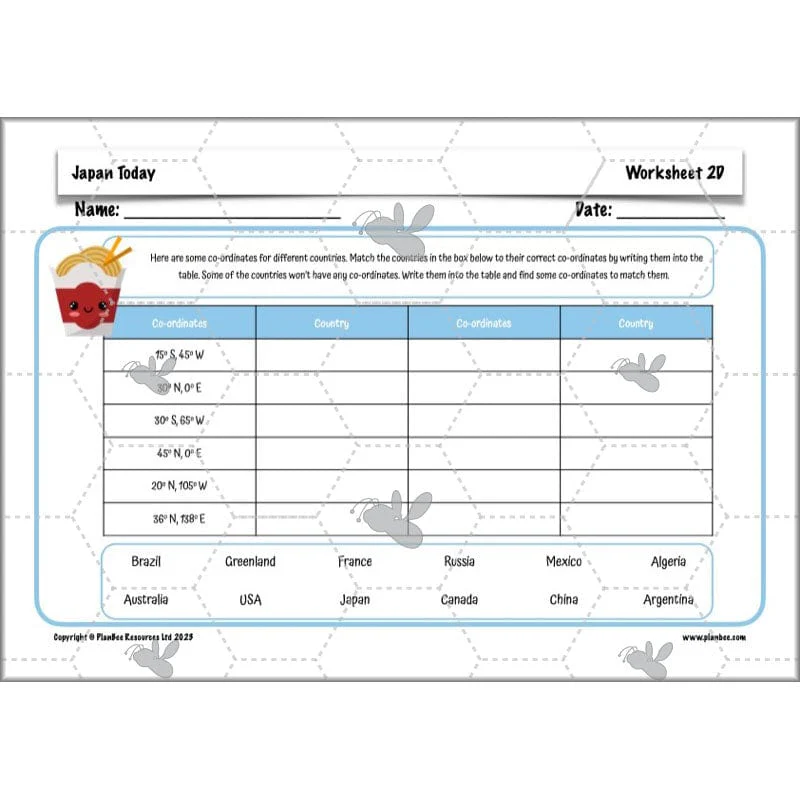
Take an in-depth look at what the lines on a world map really mean! Investigate the uses of latitude and longitude as the children become cartographers, locating countries and using the co-ordinates to describe them. The children will discuss the importance of the equator and prime meridian line and how to get their co-ordinates accurate enough to pinpoint a smaller location.
What's included:
- Lesson plan
- Slides
- Activity ideas
- Differentiated worksheets
View Lesson 2
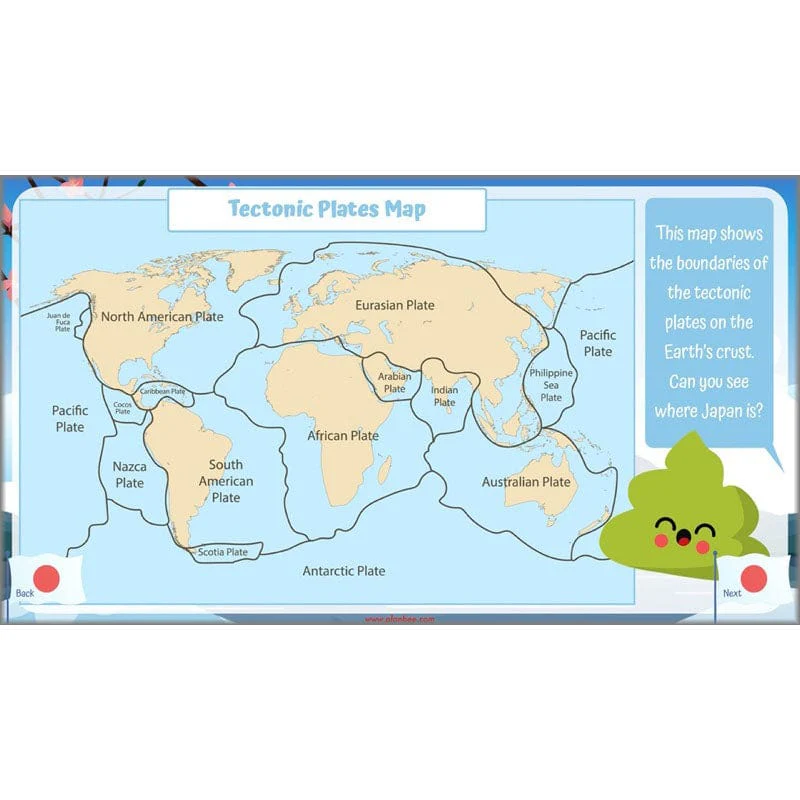
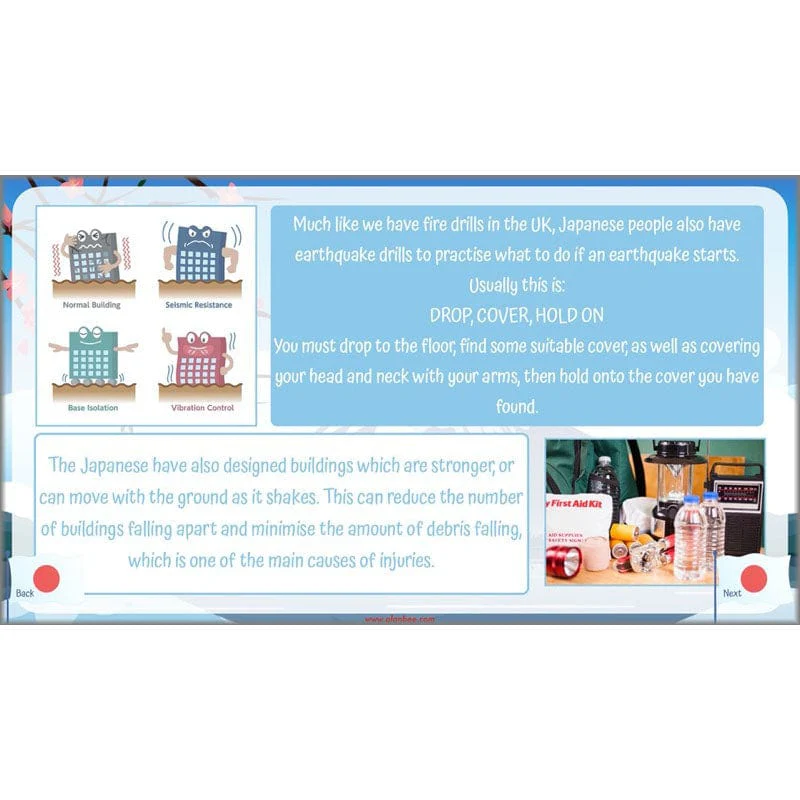
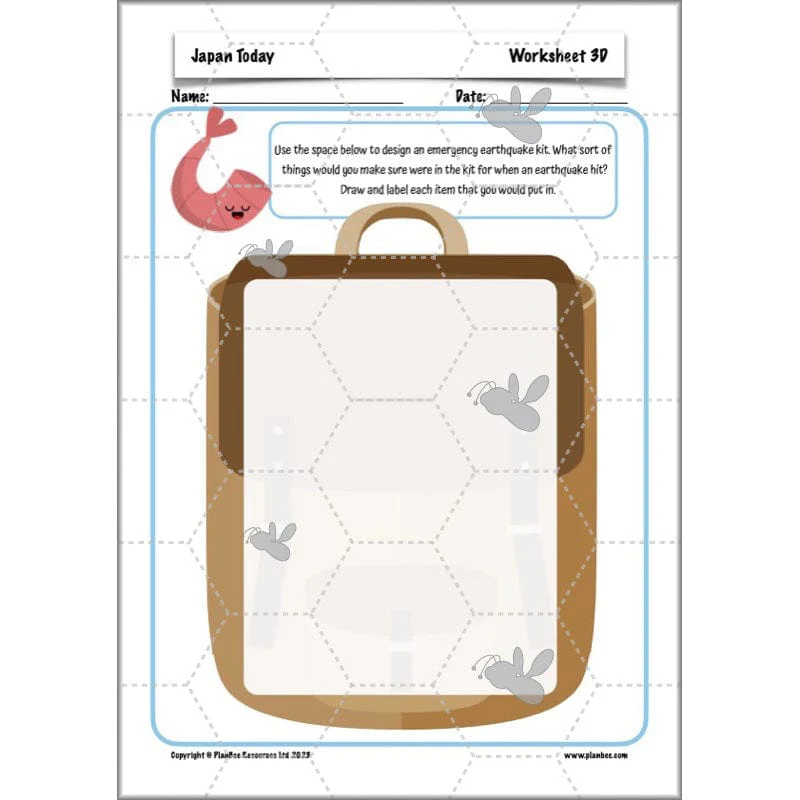
Earthquakes
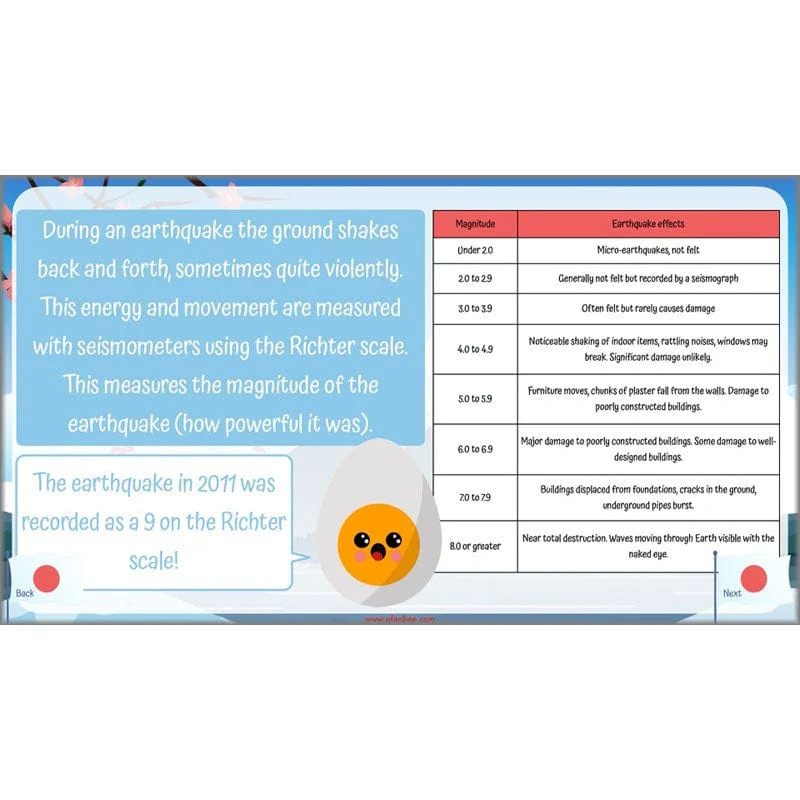
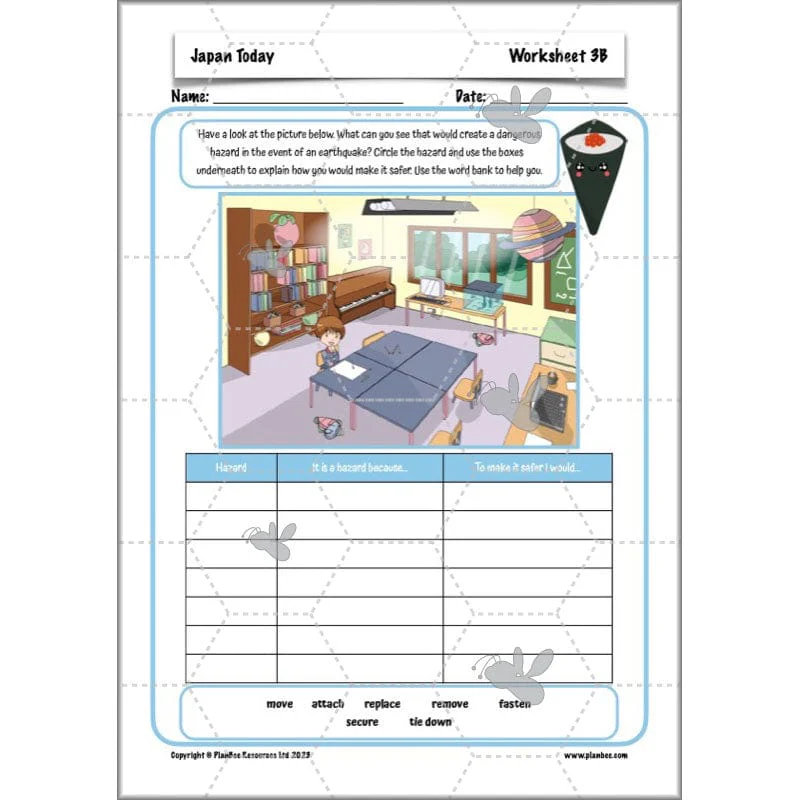
Discover the reasons why Japan and many other countries are particularly susceptible to earthquakes and how they happen. Discuss the impact that a natural disaster has on a location and what can be done to help keep people safe. Then, allow the children to take on the role of safety officer for their classroom, highlighting objects that could become hazards in the event of an earthquake and discussing how they could be made safe.
What's included:
- Lesson plan
- Slides
- Activity ideas
- Differentiated worksheets
- Challenge cards
View Lesson 3
Physical Geography
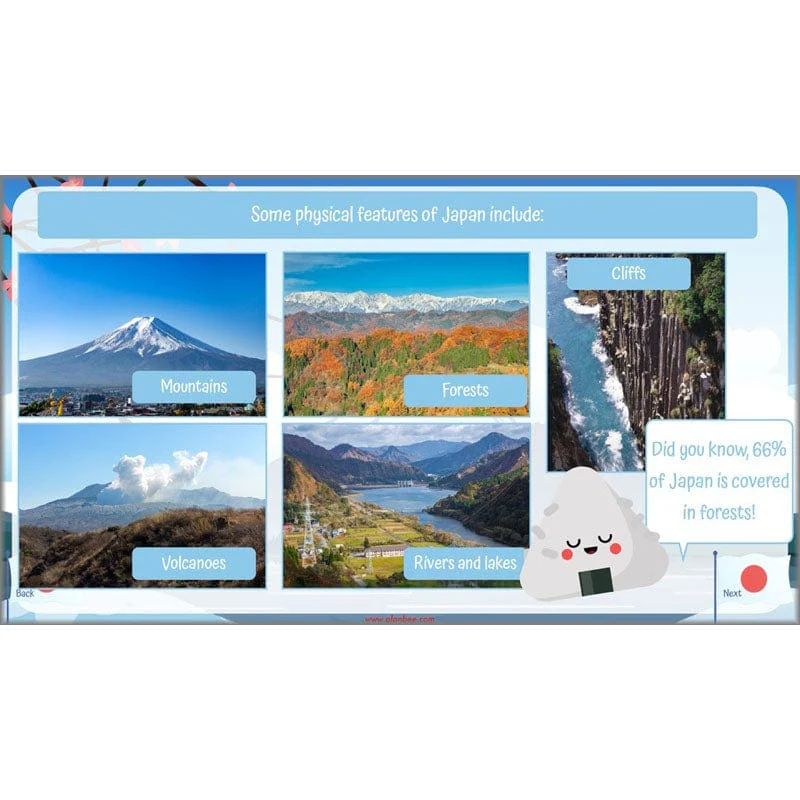
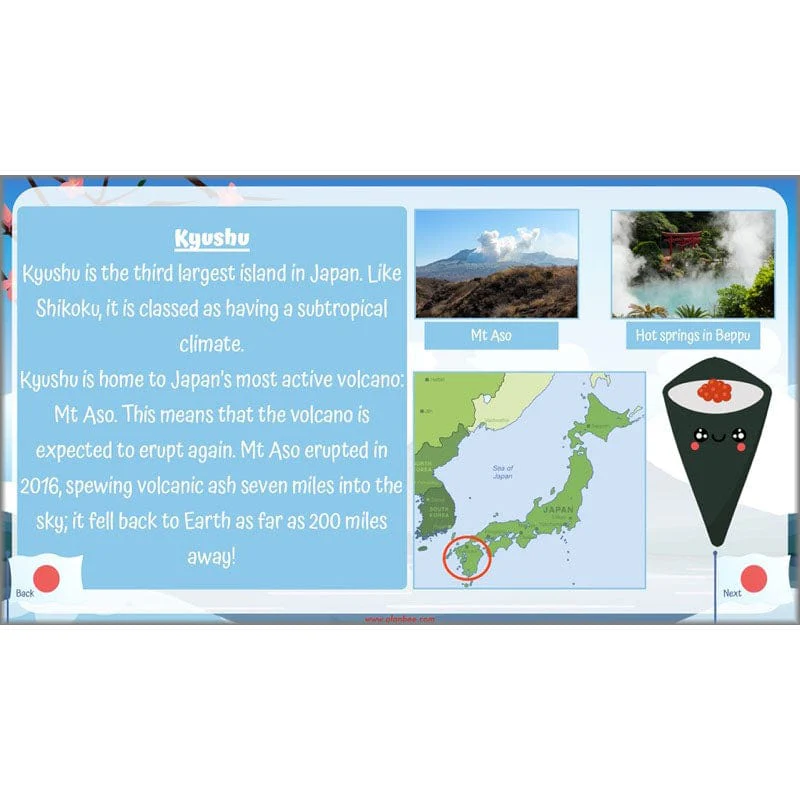
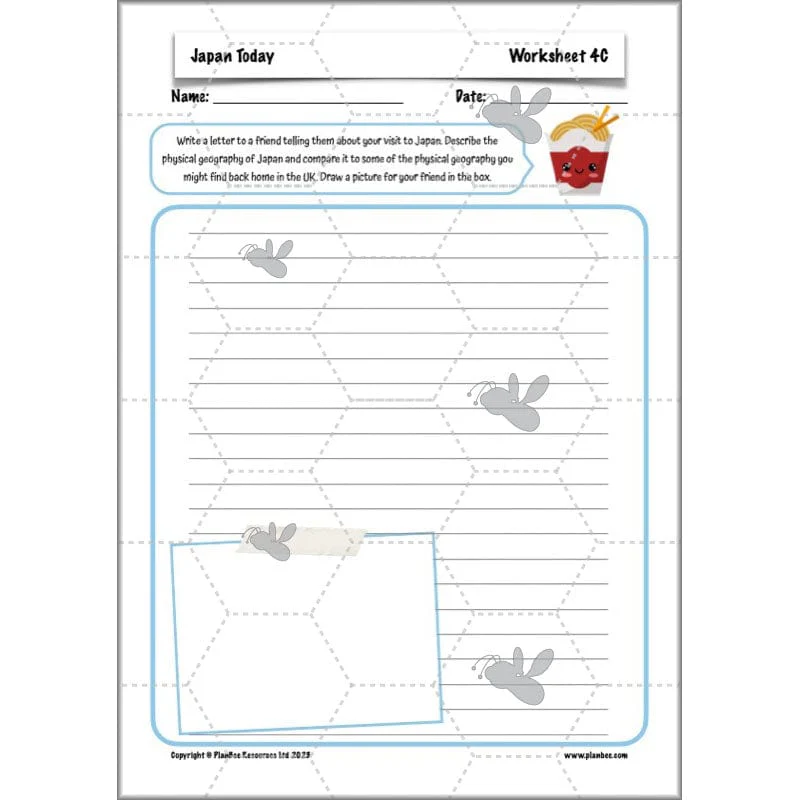
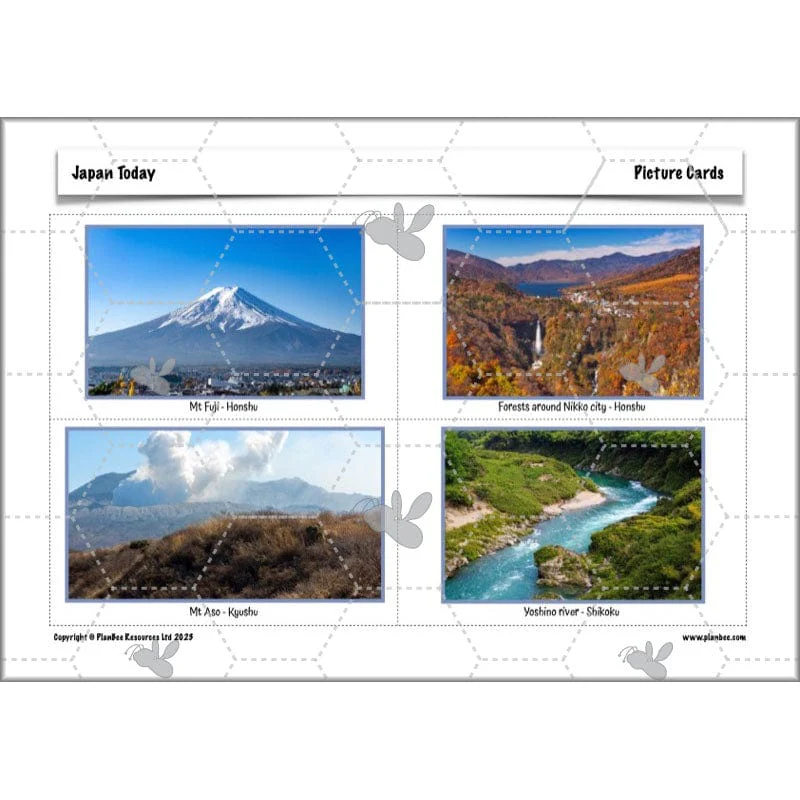
Explore the beautiful physical geography of Japan and its climates. From towering mountains (which might also be active volcanoes) to hot springs and forests, the children discover what physical geography is and how a place’s location can change it. The children then go on to compare the physical geography of Japan to somewhere closer to home.
What's included:
- Lesson plan
- Slides
- Activity ideas
- Differentiated worksheets
- Picture cards
View Lesson 4
Japanese Culture
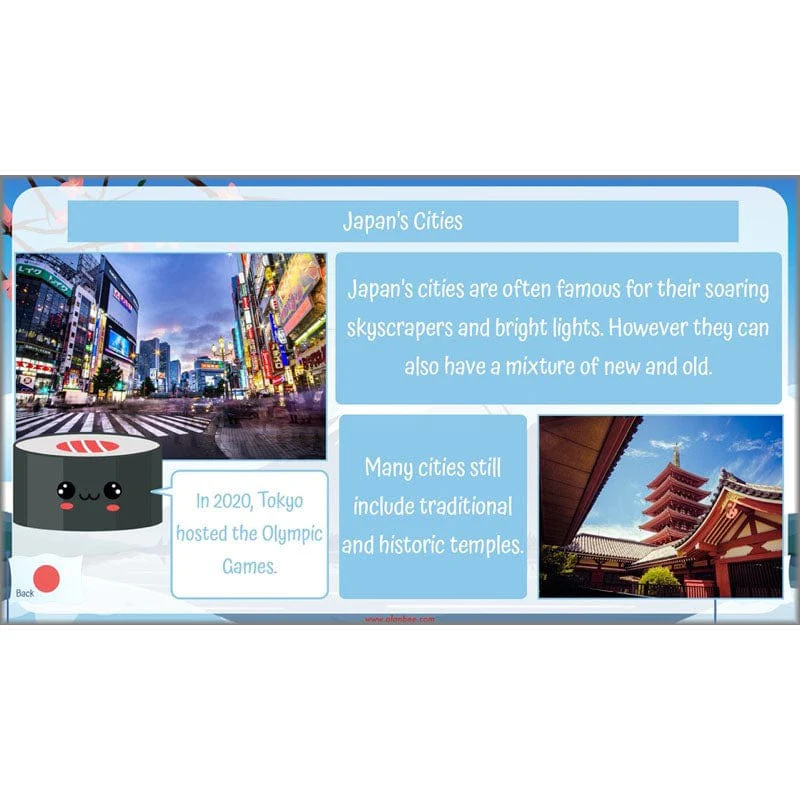
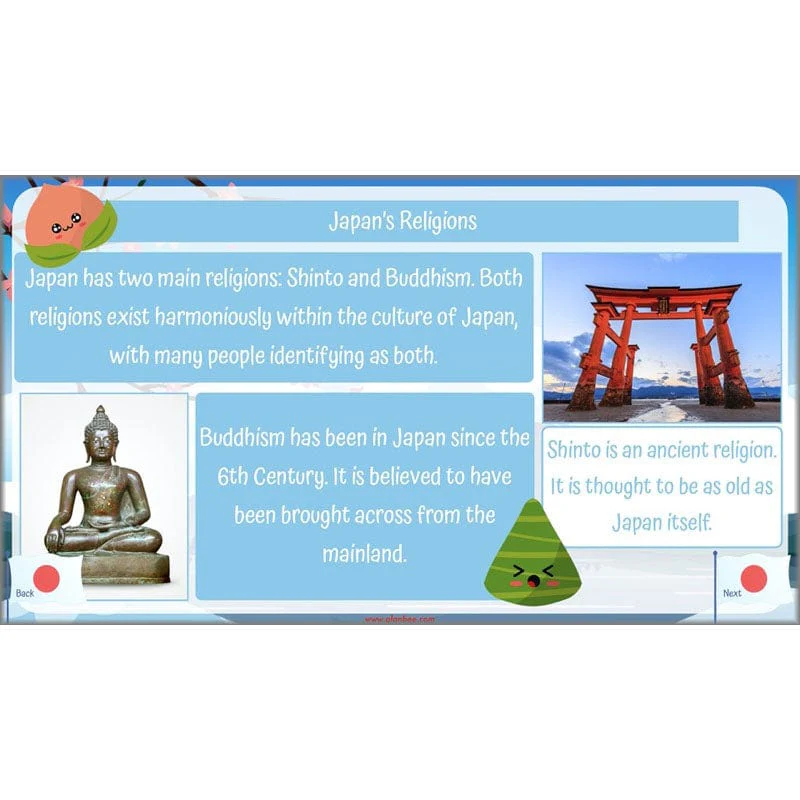
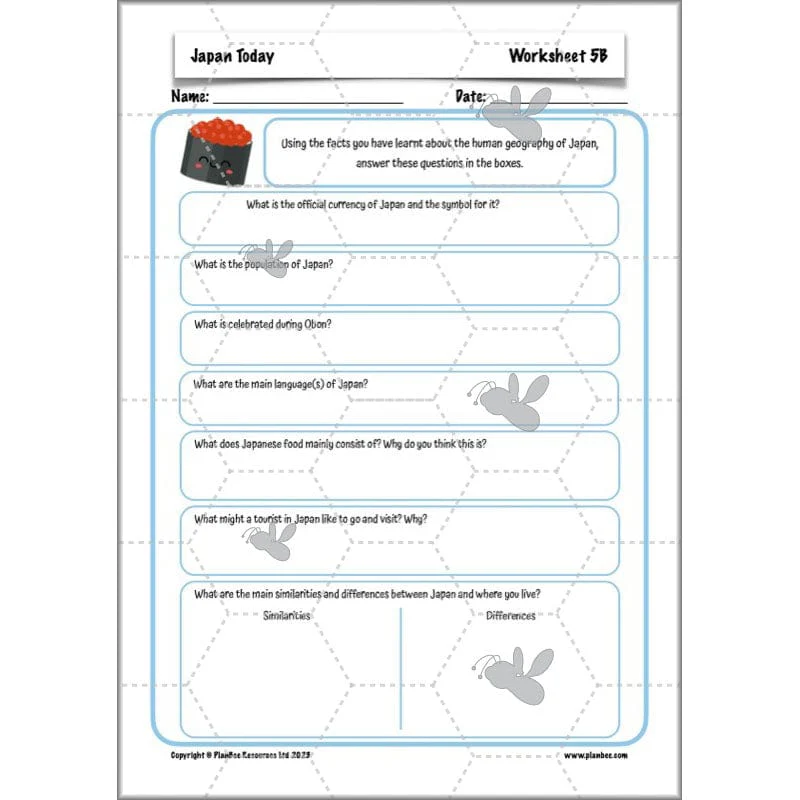
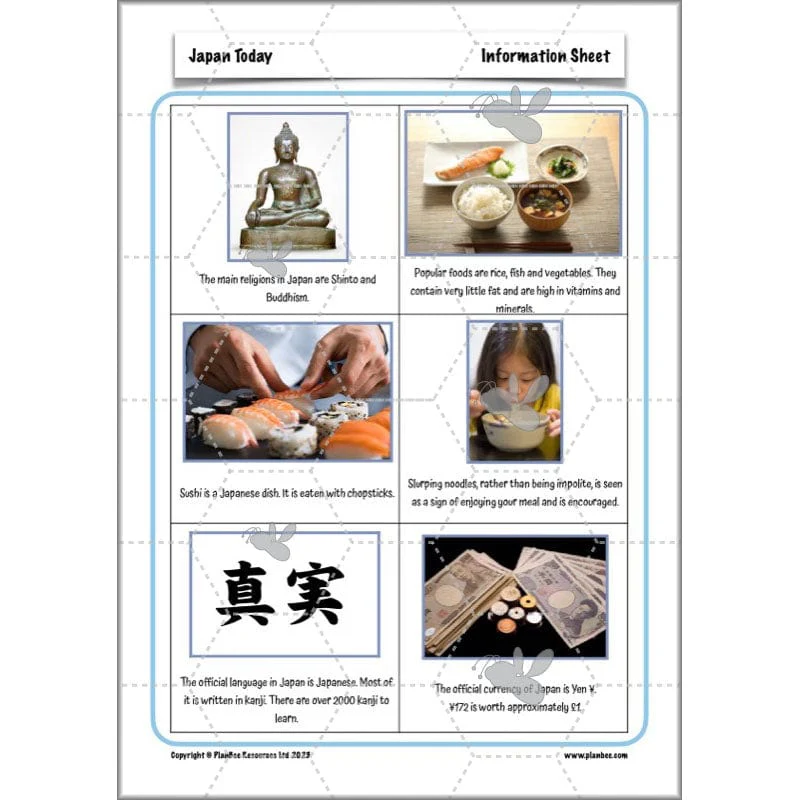
Discover the rich and historical culture of Japan and its population. Learn about the events and changes that can affect a country’s population and economy and how these have changed over the last 150 years in Japan. Teach your class about the stunning cities and foods within the Japanese culture and even have a go at learning some Japanese phrases.
What's included:
- Lesson plan
- Slides
- Activity ideas
- Differentiated worksheets
- Fact cards
- Information
View Lesson 5
School Life
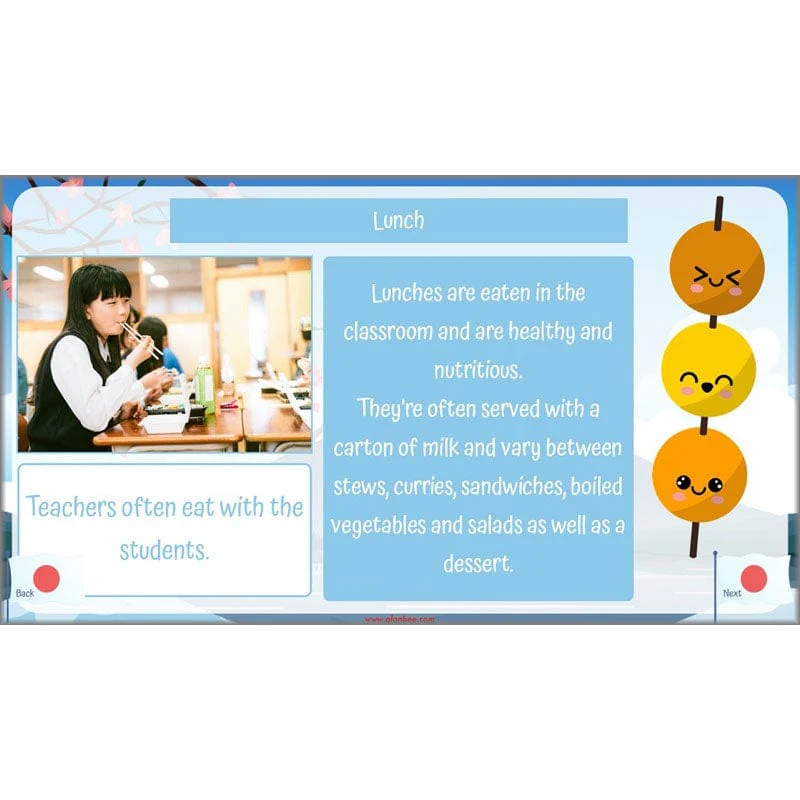
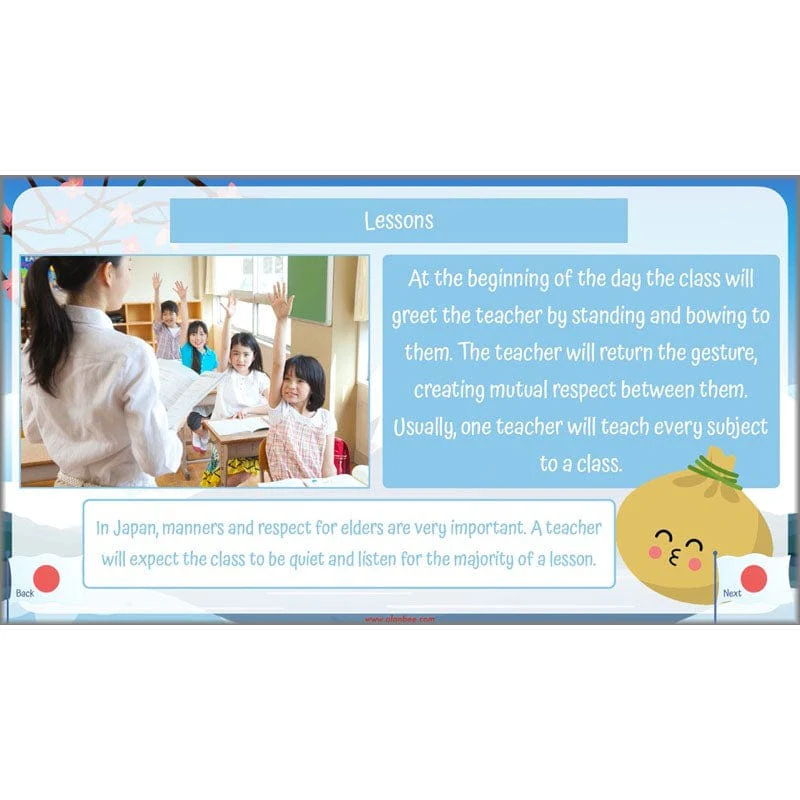
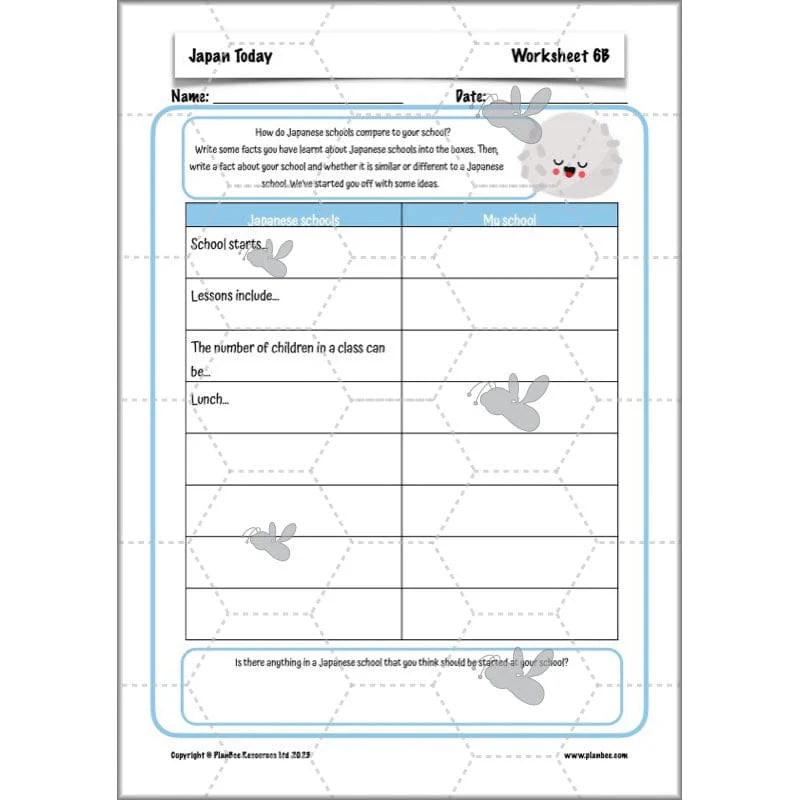
What is life like for a Japanese school student? Take your children on a journey through the day of a Japanese school and allow them to compare a way of life that they can relate to. Explore how a Japanese school is different, and how it is the same as your school and create discussions with the children on which positives they would like to have in their school.
What's included:
- Lesson plan
- Slides
- Activity ideas
- Differentiated worksheets
- Fact cards
- Picture Cards
View Lesson 6
Original: $4.65
-65%$4.65
$1.63





























Description
In this KS2 Geography scheme of work for Y5 and Y6, children will investigate the position, human and physical geography of Japan.
They begin by investigating the use of latitude and longitude when referring to a location and using this knowledge to identify Japan, and other countries’ positions around a world map. They then go on to explore the physical geography of earthquakes and the amazing features of Japan including mountains and volcanoes. The children then focus on making comparisons of Japan’s culture and schools with their own culture and experiences.
You might also be interested in our Japan Topic Bundle - perfect if you are looking for a cross-curricular approach!
Where is Japan?
Where in the world is Japan? Children begin by finding Japan on a world map. They then look in more detail at the country, and find out about the location of the surrounding countries, the seas and oceans and the islands that are part of Japan. Children record what they have learnt on their own maps of Japan, or use the facts they have learnt to play a dominoes game to test their memory.
What's included:
- Lesson plan
- Slides
- Activity ideas
- Differentiated worksheets
- Map of Japan
- Japan Domino cards
View Lesson 1
Latitude and Longitude
Take an in-depth look at what the lines on a world map really mean! Investigate the uses of latitude and longitude as the children become cartographers, locating countries and using the co-ordinates to describe them. The children will discuss the importance of the equator and prime meridian line and how to get their co-ordinates accurate enough to pinpoint a smaller location.
What's included:
- Lesson plan
- Slides
- Activity ideas
- Differentiated worksheets
View Lesson 2
Earthquakes
Discover the reasons why Japan and many other countries are particularly susceptible to earthquakes and how they happen. Discuss the impact that a natural disaster has on a location and what can be done to help keep people safe. Then, allow the children to take on the role of safety officer for their classroom, highlighting objects that could become hazards in the event of an earthquake and discussing how they could be made safe.
What's included:
- Lesson plan
- Slides
- Activity ideas
- Differentiated worksheets
- Challenge cards
View Lesson 3
Physical Geography
Explore the beautiful physical geography of Japan and its climates. From towering mountains (which might also be active volcanoes) to hot springs and forests, the children discover what physical geography is and how a place’s location can change it. The children then go on to compare the physical geography of Japan to somewhere closer to home.
What's included:
- Lesson plan
- Slides
- Activity ideas
- Differentiated worksheets
- Picture cards
View Lesson 4
Japanese Culture
Discover the rich and historical culture of Japan and its population. Learn about the events and changes that can affect a country’s population and economy and how these have changed over the last 150 years in Japan. Teach your class about the stunning cities and foods within the Japanese culture and even have a go at learning some Japanese phrases.
What's included:
- Lesson plan
- Slides
- Activity ideas
- Differentiated worksheets
- Fact cards
- Information
View Lesson 5
School Life
What is life like for a Japanese school student? Take your children on a journey through the day of a Japanese school and allow them to compare a way of life that they can relate to. Explore how a Japanese school is different, and how it is the same as your school and create discussions with the children on which positives they would like to have in their school.
What's included:
- Lesson plan
- Slides
- Activity ideas
- Differentiated worksheets
- Fact cards
- Picture Cards
View Lesson 6