Positive and Negative Numbers
Teach children how to order and compare positive and negative numbers and explain the rules for adding and subtracting negative numbers.
With the slides, worksheets and activities included in this five-lesson scheme of work for Year 5 are ideal for introducing negative numbers in KS2. Teach your class the difference between numbers above and below zero, and give them lots of real-life examples to consider such as temperature and overdrafts.
Each of the five lessons in 'Positive and Negative Numbers' includes a detailed lesson plan with a teaching input to accompany a slide show presentation, plus differentiated activities, worksheets and a range of printable PDF resources to help children interpret negative numbers in context and solve a variety of calculations and problems.
Multiplying and dividing by 10 and 100
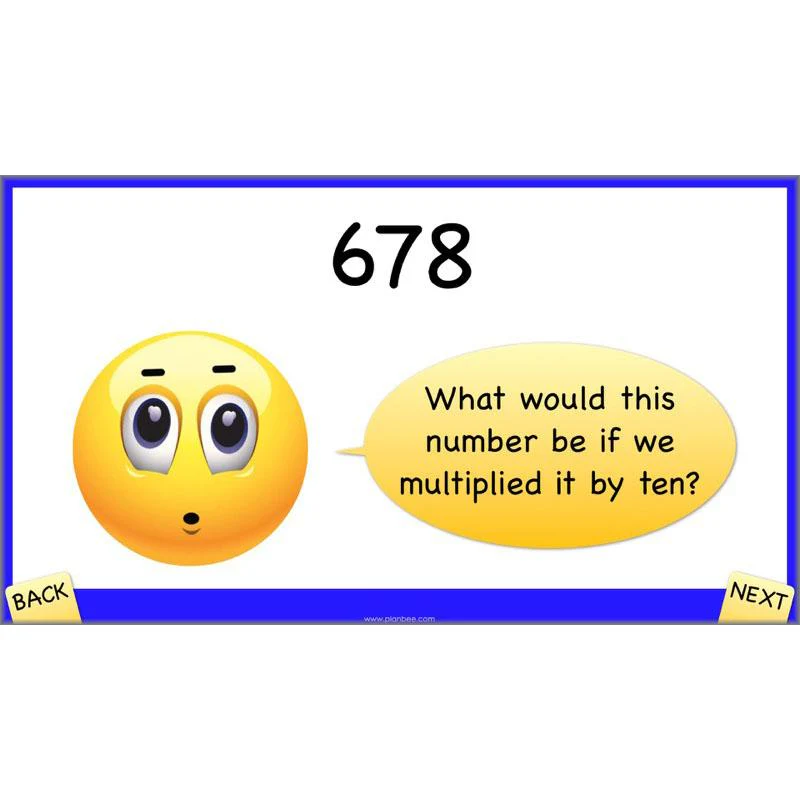
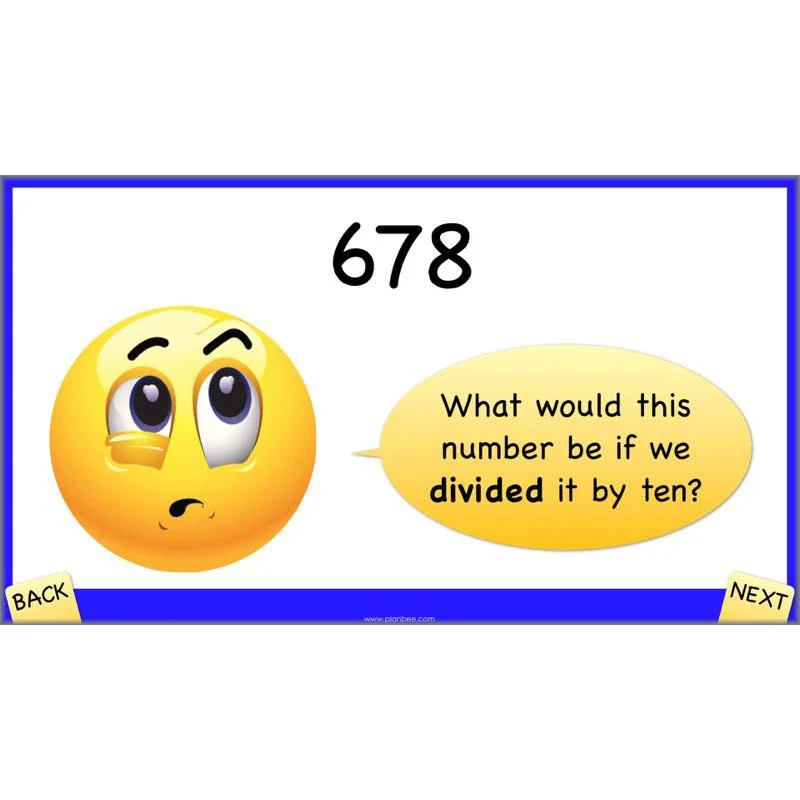
Build on your pupils' growing knowledge of the effects of multiplying and dividing by 10 and 100.
This, the first of five lessons in 'Positive and Negative Numbers' for Year 5, recaps the effects of multiplying and dividing by 10 and 100. The included slides clearly explain how to do this and show how whole numbers between 1 and 10,000 are affected when multiplied or divided. Several example calculations are shown for children to practise and apply what they have learned.
Following the teaching input, there's a choice of differentiated learning activities—with printable PDF worksheets and resources—where children may work independently to consolidate their multiplying and dividing skills.
What's included:
- Lesson plan
- Slides
- Activity ideas
- Differentiated worksheets
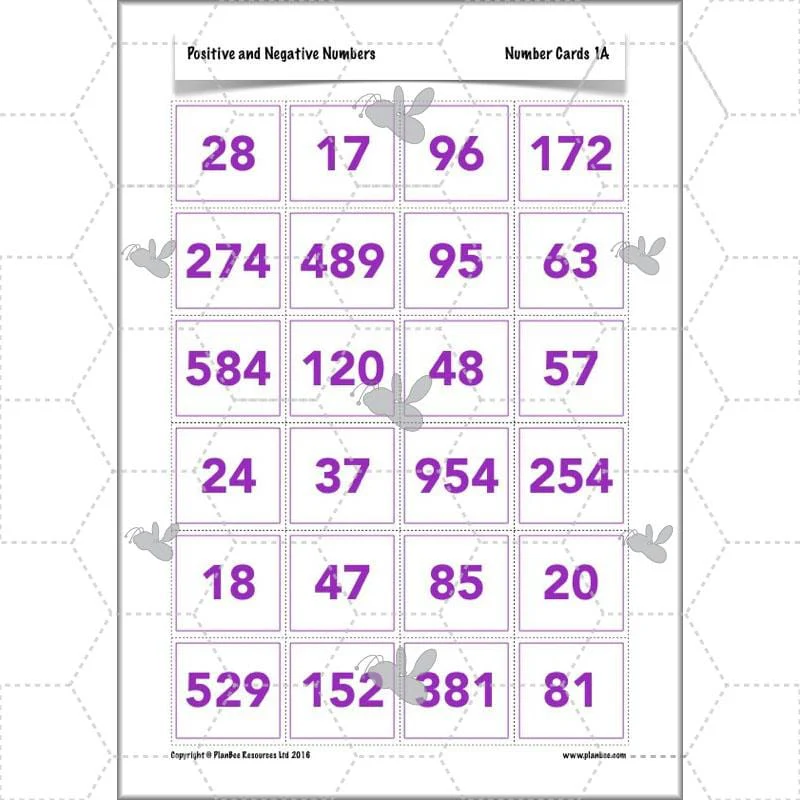
- Operation cards
- Number cards
Negative number lines counting backwards
Use negative number lines, and counting backwards through zero, to solve a variety of subtraction calculations where the second number is larger than the first.
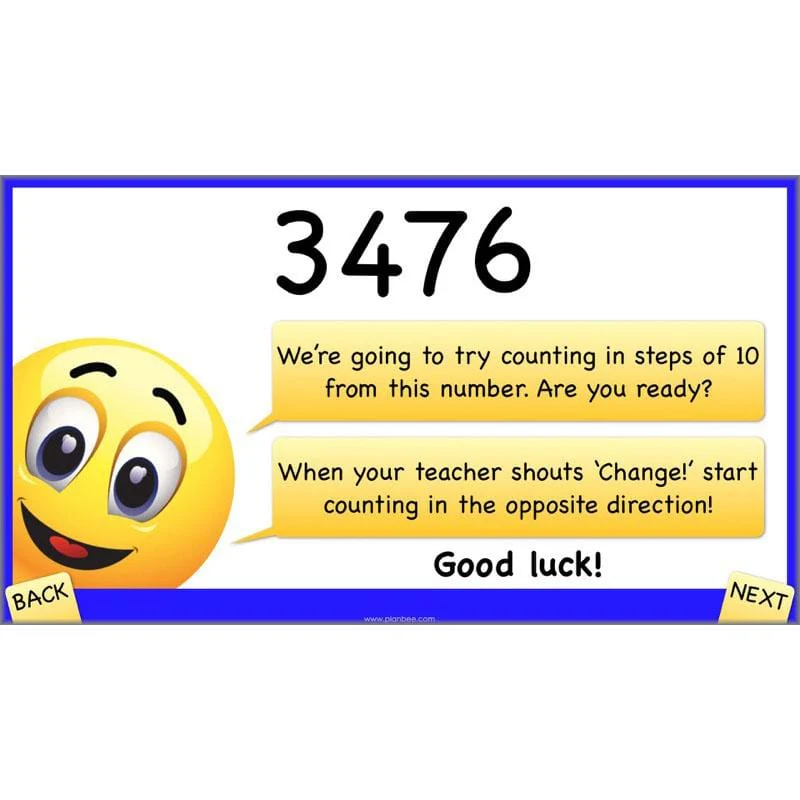
In this lesson—after recapping counting on and back in tens from a four-digit number—children are asked to consider what they already know about negative numbers and describe where they have seen them before. They'll then learn how to complete a subtraction calculation resulting in a negative number by counting backwards, using a negative and positive number line to help them.
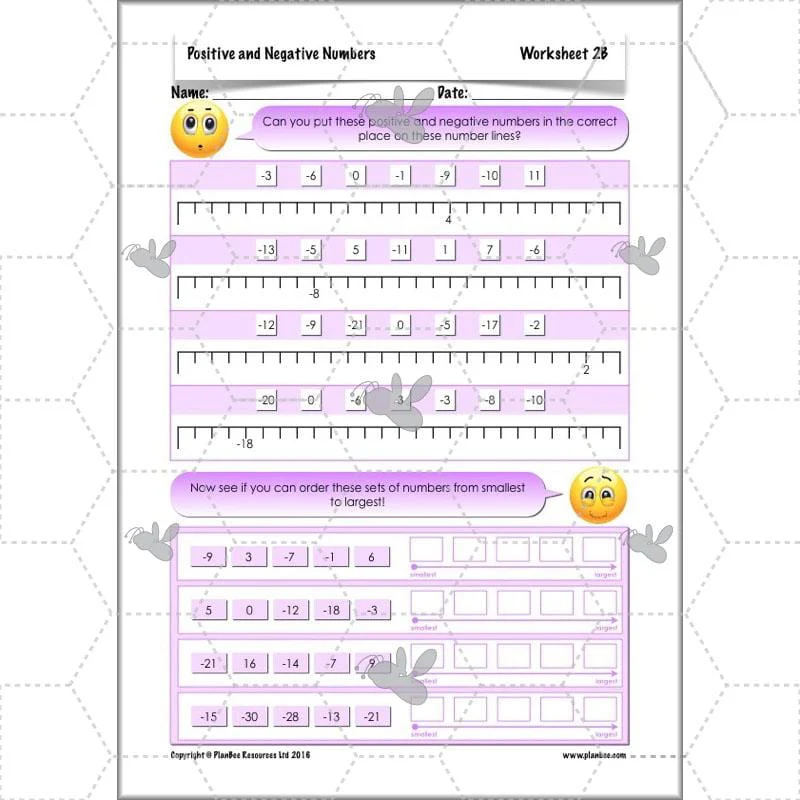
The included slides and detailed lesson plan with teaching input clearly explain how to do this type of calculation, and include several questions for children to attempt themselves. There's also a choice of differentiated learning activities and supporting resources where children can then practise subtraction calculations resulting in negative numbers, and have a go at ordering positive and negative numbers on a number line.
What's included:
- Lesson plan
- Slides
- Activity ideas
- Differentiated worksheets
Comparing and ordering negative numbers
Take a look at comparing and ordering negative numbers, including comparing them to positive numbers.
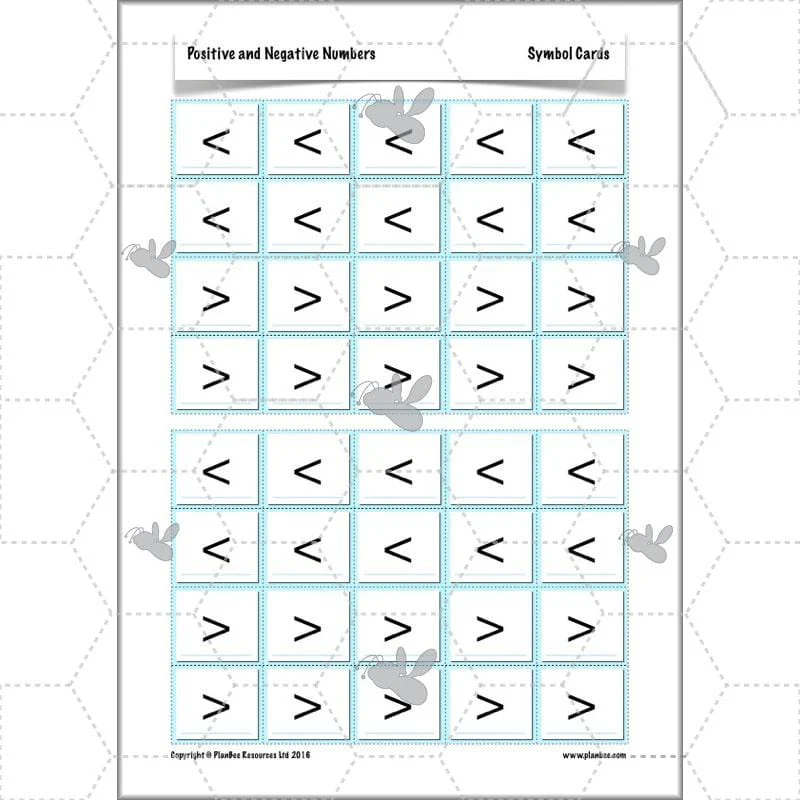
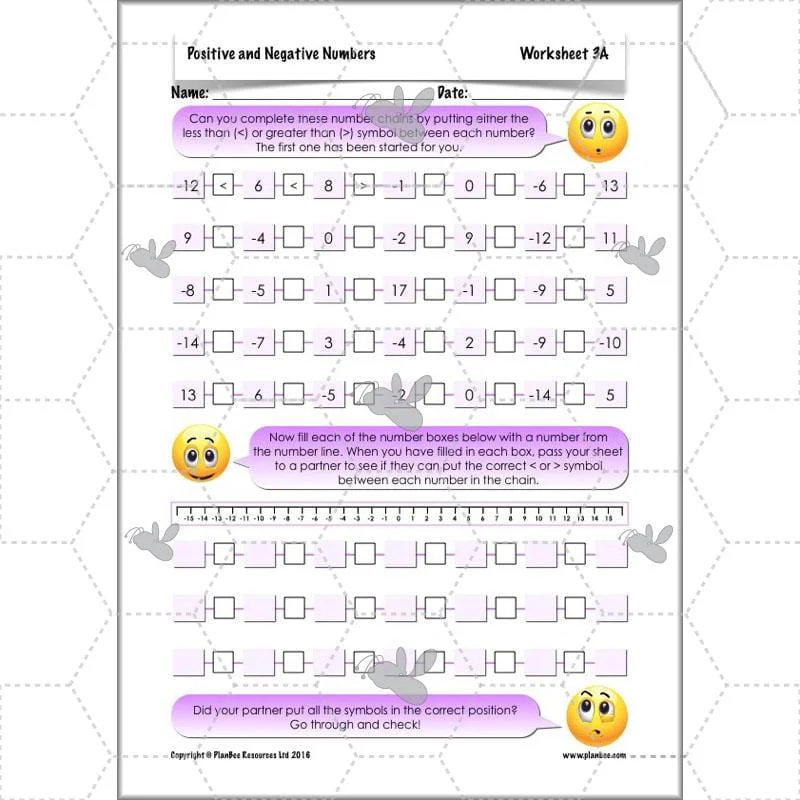
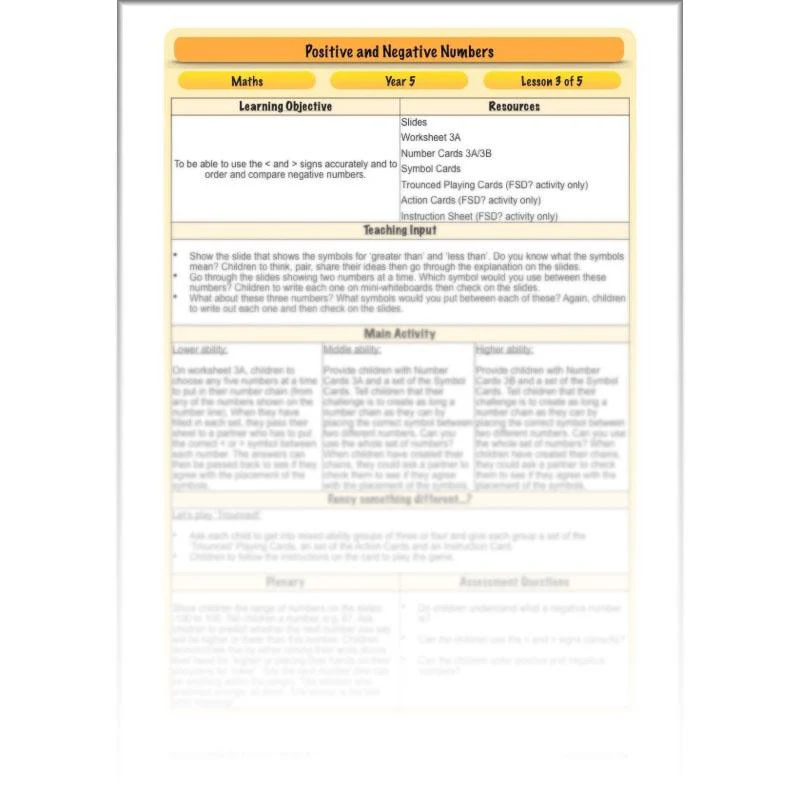
In this, the third of five lessons in 'Positive and Negative Numbers' for Year 5, children will learn how to apply their growing knowledge and understanding of negative numbers to compare and order them. The included slides explain how to use the greater than (>) and less than (<).
Following the teaching input, there's a choice of differentiated learning activities included, where children may practise their skills of comparing and ordering negative numbers.
What's included:
- Lesson plan
- Slides
- Activity ideas
- Worksheet
- Number cards
- Symbol cards
- Trounced playing cards
- Action cards
- Instruction sheet
Tricky Temperatures, Negative Numbers
Take a close look at negative numbers in the context of average temperatures in various cities, worldwide.
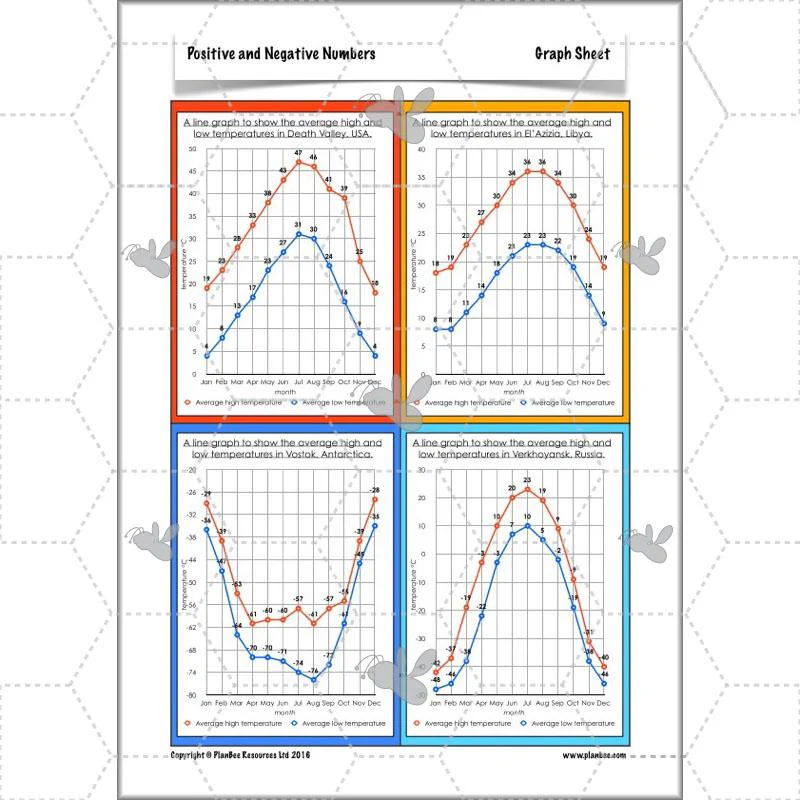
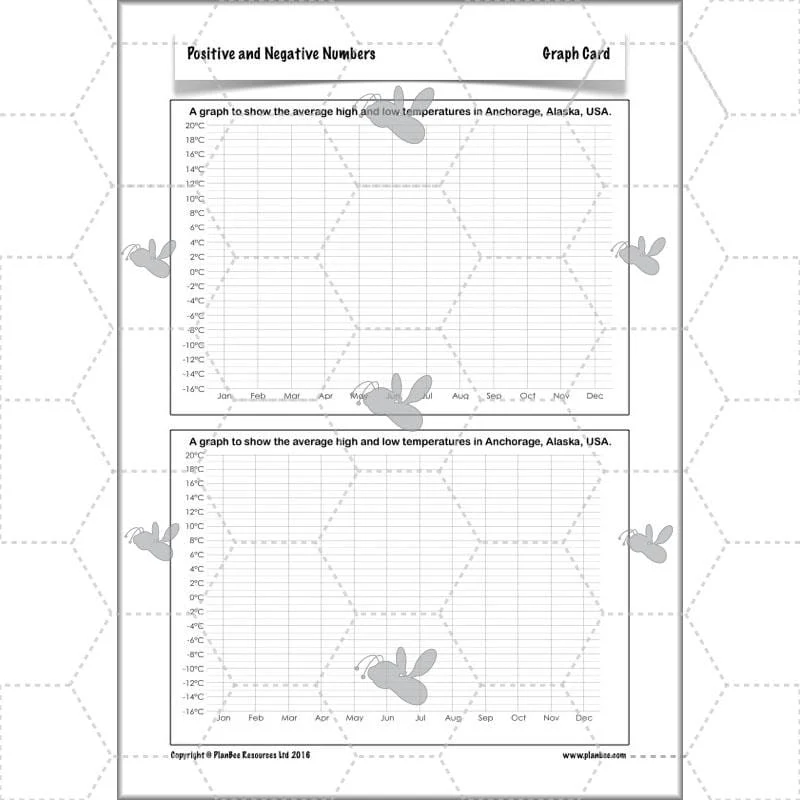
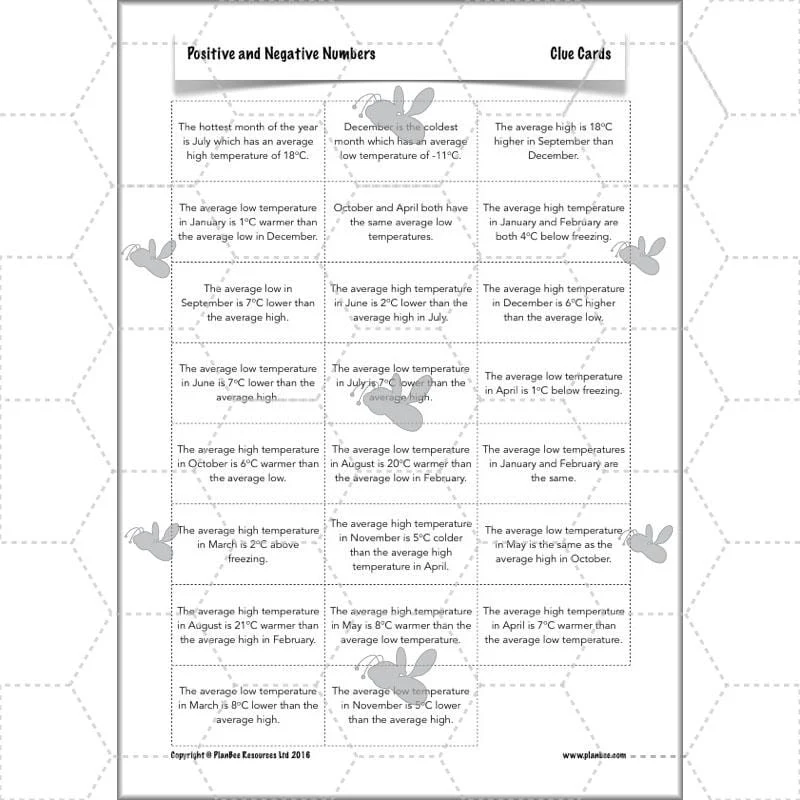
In this, the fourth of five lessons in 'Positive and Negative Numbers' for Year 5, children will firstly warm up by counting on and back in steps of 100 from a five-digit number. After that, they'll look at negative numbers in the context of temperature. They will use line graphs showing the average low and high temperatures for several different cities worldwide, then ask and answer questions about the data they have been shown.
A number of the questions shown on the included slides involve calculating with negative numbers, as do the questions and calculations included on the differentiated negative numbers temperature worksheets. A range of other printable PDF resources are also included to help children get to grips with tricky temperatures and negative numbers.
What's included:
- Lesson plan
- Slides
- Activity ideas
- Differentiated worksheets
- Graph sheet
- Clue cards
- Graph cards
Adding and subtracting into negative numbers
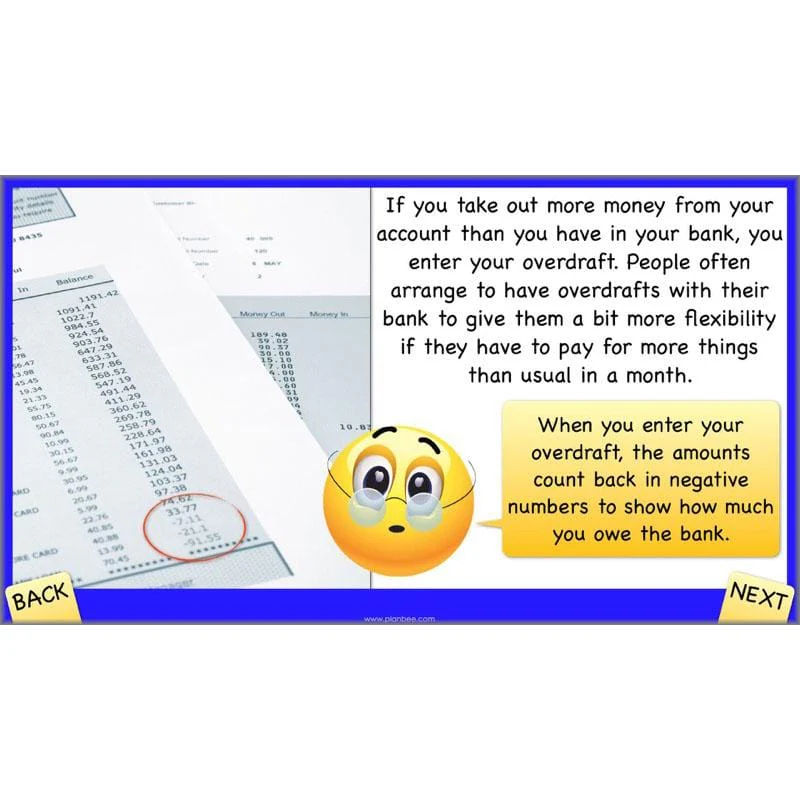
Practise adding and subtracting resulting in negative numbers in the context of bank account overdrafts.
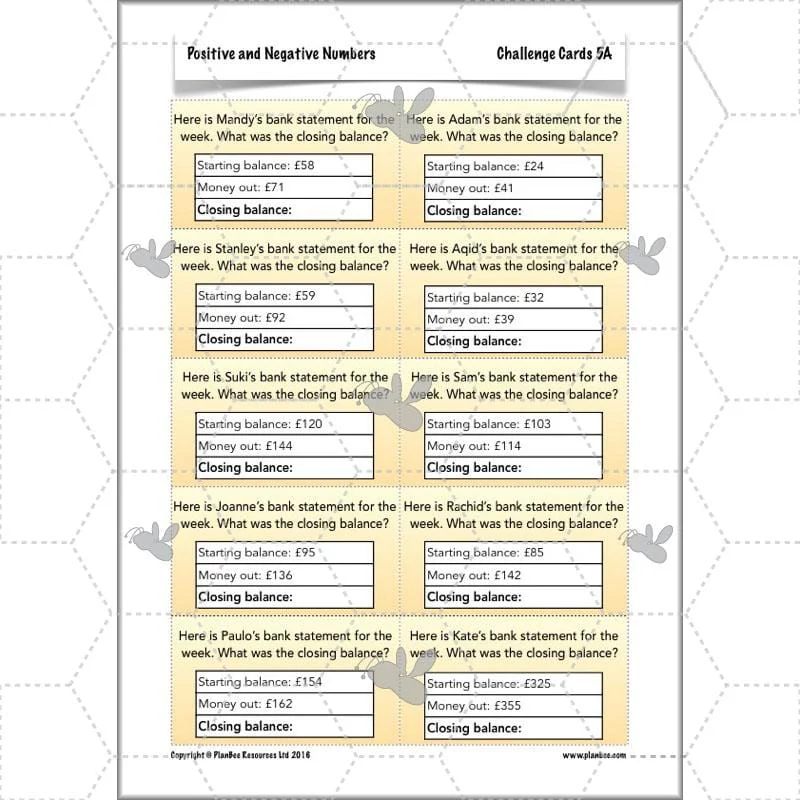
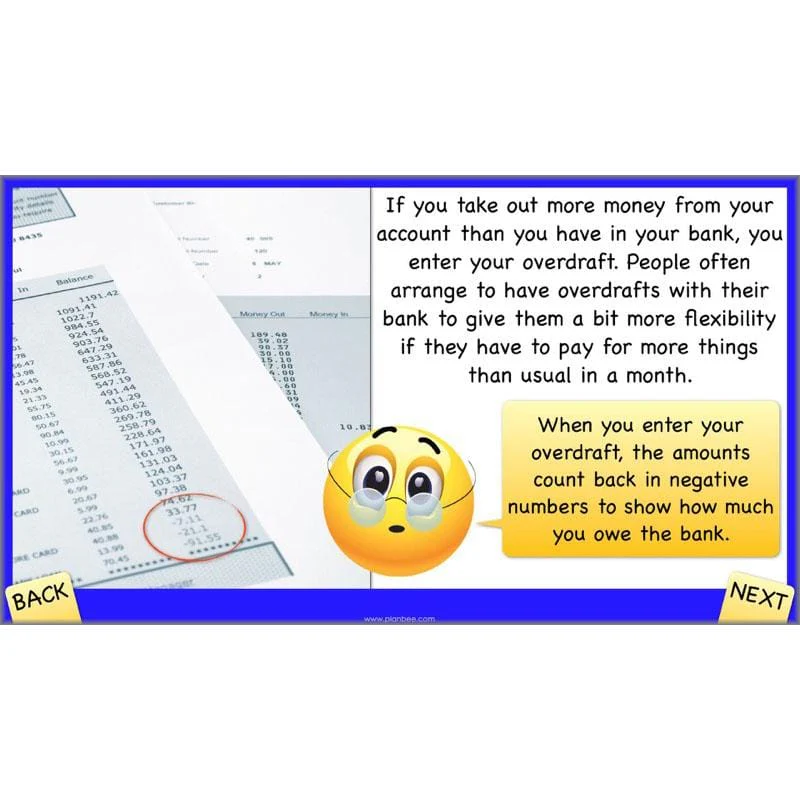
Having looked at ways of comparing and ordering positive and negative numbers, and at how adding and subtracting can result in negative numbers in the previous four lessons of 'Positive and Negative Numbers', this lesson gives children the opportunity to show what they have learnt. With the included slides, they will learn exactly what an overdraft is before using number lines to help them work out balances when they are given a starting amount of money, and the amount spent.
Starting with easier questions for all learners, the main input and differentiated learning activities also include more challenging questions which are sure to challenge even the most confident mathematicians in your class. This lesson planning pack also includes a range of printable resources to support learning, including adding and subtracting negative numbers worksheets and a range of activity cards.
What's included:
- Lesson plan
- Slides
- Activity ideas
- Money cards
- Number line sheet
- Differentiated worksheets
- Bank balance cards
Original: $4.65
-65%$4.65
$1.63

























Description
Teach children how to order and compare positive and negative numbers and explain the rules for adding and subtracting negative numbers.
With the slides, worksheets and activities included in this five-lesson scheme of work for Year 5 are ideal for introducing negative numbers in KS2. Teach your class the difference between numbers above and below zero, and give them lots of real-life examples to consider such as temperature and overdrafts.
Each of the five lessons in 'Positive and Negative Numbers' includes a detailed lesson plan with a teaching input to accompany a slide show presentation, plus differentiated activities, worksheets and a range of printable PDF resources to help children interpret negative numbers in context and solve a variety of calculations and problems.
Multiplying and dividing by 10 and 100
Build on your pupils' growing knowledge of the effects of multiplying and dividing by 10 and 100.
This, the first of five lessons in 'Positive and Negative Numbers' for Year 5, recaps the effects of multiplying and dividing by 10 and 100. The included slides clearly explain how to do this and show how whole numbers between 1 and 10,000 are affected when multiplied or divided. Several example calculations are shown for children to practise and apply what they have learned.
Following the teaching input, there's a choice of differentiated learning activities—with printable PDF worksheets and resources—where children may work independently to consolidate their multiplying and dividing skills.
What's included:
- Lesson plan
- Slides
- Activity ideas
- Differentiated worksheets
- Operation cards
- Number cards
Negative number lines counting backwards
Use negative number lines, and counting backwards through zero, to solve a variety of subtraction calculations where the second number is larger than the first.
In this lesson—after recapping counting on and back in tens from a four-digit number—children are asked to consider what they already know about negative numbers and describe where they have seen them before. They'll then learn how to complete a subtraction calculation resulting in a negative number by counting backwards, using a negative and positive number line to help them.
The included slides and detailed lesson plan with teaching input clearly explain how to do this type of calculation, and include several questions for children to attempt themselves. There's also a choice of differentiated learning activities and supporting resources where children can then practise subtraction calculations resulting in negative numbers, and have a go at ordering positive and negative numbers on a number line.
What's included:
- Lesson plan
- Slides
- Activity ideas
- Differentiated worksheets
Comparing and ordering negative numbers
Take a look at comparing and ordering negative numbers, including comparing them to positive numbers.
In this, the third of five lessons in 'Positive and Negative Numbers' for Year 5, children will learn how to apply their growing knowledge and understanding of negative numbers to compare and order them. The included slides explain how to use the greater than (>) and less than (<).
Following the teaching input, there's a choice of differentiated learning activities included, where children may practise their skills of comparing and ordering negative numbers.
What's included:
- Lesson plan
- Slides
- Activity ideas
- Worksheet
- Number cards
- Symbol cards
- Trounced playing cards
- Action cards
- Instruction sheet
Tricky Temperatures, Negative Numbers
Take a close look at negative numbers in the context of average temperatures in various cities, worldwide.
In this, the fourth of five lessons in 'Positive and Negative Numbers' for Year 5, children will firstly warm up by counting on and back in steps of 100 from a five-digit number. After that, they'll look at negative numbers in the context of temperature. They will use line graphs showing the average low and high temperatures for several different cities worldwide, then ask and answer questions about the data they have been shown.
A number of the questions shown on the included slides involve calculating with negative numbers, as do the questions and calculations included on the differentiated negative numbers temperature worksheets. A range of other printable PDF resources are also included to help children get to grips with tricky temperatures and negative numbers.
What's included:
- Lesson plan
- Slides
- Activity ideas
- Differentiated worksheets
- Graph sheet
- Clue cards
- Graph cards
Adding and subtracting into negative numbers
Practise adding and subtracting resulting in negative numbers in the context of bank account overdrafts.
Having looked at ways of comparing and ordering positive and negative numbers, and at how adding and subtracting can result in negative numbers in the previous four lessons of 'Positive and Negative Numbers', this lesson gives children the opportunity to show what they have learnt. With the included slides, they will learn exactly what an overdraft is before using number lines to help them work out balances when they are given a starting amount of money, and the amount spent.
Starting with easier questions for all learners, the main input and differentiated learning activities also include more challenging questions which are sure to challenge even the most confident mathematicians in your class. This lesson planning pack also includes a range of printable resources to support learning, including adding and subtracting negative numbers worksheets and a range of activity cards.
What's included:
- Lesson plan
- Slides
- Activity ideas
- Money cards
- Number line sheet
- Differentiated worksheets
- Bank balance cards