States of Matter
These Year 4 States of Matter Science lessons for KS2 are the perfect way to teach your class about the differences between solids, liquids and gases, and how different materials can change state. Your Year 4 class will have plenty of opportunities to undertake practical experiments to help them understand the processes of evaporation and condensation, and the water cycle, as well as having the chance to express their understanding in a variety of ways.
With lesson plans, slides, activity ideas, differentiated worksheets and loads more helpful resources, this Year 4 States of Matter scheme of work provides everything you need teach them all the solids, liquids and gases KS2 objectives they need to know!
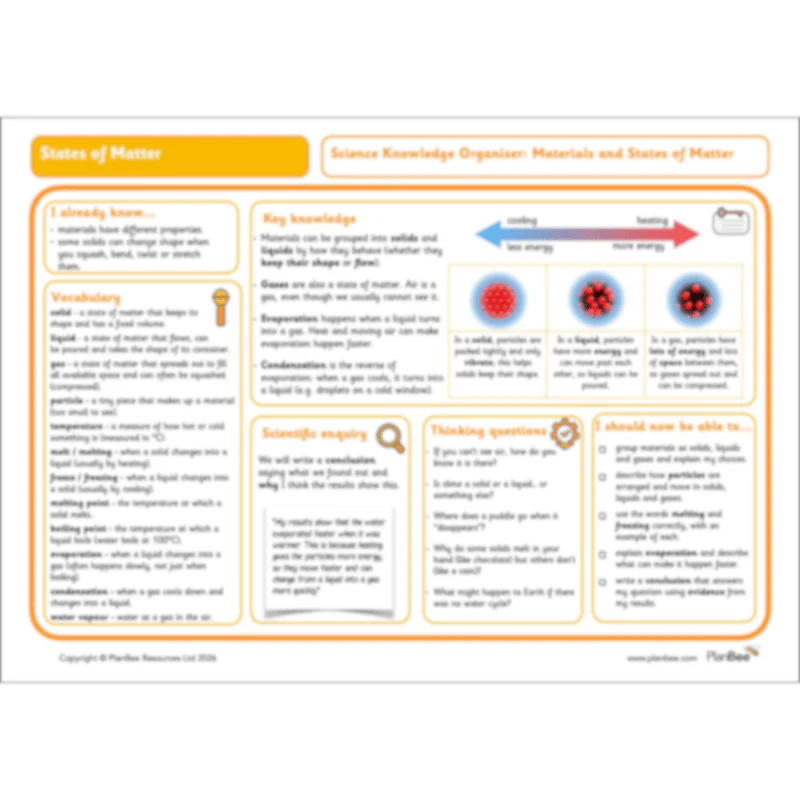
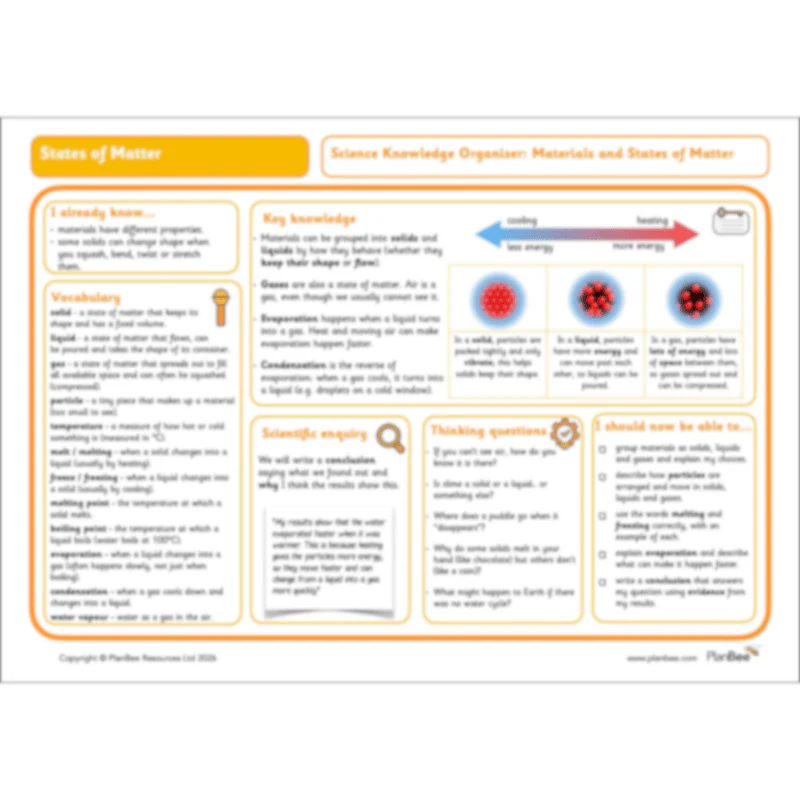
A Knowledge Organiser is included within the complete series download, or is available to purchase separately.
Solids and Liquids
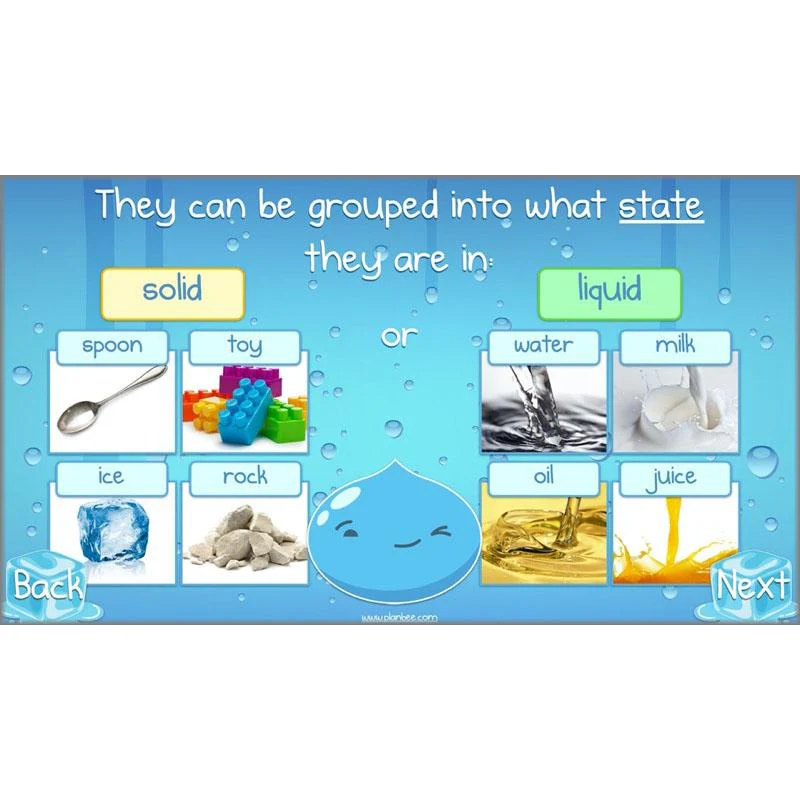
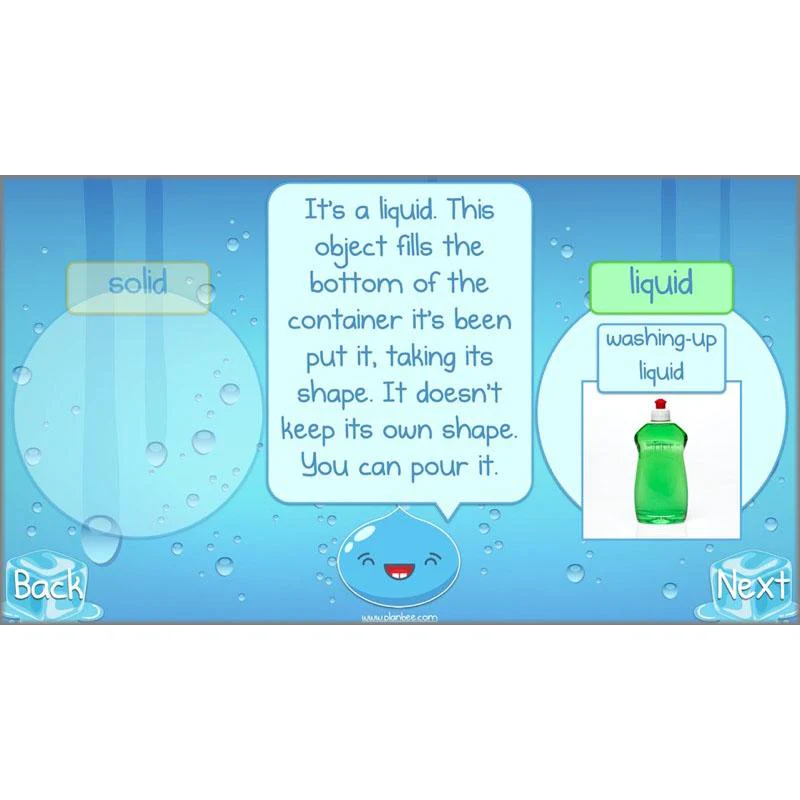
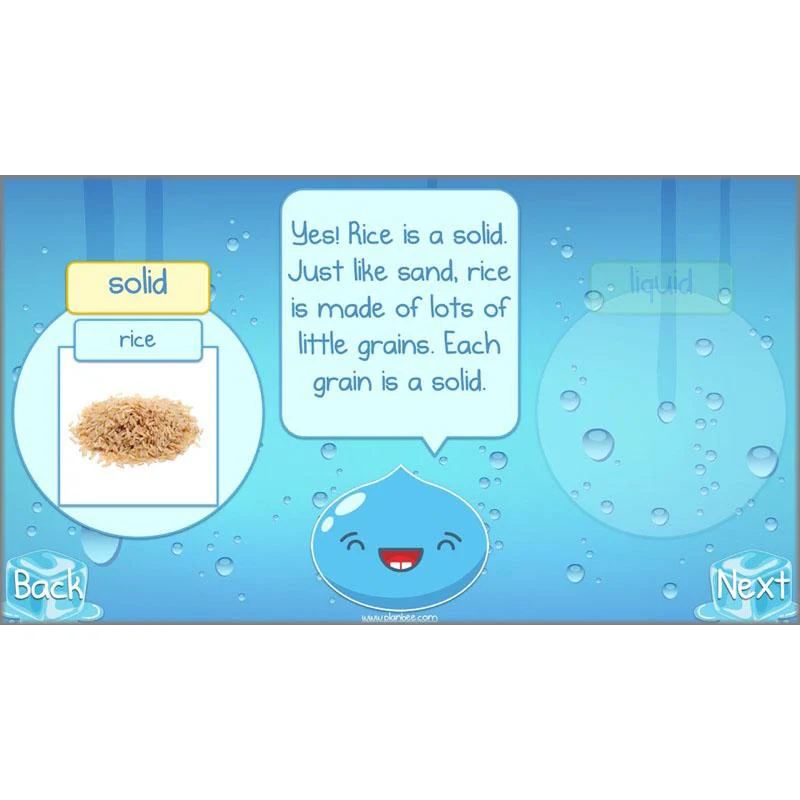
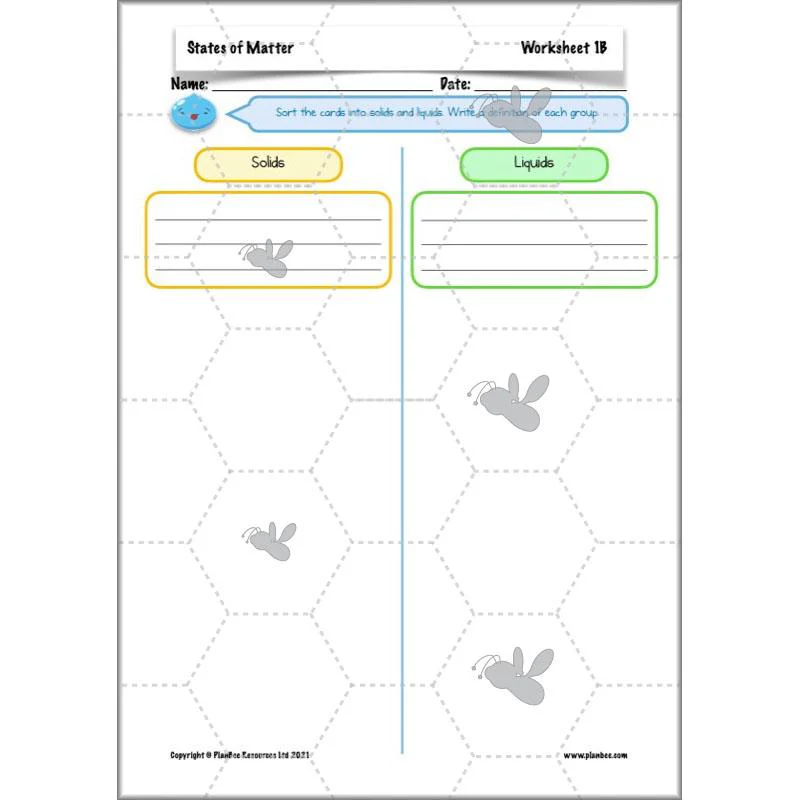
The first lesson in this series takes a look at solids and liquids and the differences between them. Your class will identify and group a variety of objects depending on whether they are a solid or a liquid, as well as considering whether objects which can be poured, such as sand or rice, are solids or liquids.
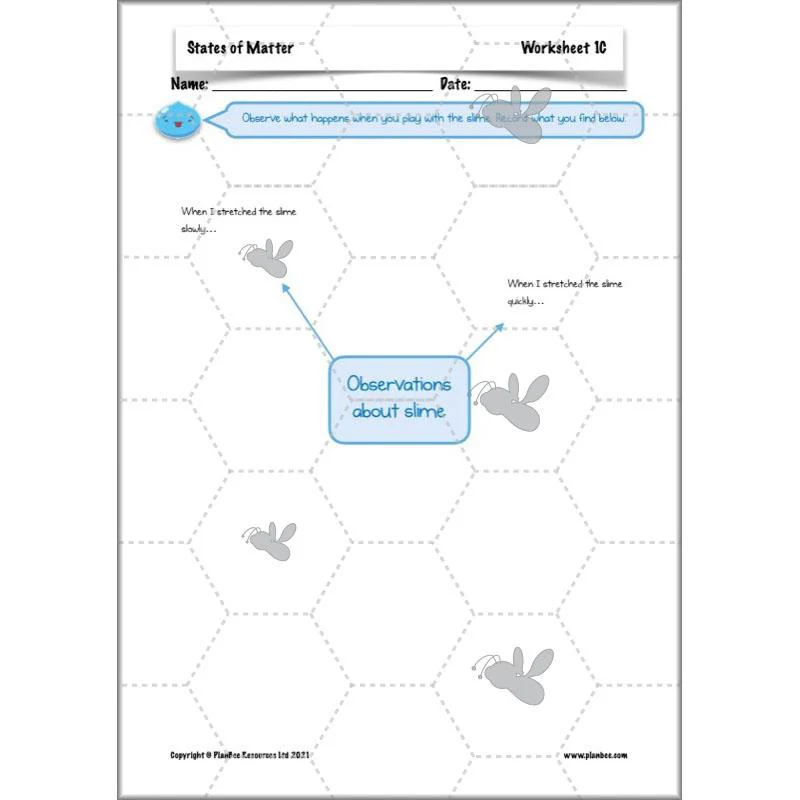
Alternatively, have your more confident class members investigate slime. Is it a solid or a liquid? Challenge them to make careful observations as they manipulate this non-Newtonian fluid and describe what they see.
What's included:
- Lesson plan
- Slides
- Activity ideas
- Object cards
- Differentiated sorting cards
- Differentiated worksheets
- Slime recipe cards
- Challenge cards
View Lesson 1
Properties of Gases
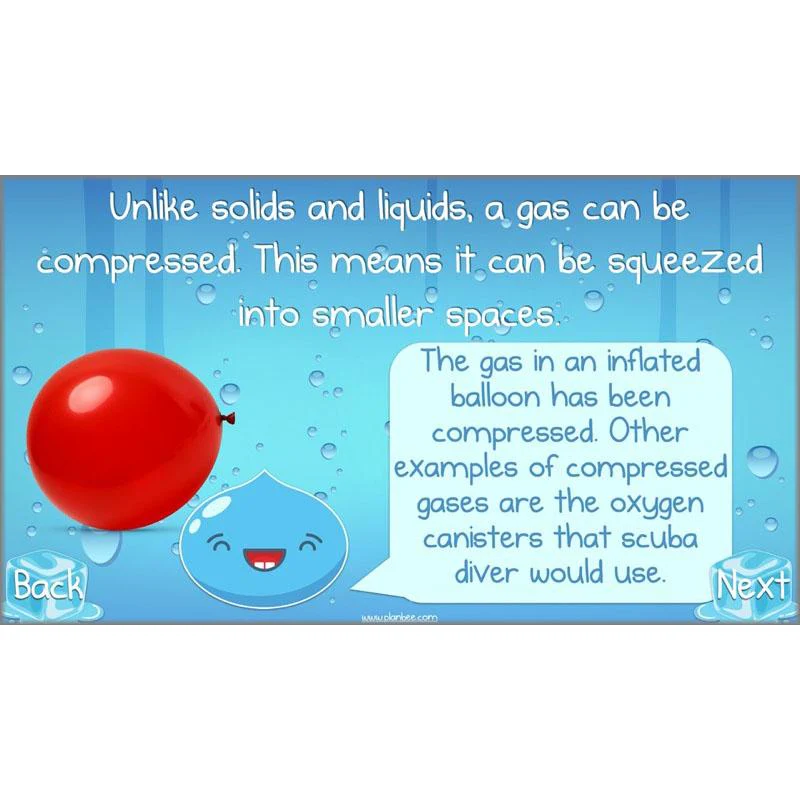
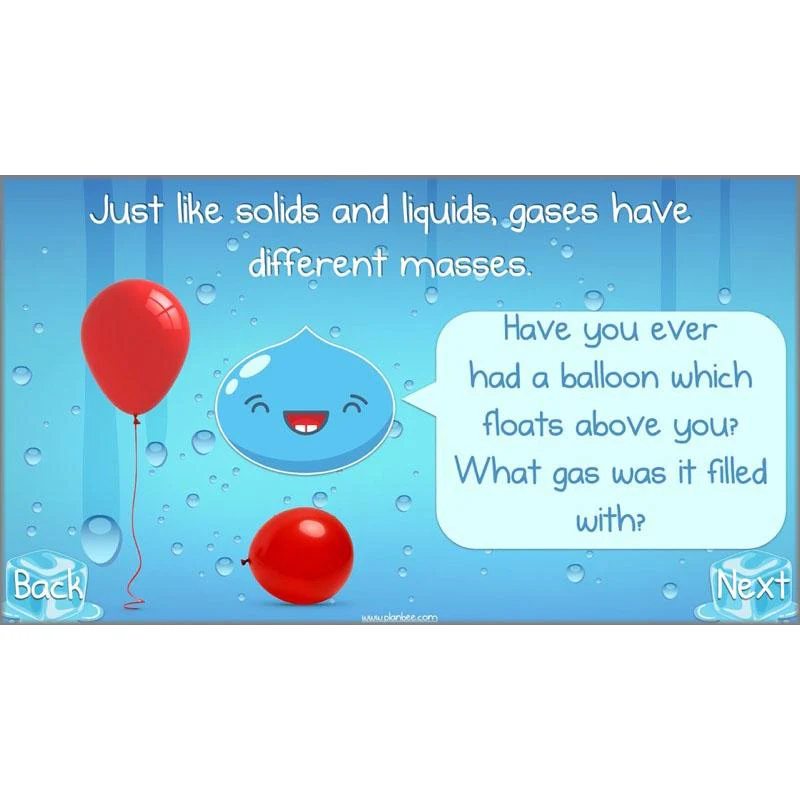
Explore gases and how they are different to solids and liquids. Discuss how gases fill all the available space around them and investigate this using sponges. Lead the discussion on to talking about gases and if they have mass. How can this make gases useful? The lesson input shows gases such as helium and CO2 and how their masses change the way a balloon behaves when inflated with these gases.
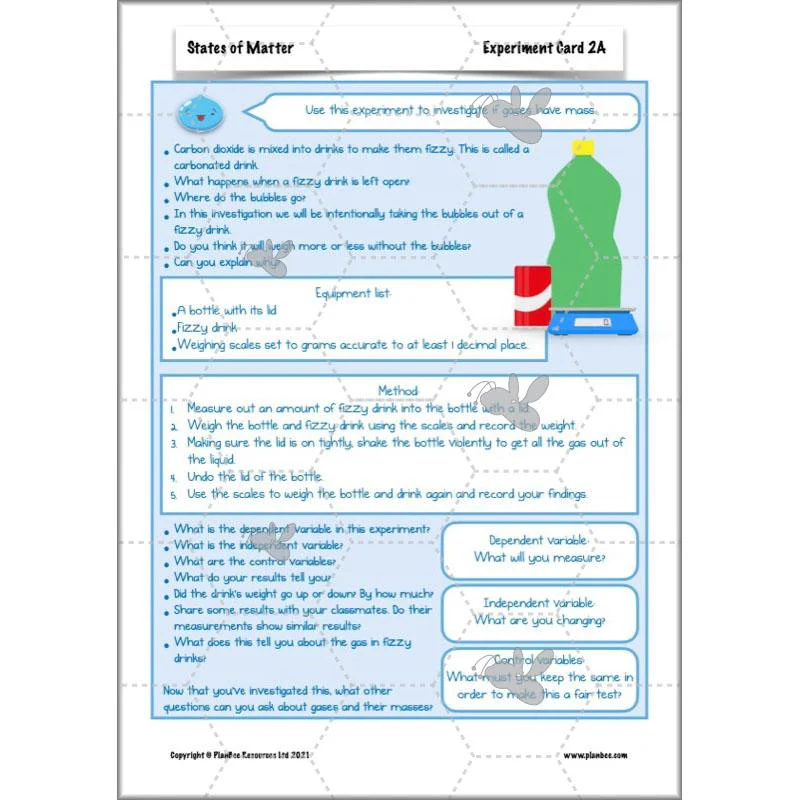
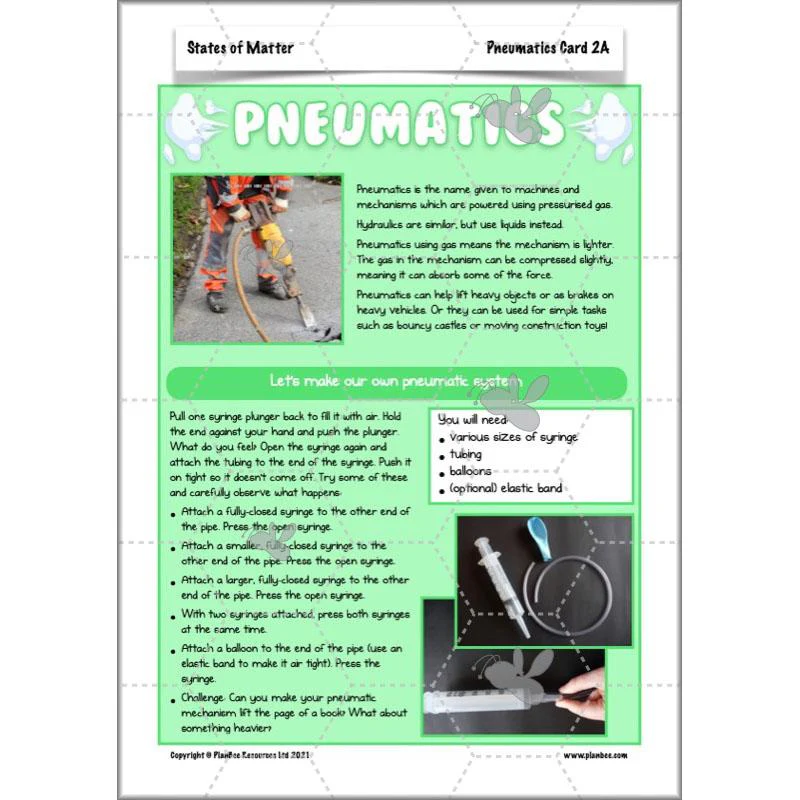
Conduct a practical experiment to find out if gases have mass using carbonated drinks. Your class are challenged to use their measuring skills to take accurate and careful measurements of the drink's weight. Alternatively, investigate pneumatic mechanisms using syringes and how gas can be used to create movement.
With differentiated worksheets, a detailed lesson plan and lesson input slides, this complete Year 4 Science lesson provides you with everything you need to teach an engaging and informative lesson about gases!
What's included:
- Lesson plan
- Slides
- Activity ideas
- Experiment card
- Differentiated worksheets
- Pneumatics card
View Lesson 2
Melting and Freezing
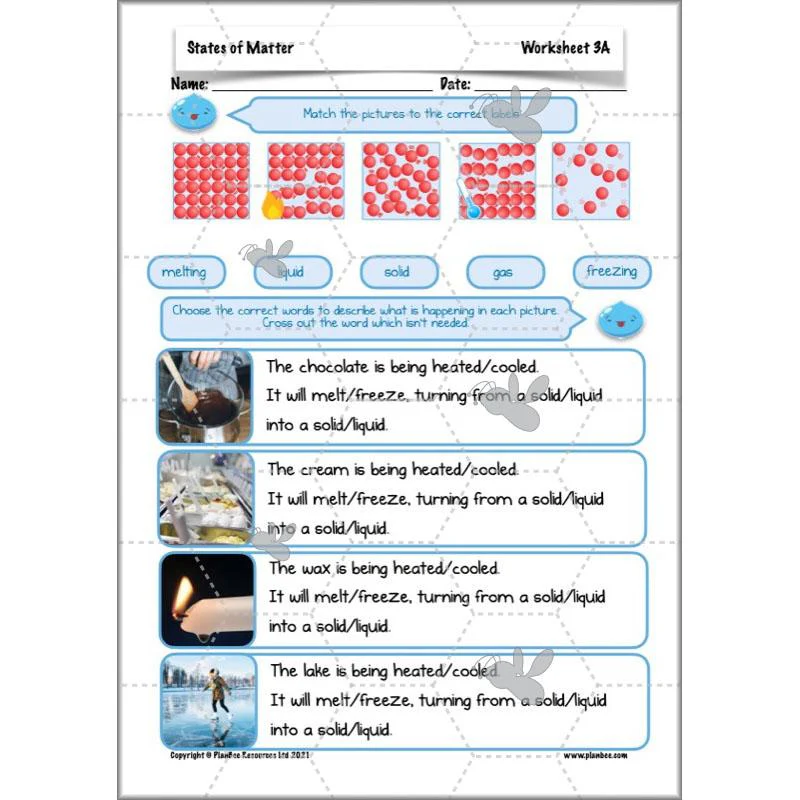
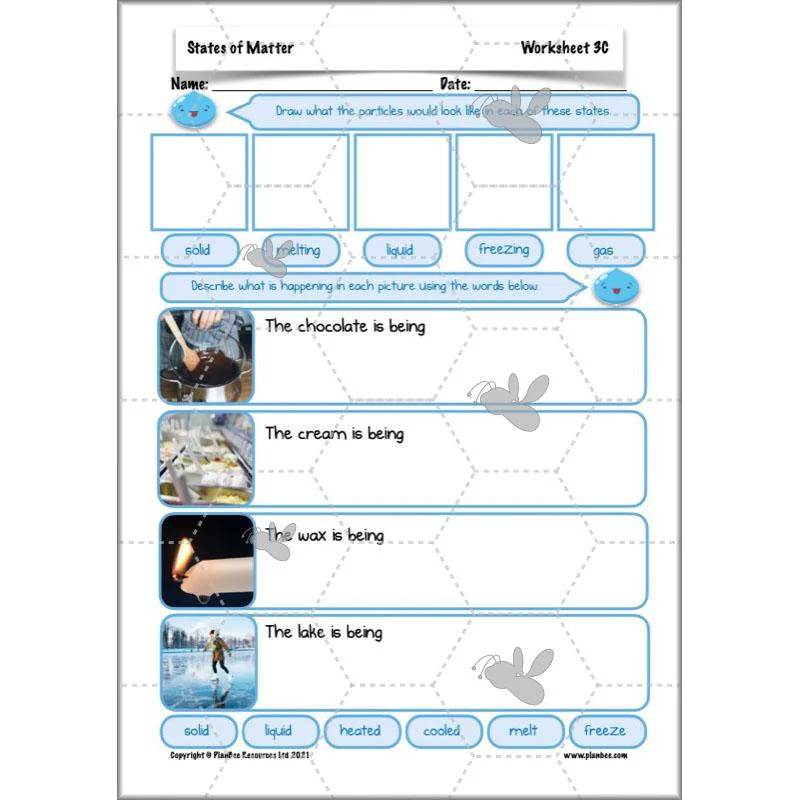
In this lesson the children will look closely at how the particles in solids, liquids and gases behave and how this affects the overall state of the material. They will then use this understanding to look at what happens when materials are heated and cooled. They will name these processes as melting and freezing and look at different circumstances that this may happen.
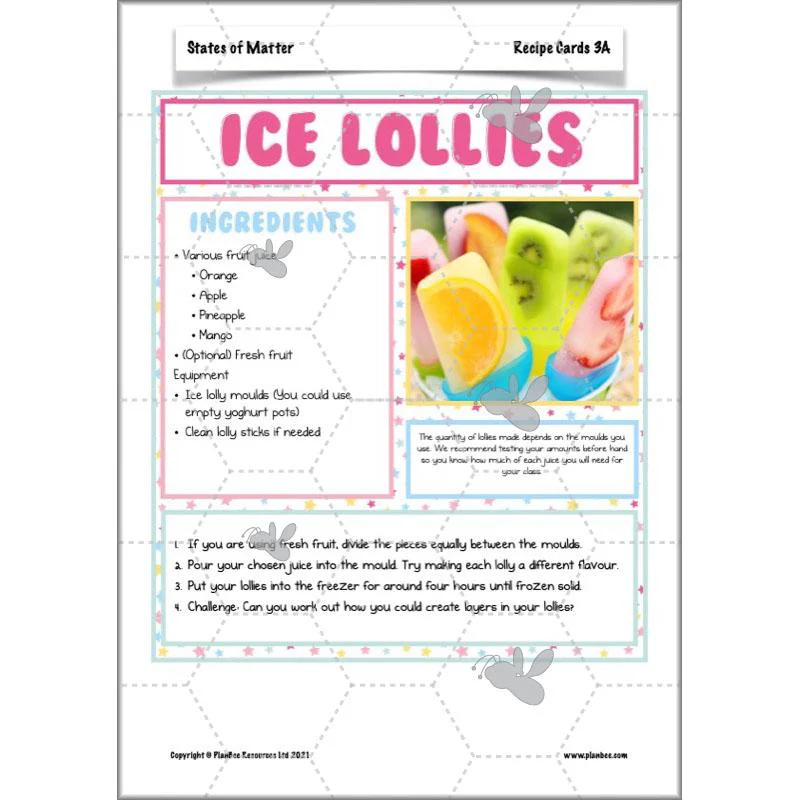
Why not use the recipes included in this lesson to create some party foods using melting and freezing!
With detailed lesson slides, a lesson plan and printable resources, this lesson pack gives you everything you'll need to teach a fun and engaging lesson on melting and freezing.
What's included:
- Lesson plan
- Slides
- Activity ideas
- Differentiated worksheets
- Recipe cards
- Party Cards
View Lesson 3
Melting Points
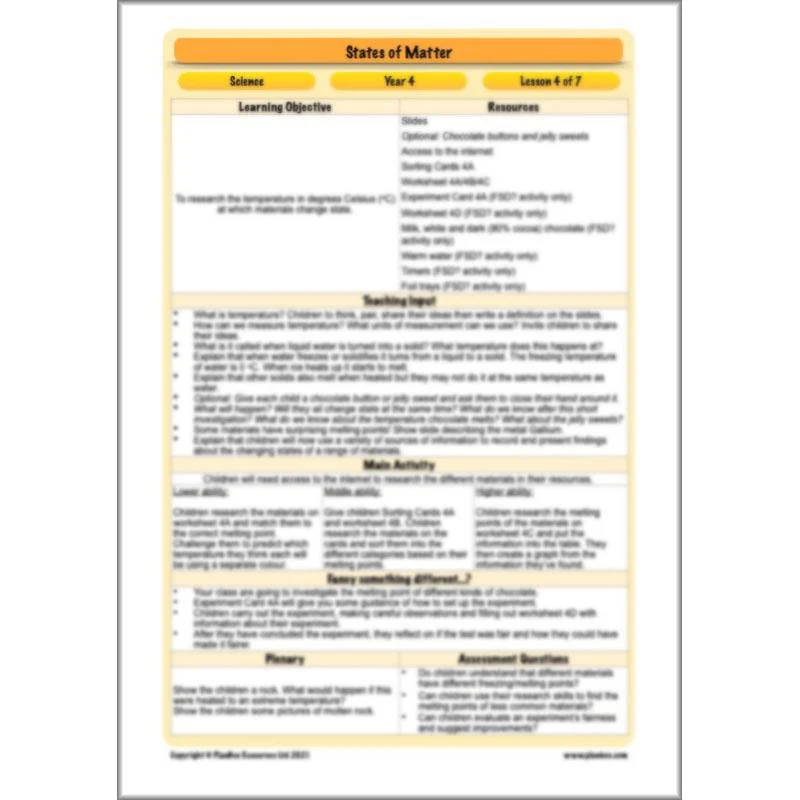
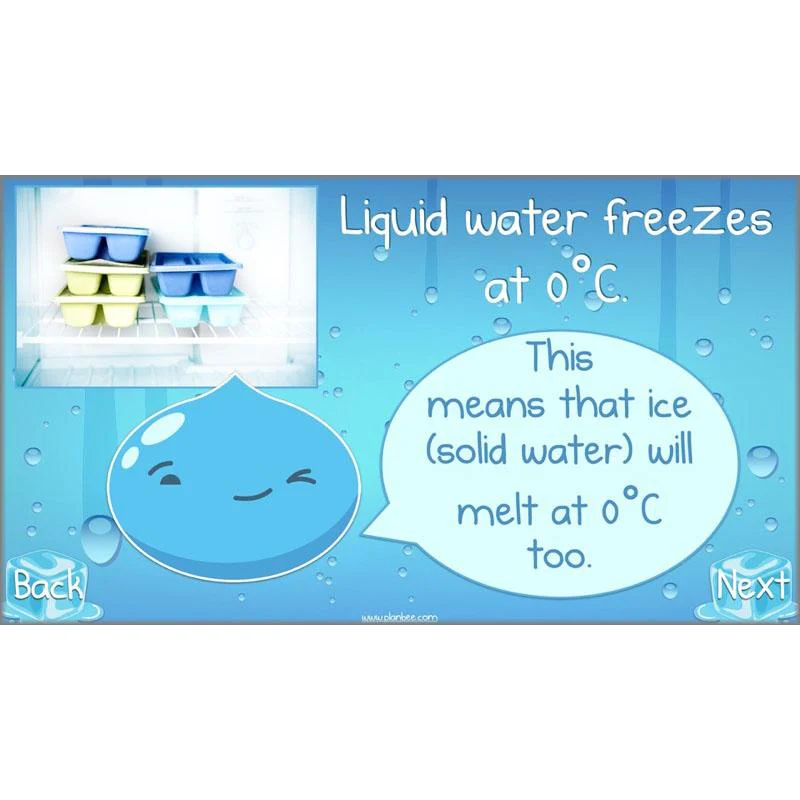
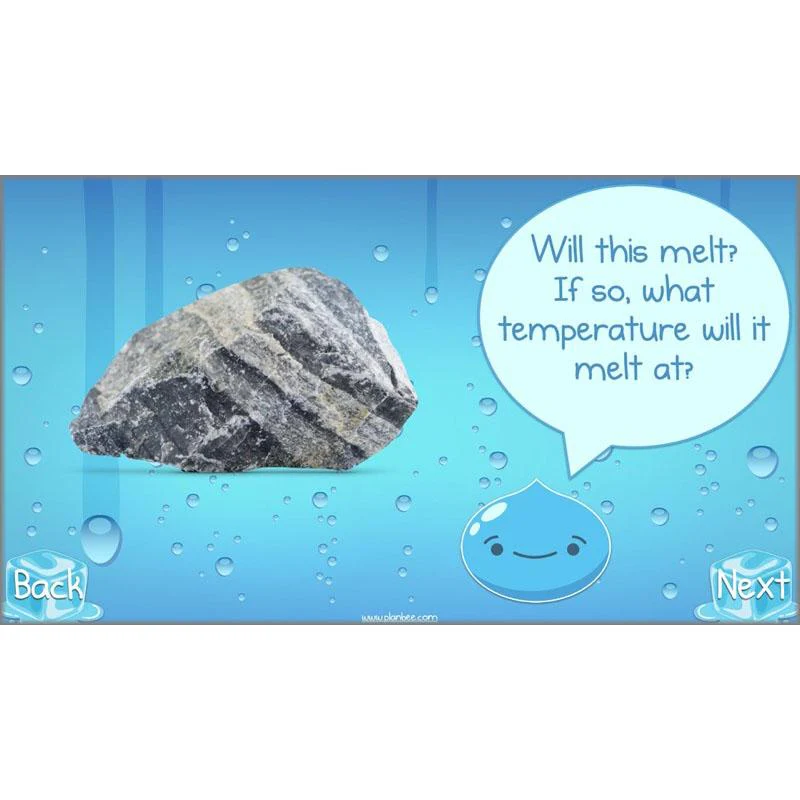
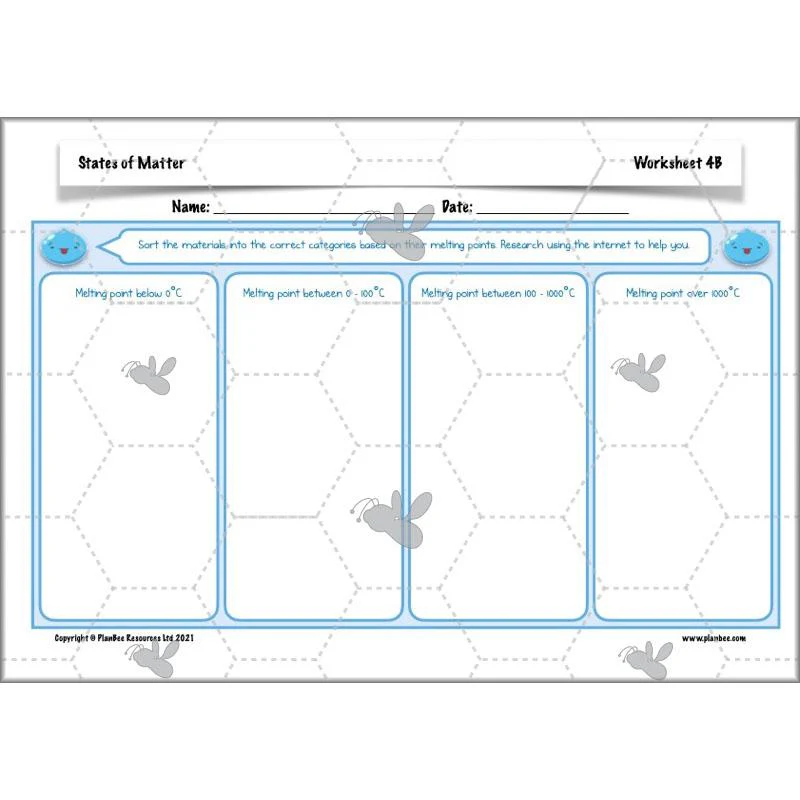
In this lesson the children will explore how different materials have different melting points, including some surprising metals! Challenge your Year 4 class to research and present information about melting points using their research skills.
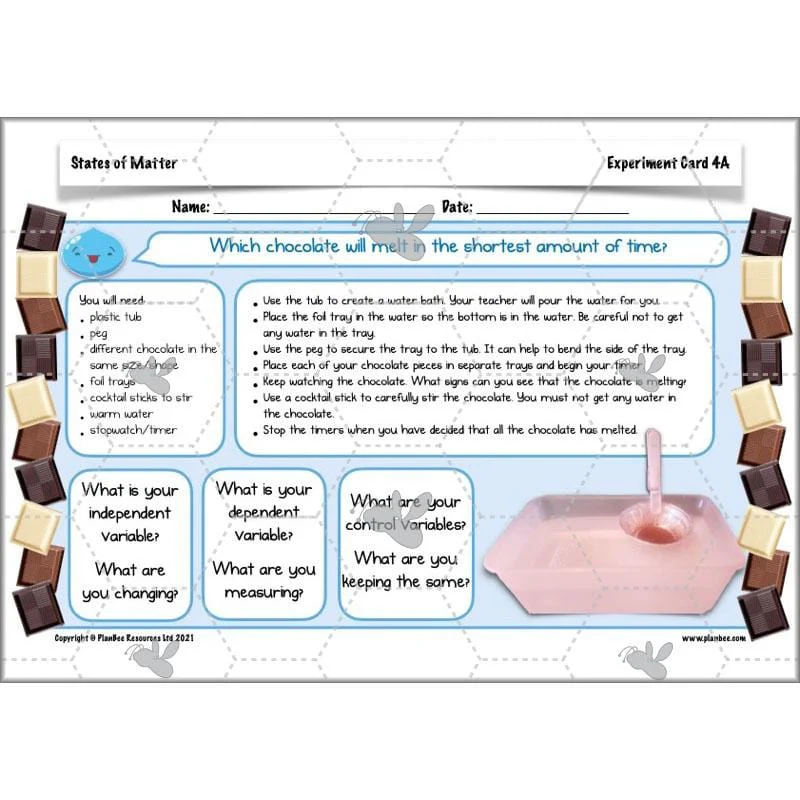
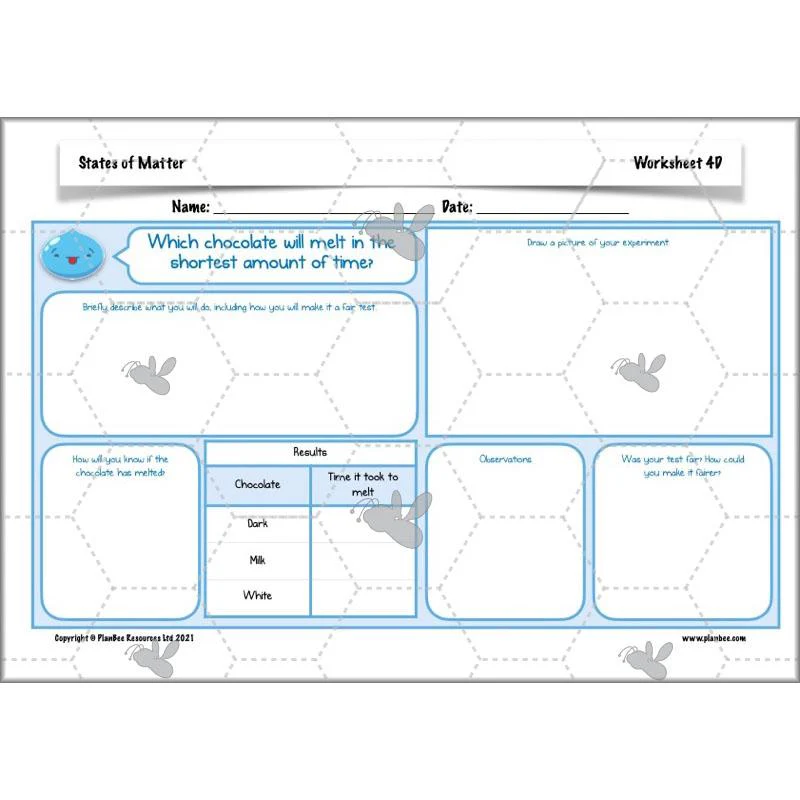
Alternatively, printable resources are provided to support your class in investigating the different melting points of different types of chocolate. Challenge them to make their own decisions about their fair testing and reflect on how they could improve the accuracy of their investigation next time.
This lesson pack comes with the lesson slides, plan and printable resources you'll need to teach an engaging lesson on melting points of different materials.
What's included:
- Lesson plan
- Slides
- Activity ideas
- Sorting cards
- Differentiated worksheets
- Experiment card
View Lesson 4
Evaporation
This lesson looks at the process of evaporation and how we can use this process in our everyday lives. They discuss different examples of evaporation we use and see such as drying laundry, sweat and hair dryers. This lesson looks at the differences between evaporation and boiling water and specifies the boiling point of water.
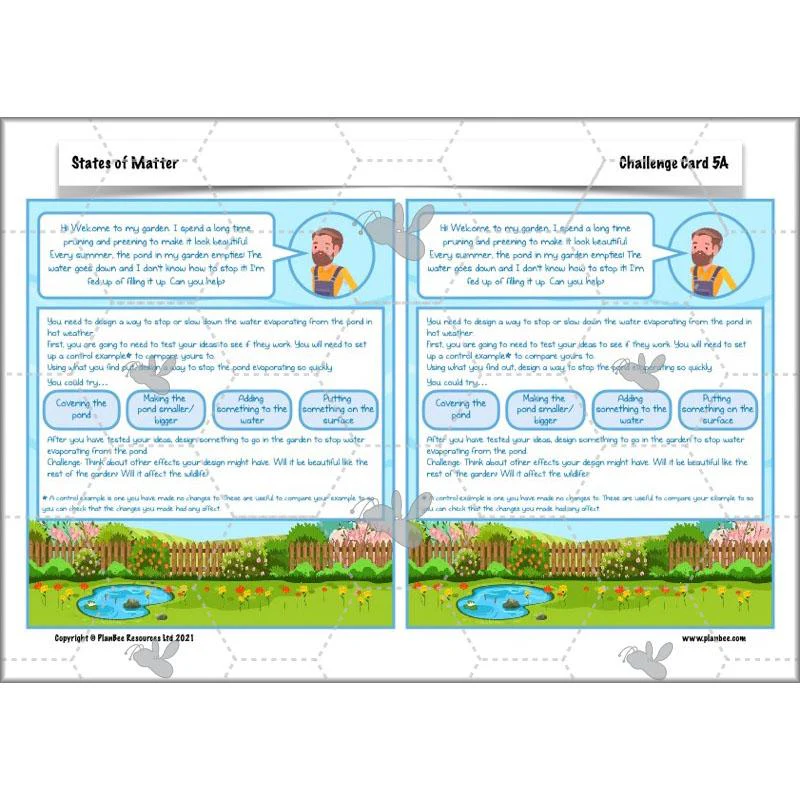
The children are challenged to investigate the effects of heat and air on the rate of evaporation in different circumstances, thinking carefully about their use of control variables in their investigation and how they can measure their dependent variable.
This lesson comes with differentiated activity ideas and all the printable resources you will need to support your class as they investigate the process of evaporation.
What's included:
- Lesson plan
- Slides
- Activity ideas
- Teacher notes
- Differentiated worksheets
- Challenge card
- Investigation planner
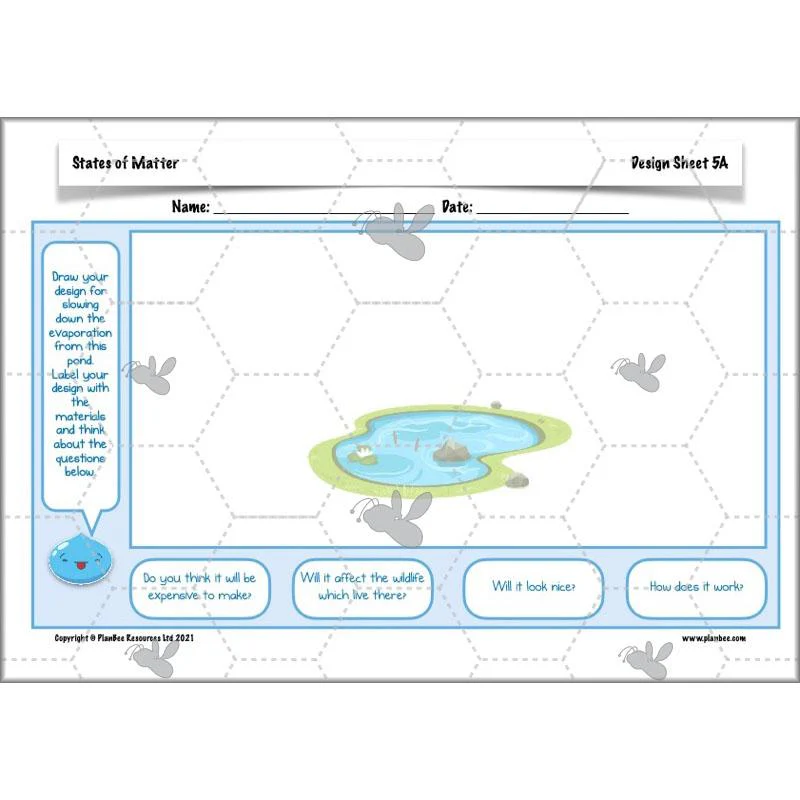
- Design sheet
View Lesson 5
Condensation
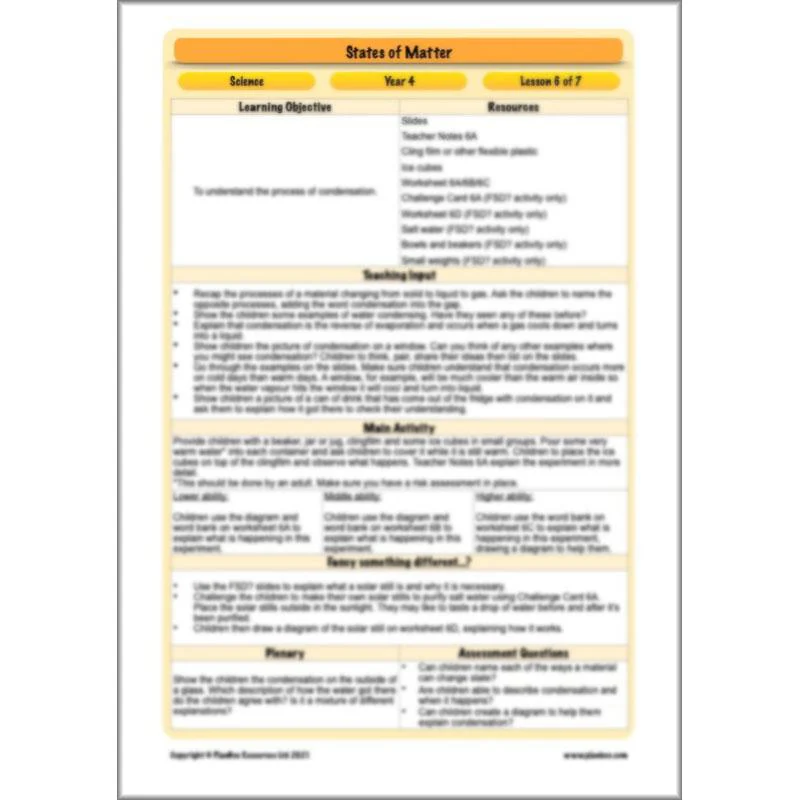
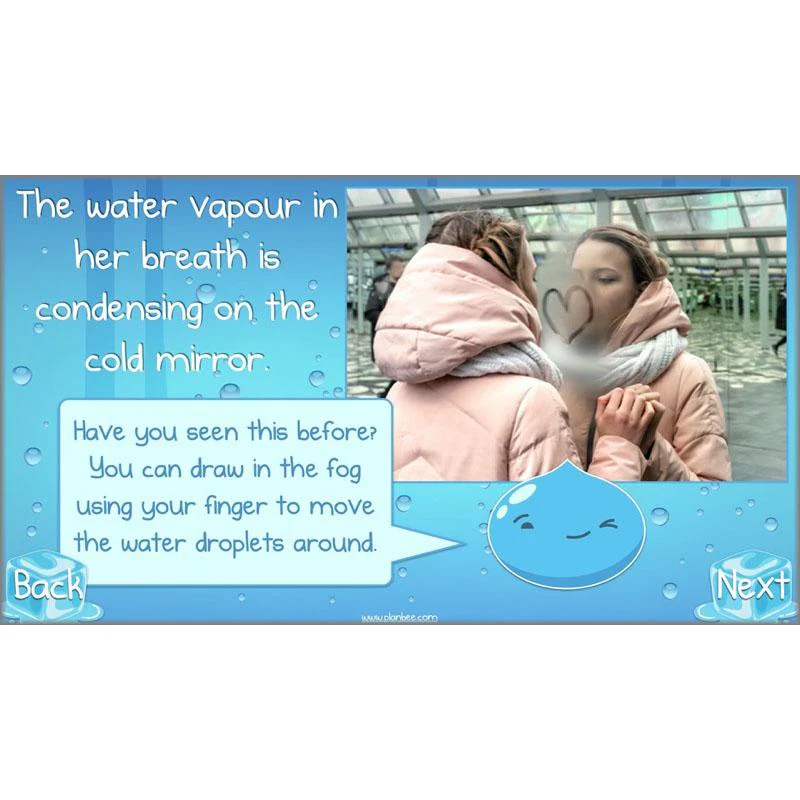
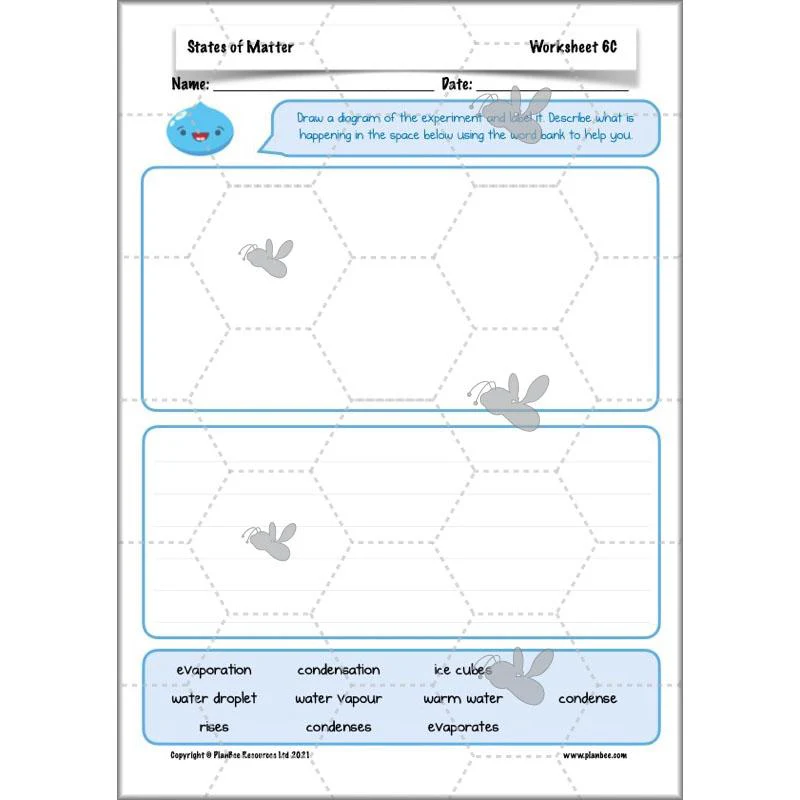
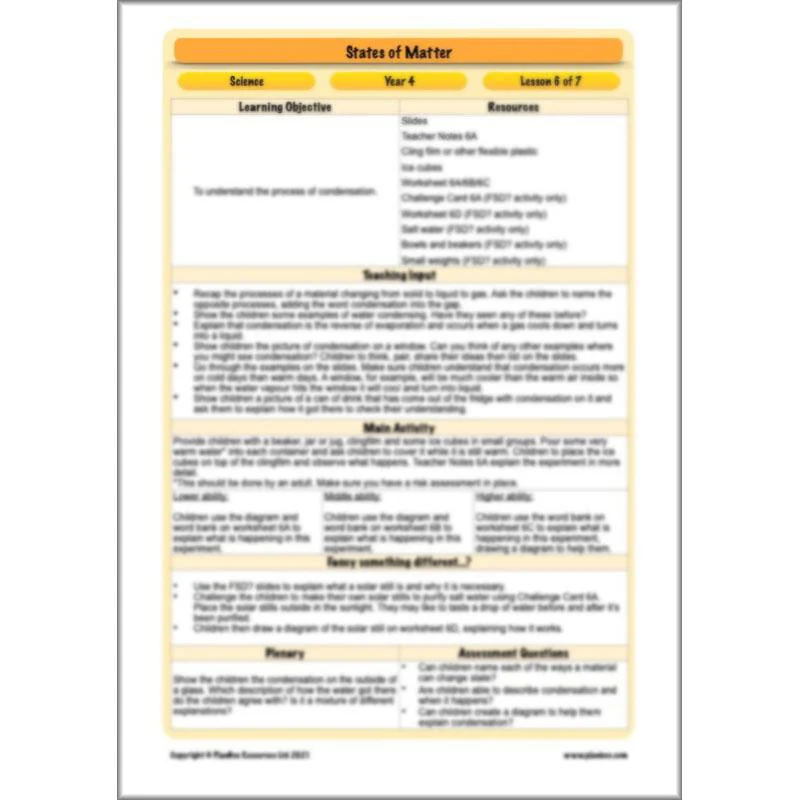
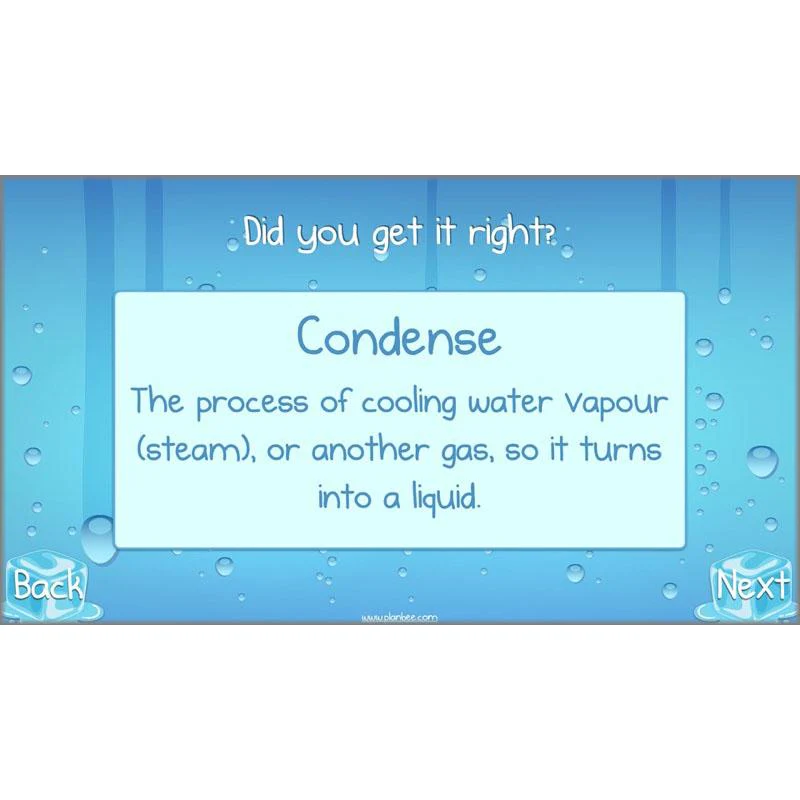
In this lesson the children will look at the opposite process to evaporation: condensation. They will think about what causes water to condense and look at some examples of this.
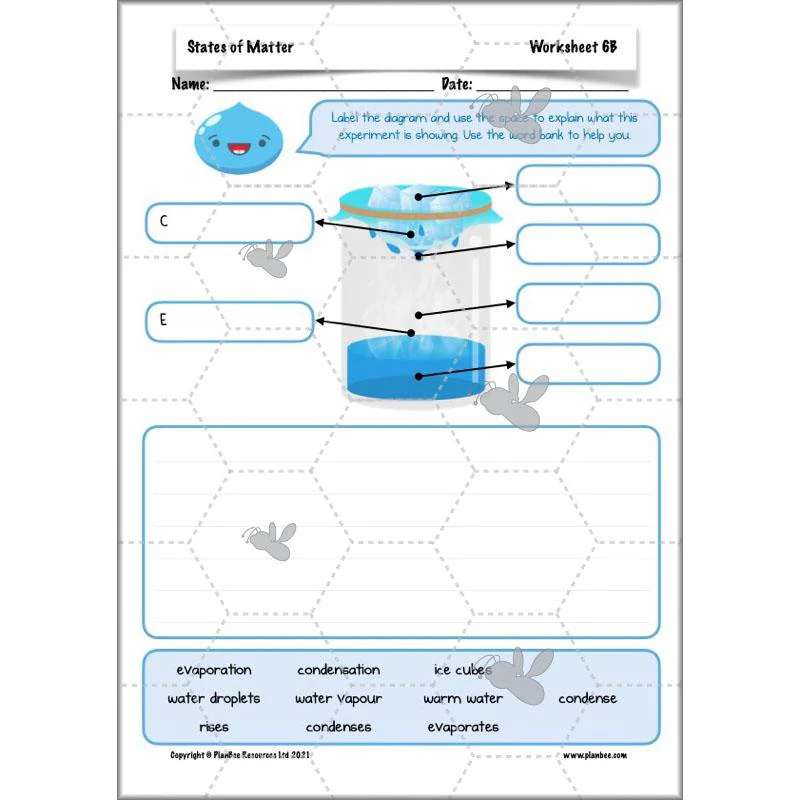
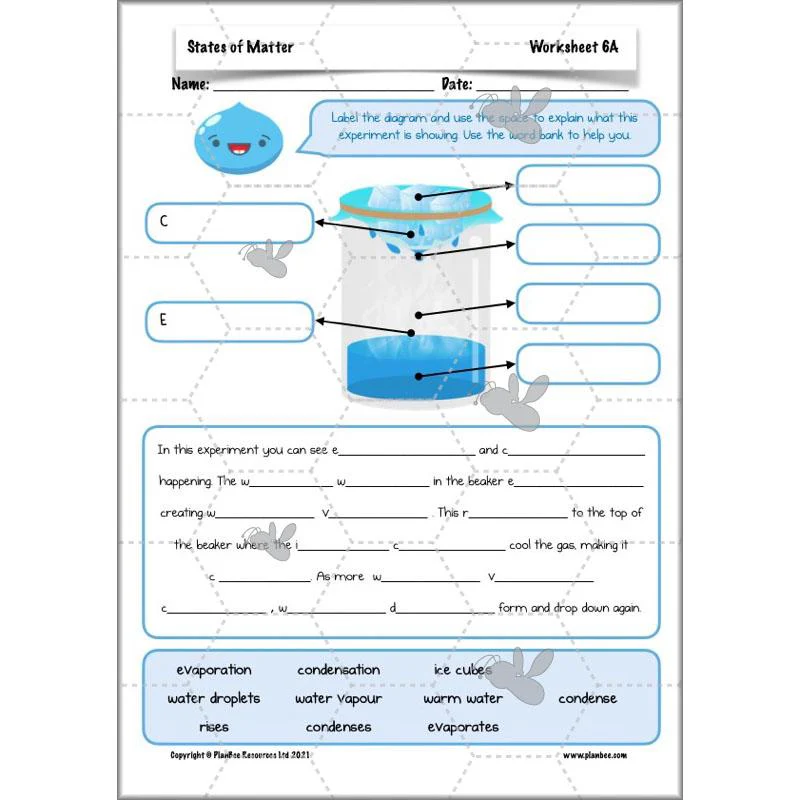
They are then challenged to recreate a situation where they can see water condensing, including its use in a solar still to remove the salt from sea water.
This lesson comes with a detailed lesson plan, lesson slides, differentiated activity ideas and accompanying printable resources.
What's included:
- Lesson plan
- Slides
- Activity ideas
- Teacher notes
- Differentiated worksheets
- Challenge card
View Lesson 6
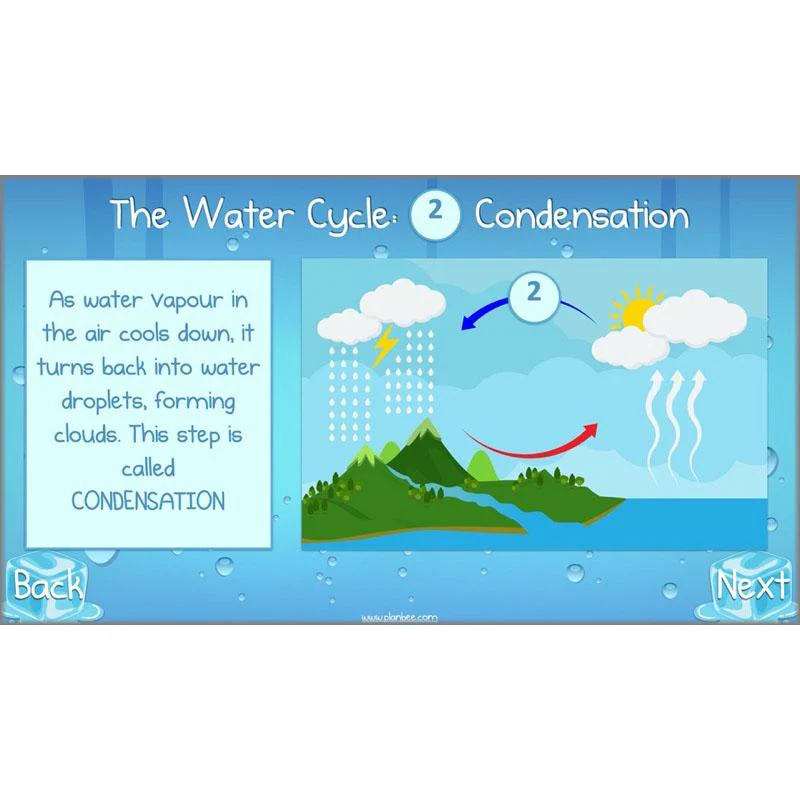
The Water Cycle
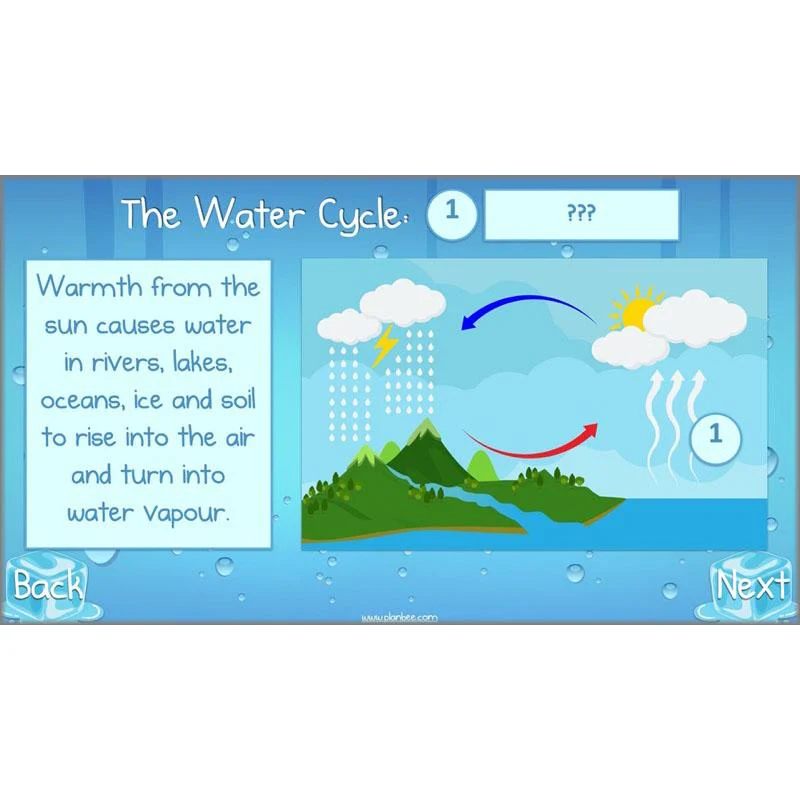
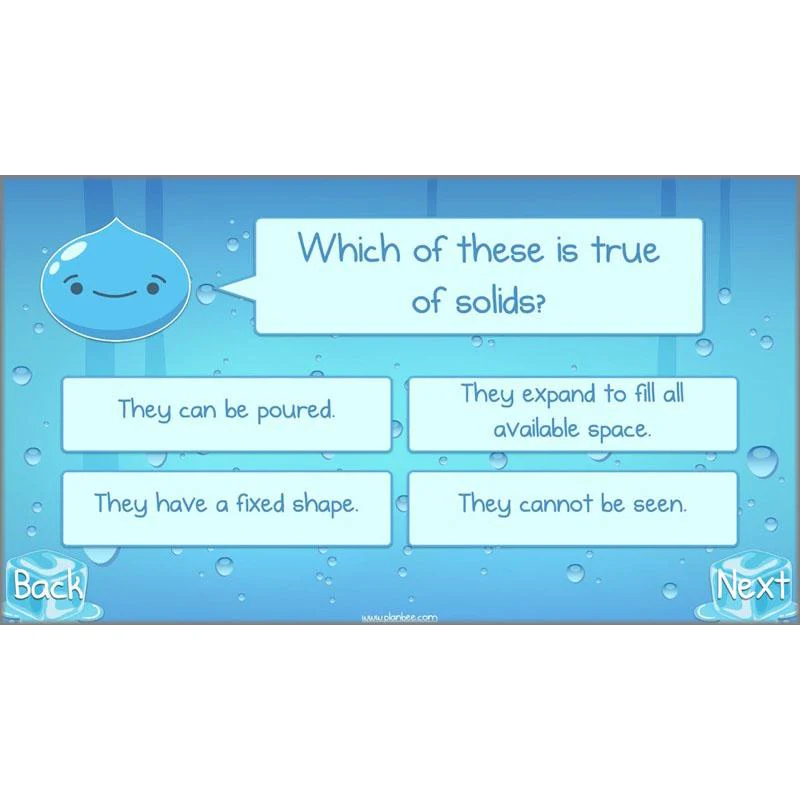
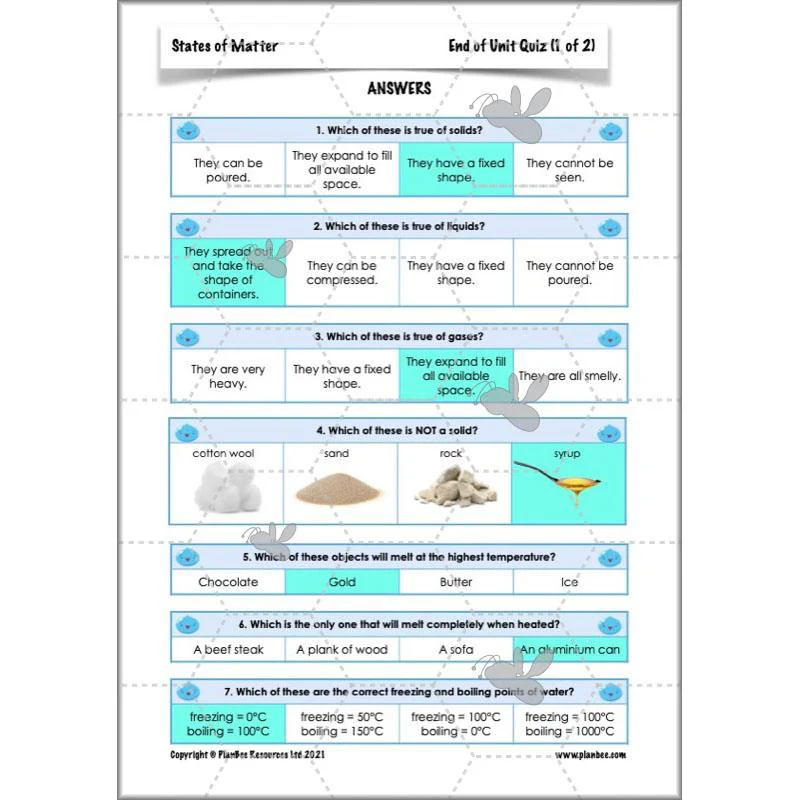
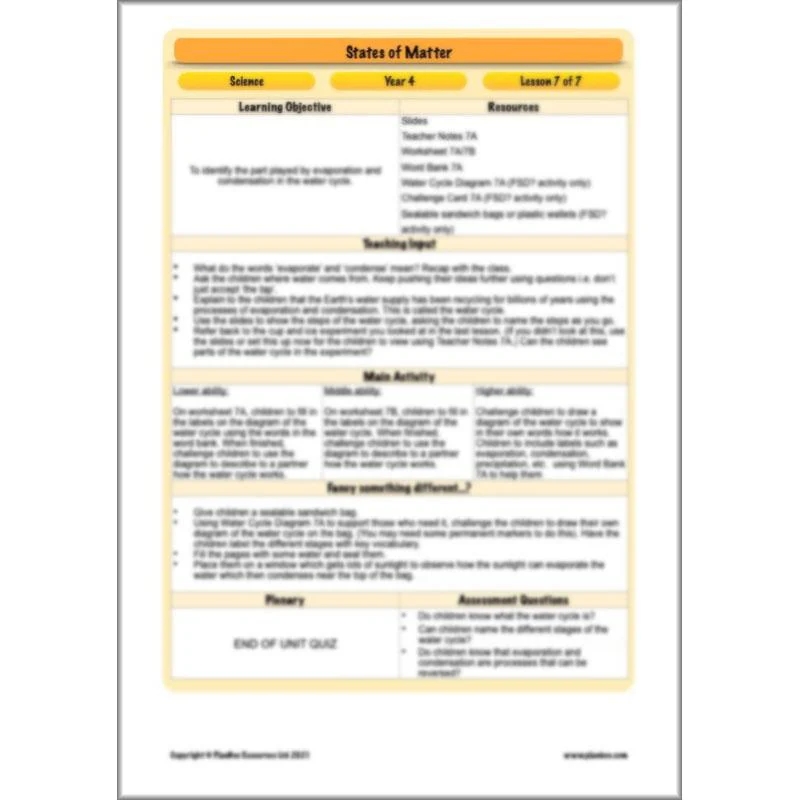
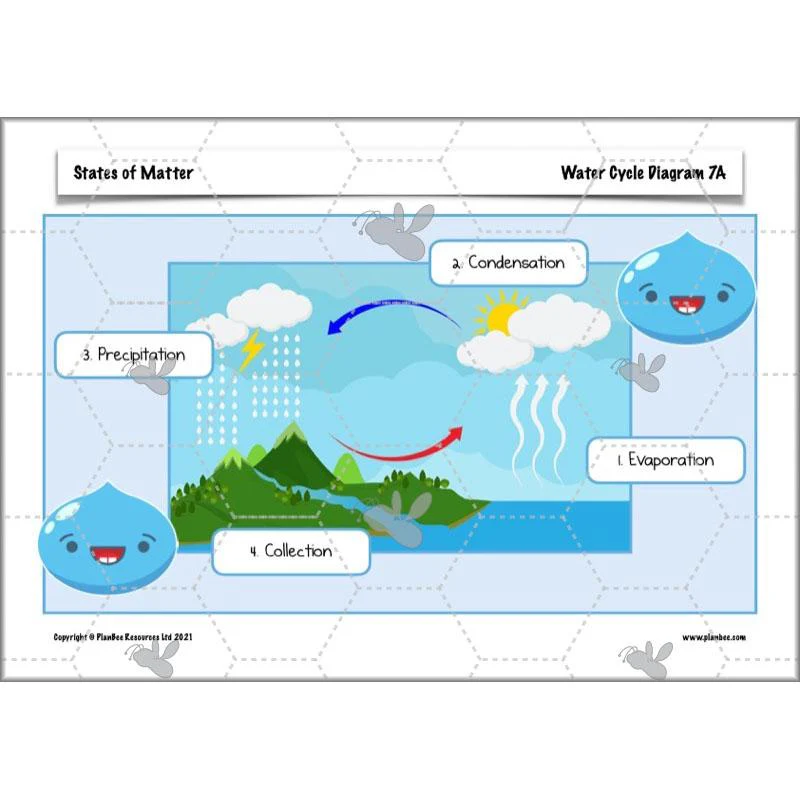
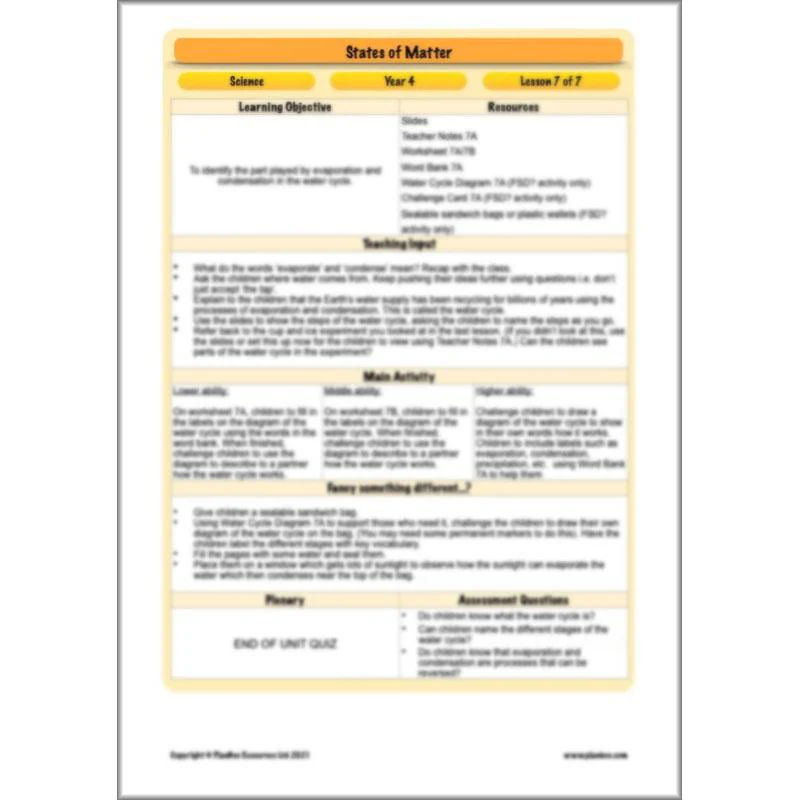
The final lesson in this series consolidates your class's learning about evaporation and condensation by studying the water cycle. They will use their scientific understanding to explain what the water cycle is and how it works. After that, there's an additional slideshow quiz for children to attempt, so you can assess what they've learned and understood during these 'States of Matter' lessons!
What's included:
- Lesson plan
- Slides
- Activity ideas
- Teacher notes
- Differentiated worksheets
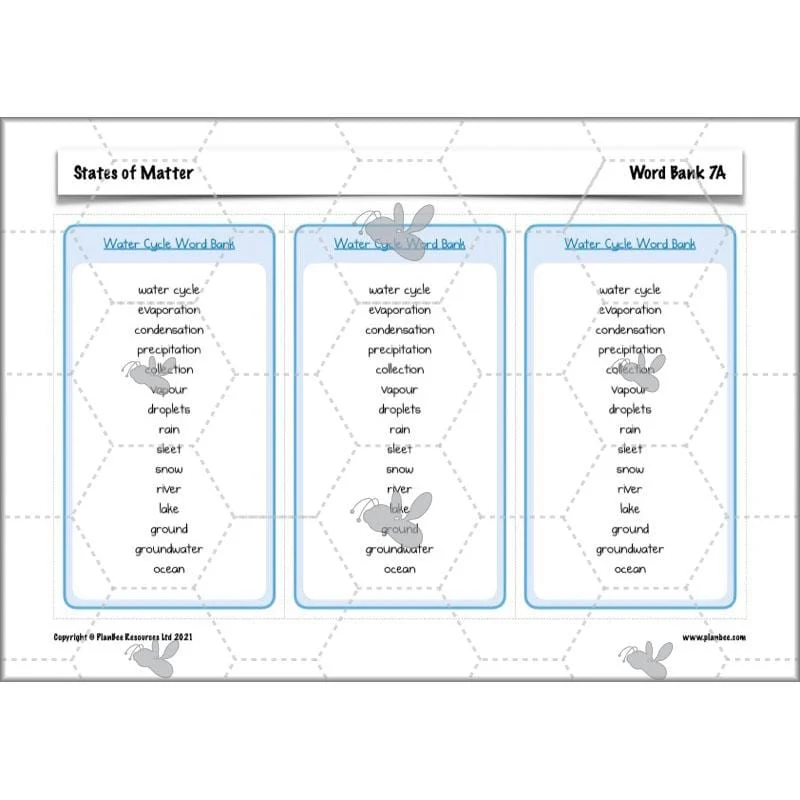
- Word bank
- Water cycle diagram
- Challenge card
View Lesson 7
Original: $2.65
-65%$2.65
$0.93




























Description
These Year 4 States of Matter Science lessons for KS2 are the perfect way to teach your class about the differences between solids, liquids and gases, and how different materials can change state. Your Year 4 class will have plenty of opportunities to undertake practical experiments to help them understand the processes of evaporation and condensation, and the water cycle, as well as having the chance to express their understanding in a variety of ways.
With lesson plans, slides, activity ideas, differentiated worksheets and loads more helpful resources, this Year 4 States of Matter scheme of work provides everything you need teach them all the solids, liquids and gases KS2 objectives they need to know!
A Knowledge Organiser is included within the complete series download, or is available to purchase separately.
Solids and Liquids
The first lesson in this series takes a look at solids and liquids and the differences between them. Your class will identify and group a variety of objects depending on whether they are a solid or a liquid, as well as considering whether objects which can be poured, such as sand or rice, are solids or liquids.
Alternatively, have your more confident class members investigate slime. Is it a solid or a liquid? Challenge them to make careful observations as they manipulate this non-Newtonian fluid and describe what they see.
What's included:
- Lesson plan
- Slides
- Activity ideas
- Object cards
- Differentiated sorting cards
- Differentiated worksheets
- Slime recipe cards
- Challenge cards
View Lesson 1
Properties of Gases
Explore gases and how they are different to solids and liquids. Discuss how gases fill all the available space around them and investigate this using sponges. Lead the discussion on to talking about gases and if they have mass. How can this make gases useful? The lesson input shows gases such as helium and CO2 and how their masses change the way a balloon behaves when inflated with these gases.
Conduct a practical experiment to find out if gases have mass using carbonated drinks. Your class are challenged to use their measuring skills to take accurate and careful measurements of the drink's weight. Alternatively, investigate pneumatic mechanisms using syringes and how gas can be used to create movement.
With differentiated worksheets, a detailed lesson plan and lesson input slides, this complete Year 4 Science lesson provides you with everything you need to teach an engaging and informative lesson about gases!
What's included:
- Lesson plan
- Slides
- Activity ideas
- Experiment card
- Differentiated worksheets
- Pneumatics card
View Lesson 2
Melting and Freezing
In this lesson the children will look closely at how the particles in solids, liquids and gases behave and how this affects the overall state of the material. They will then use this understanding to look at what happens when materials are heated and cooled. They will name these processes as melting and freezing and look at different circumstances that this may happen.
Why not use the recipes included in this lesson to create some party foods using melting and freezing!
With detailed lesson slides, a lesson plan and printable resources, this lesson pack gives you everything you'll need to teach a fun and engaging lesson on melting and freezing.
What's included:
- Lesson plan
- Slides
- Activity ideas
- Differentiated worksheets
- Recipe cards
- Party Cards
View Lesson 3
Melting Points
In this lesson the children will explore how different materials have different melting points, including some surprising metals! Challenge your Year 4 class to research and present information about melting points using their research skills.
Alternatively, printable resources are provided to support your class in investigating the different melting points of different types of chocolate. Challenge them to make their own decisions about their fair testing and reflect on how they could improve the accuracy of their investigation next time.
This lesson pack comes with the lesson slides, plan and printable resources you'll need to teach an engaging lesson on melting points of different materials.
What's included:
- Lesson plan
- Slides
- Activity ideas
- Sorting cards
- Differentiated worksheets
- Experiment card
View Lesson 4
Evaporation
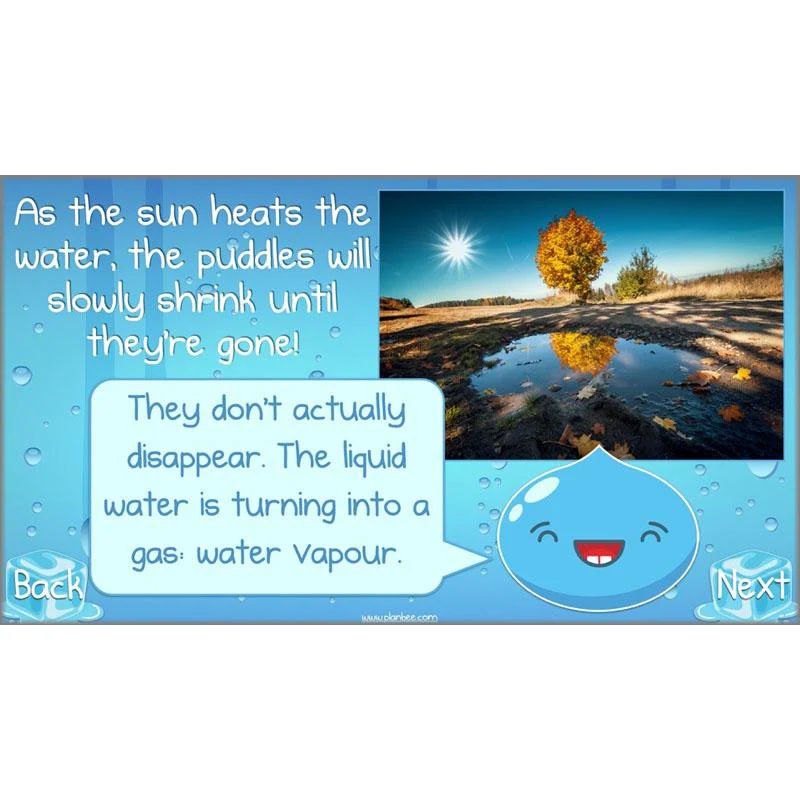
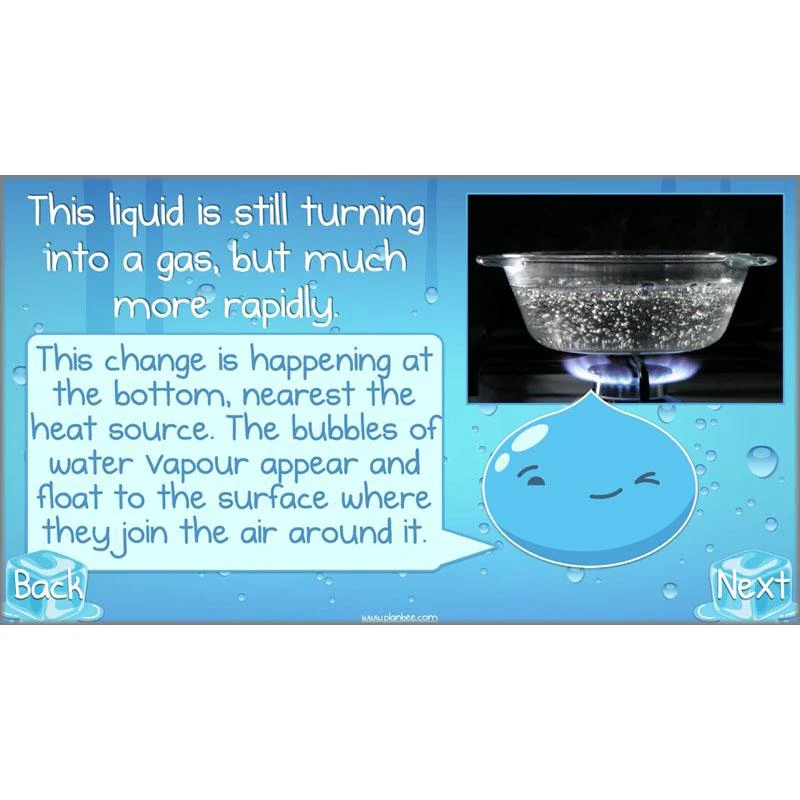
This lesson looks at the process of evaporation and how we can use this process in our everyday lives. They discuss different examples of evaporation we use and see such as drying laundry, sweat and hair dryers. This lesson looks at the differences between evaporation and boiling water and specifies the boiling point of water.
The children are challenged to investigate the effects of heat and air on the rate of evaporation in different circumstances, thinking carefully about their use of control variables in their investigation and how they can measure their dependent variable.
This lesson comes with differentiated activity ideas and all the printable resources you will need to support your class as they investigate the process of evaporation.
What's included:
- Lesson plan
- Slides
- Activity ideas
- Teacher notes
- Differentiated worksheets
- Challenge card
- Investigation planner
- Design sheet
View Lesson 5
Condensation
In this lesson the children will look at the opposite process to evaporation: condensation. They will think about what causes water to condense and look at some examples of this.
They are then challenged to recreate a situation where they can see water condensing, including its use in a solar still to remove the salt from sea water.
This lesson comes with a detailed lesson plan, lesson slides, differentiated activity ideas and accompanying printable resources.
What's included:
- Lesson plan
- Slides
- Activity ideas
- Teacher notes
- Differentiated worksheets
- Challenge card
View Lesson 6
The Water Cycle
The final lesson in this series consolidates your class's learning about evaporation and condensation by studying the water cycle. They will use their scientific understanding to explain what the water cycle is and how it works. After that, there's an additional slideshow quiz for children to attempt, so you can assess what they've learned and understood during these 'States of Matter' lessons!
What's included:
- Lesson plan
- Slides
- Activity ideas
- Teacher notes
- Differentiated worksheets
- Word bank
- Water cycle diagram
- Challenge card
View Lesson 7