
Exploring Subtraction
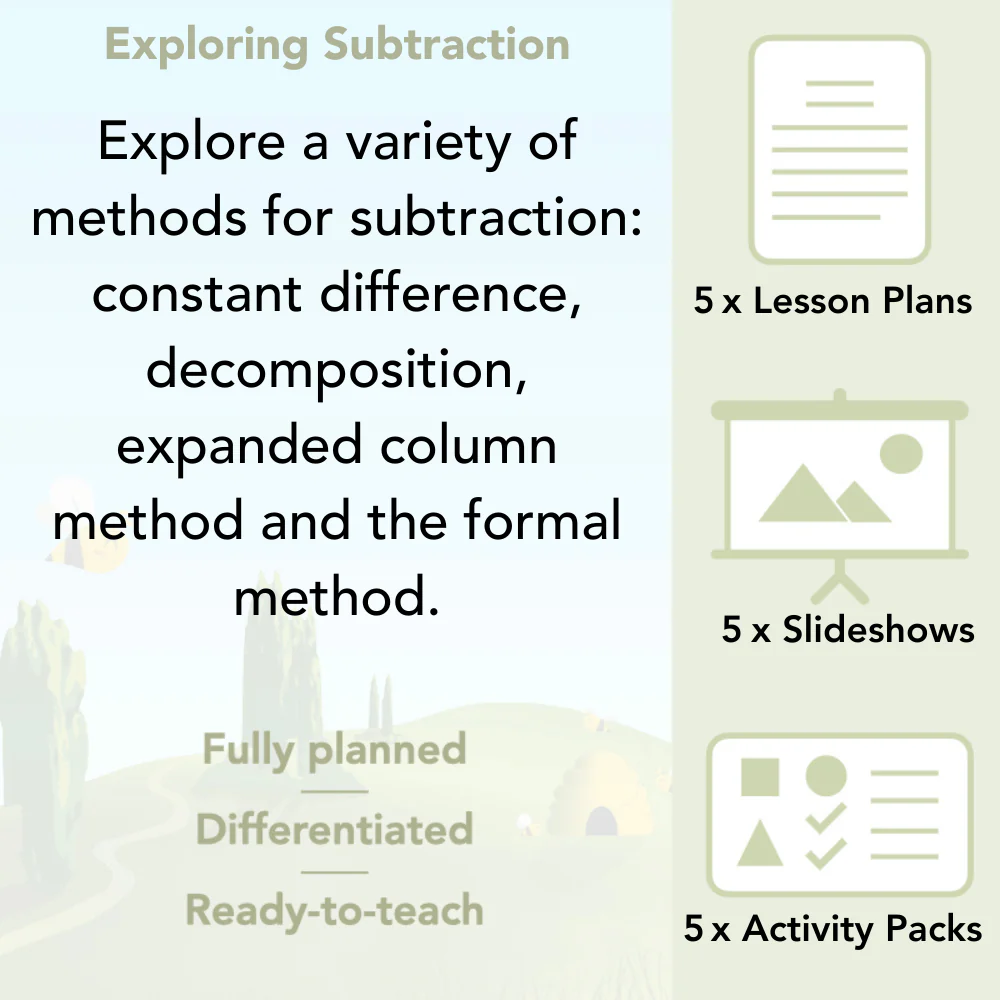
Use this scheme of work for Year 4 to increase your class’s knowledge and understanding of the different methods for subtraction.
Beginning by looking at the constant difference method for mental calculations, and then progressing to the decomposition method, the expanded column method, and finally exploring the formal column method for written calculations, your class will soon be experts on subtraction!
The Constant Difference Method
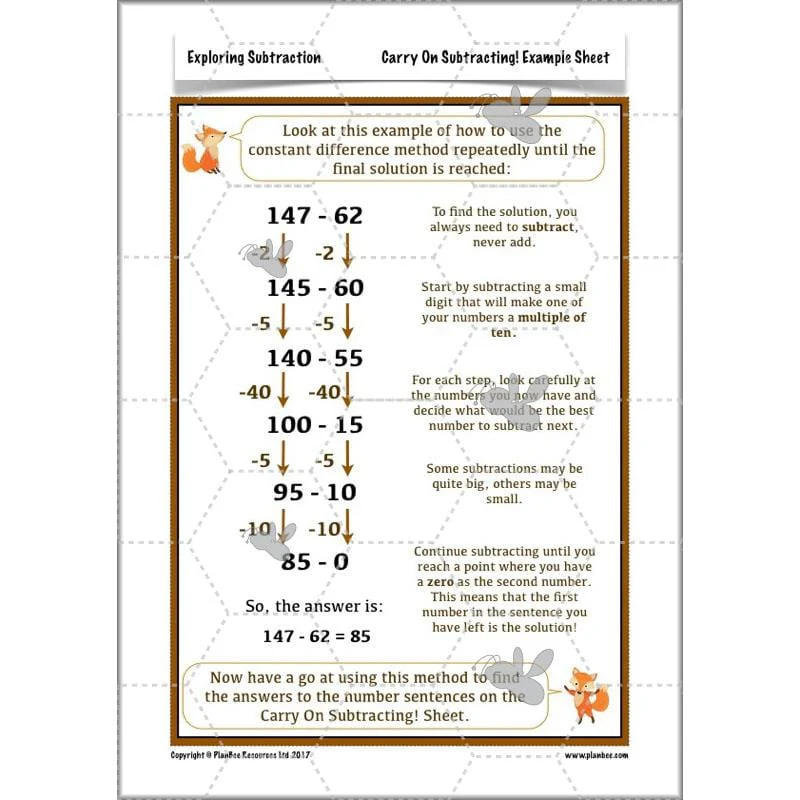
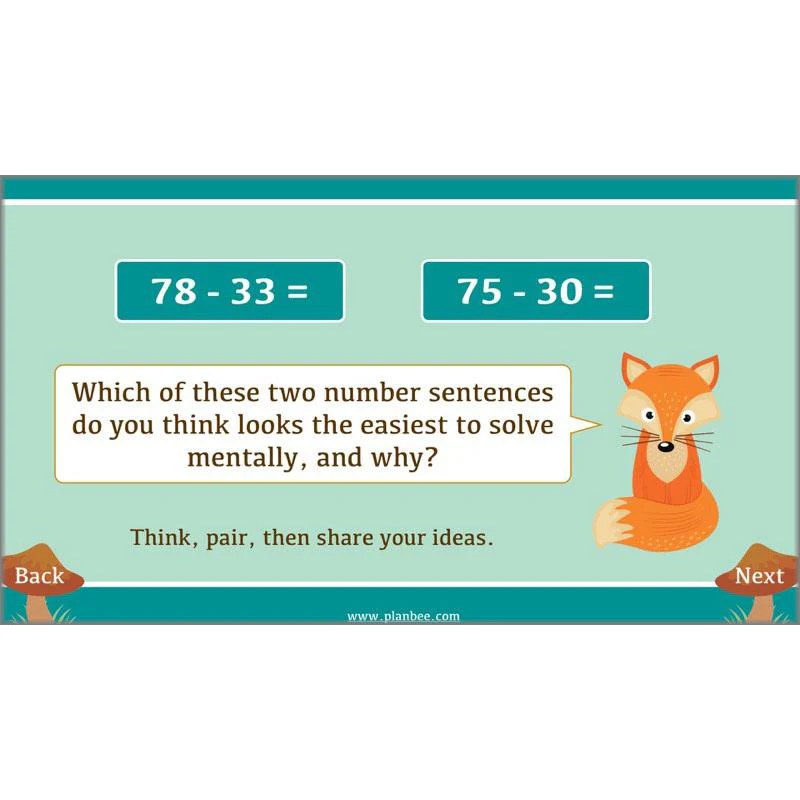
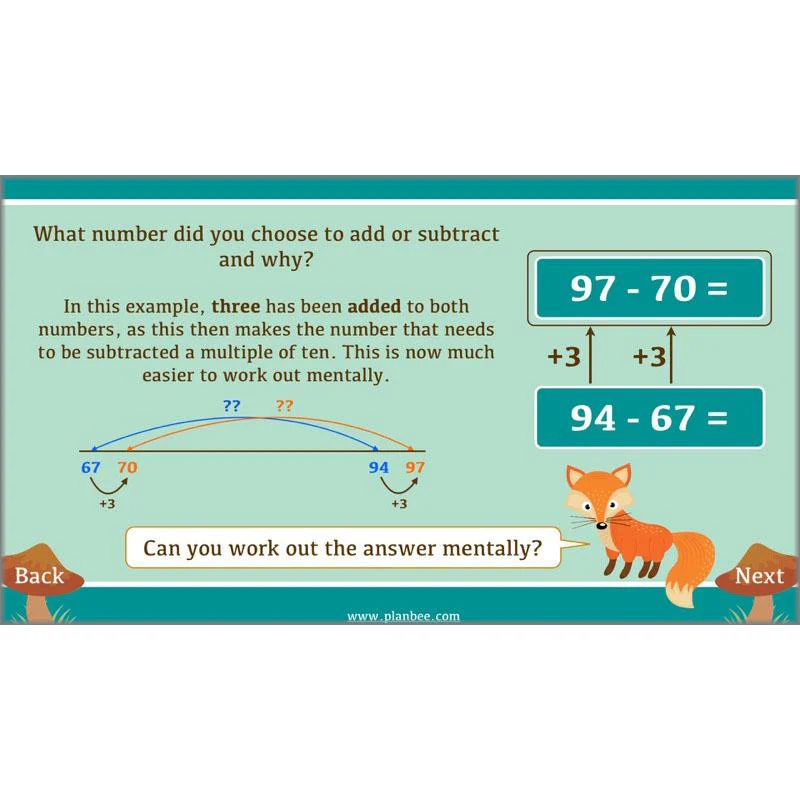
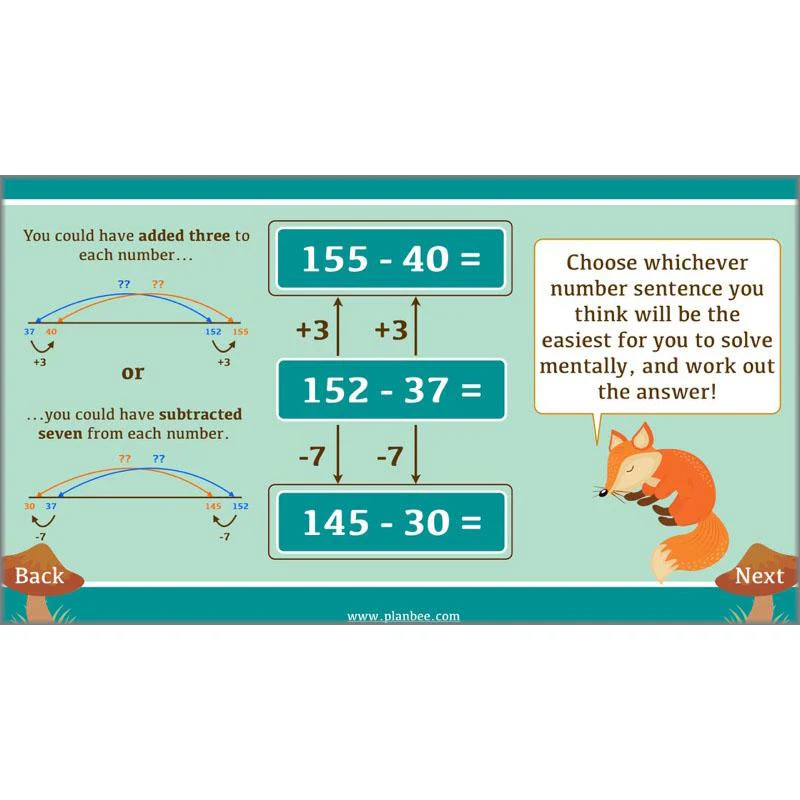
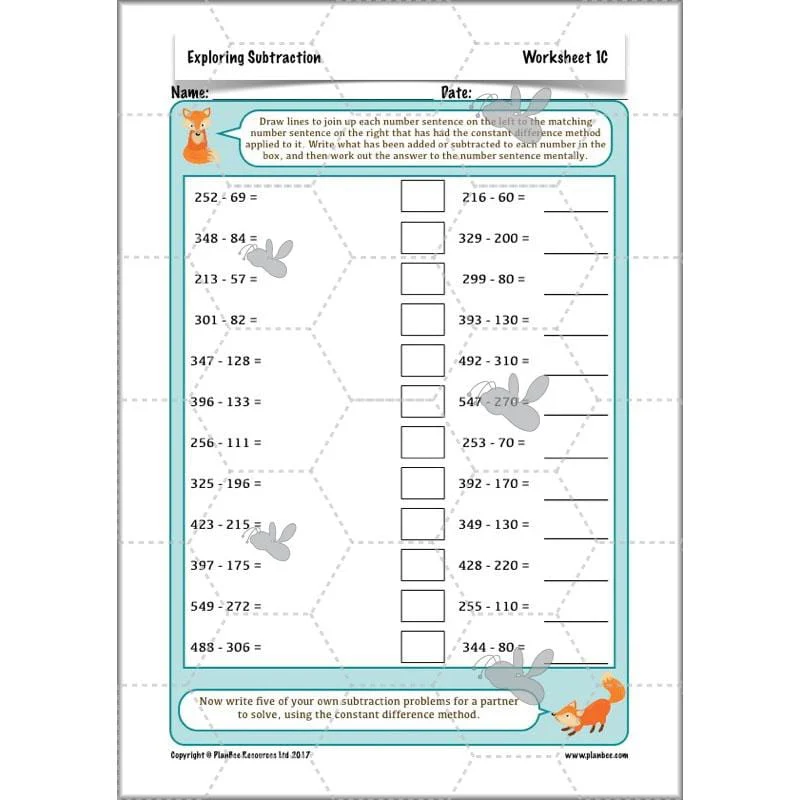
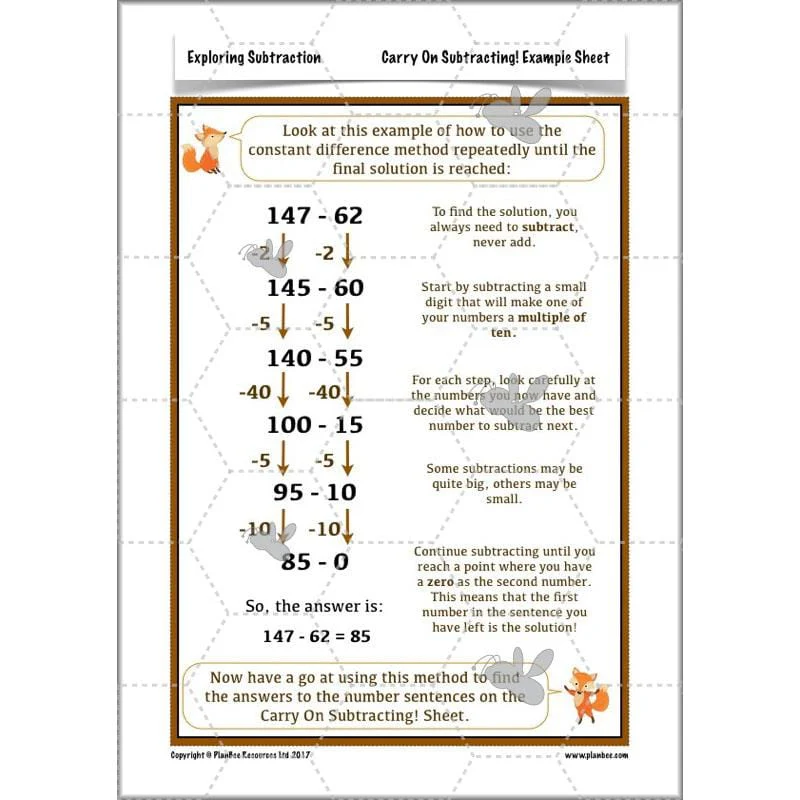
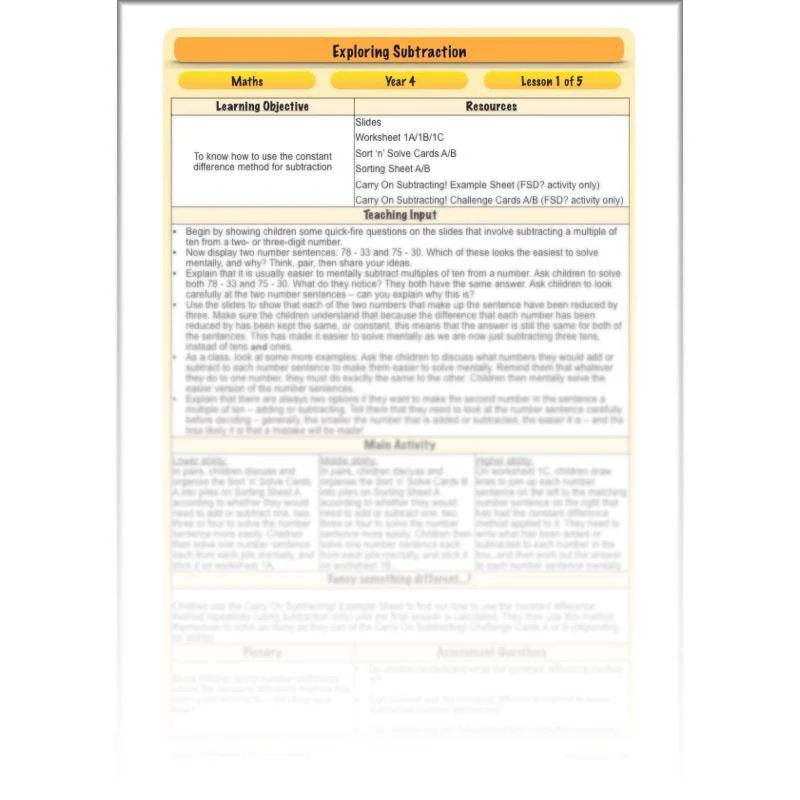
This first lesson begins with some quick-fire questions involving subtracting multiples of ten from two- and three-digit numbers. Children will then learn about the constant difference method, and how this can be used to adjust calculations to make them easier, allowing them to be solved mentally. In their independent activities, children apply this knowledge to sort and solve subtraction number sentences mentally. Or in the alternate activity, they can explore how to use the constant difference method repeatedly to reach a final solution to a subtraction number sentence.
What's included:
- Lesson plan
- Slides
- Activity ideas
- Differentiated worksheets
- Sort ‘n’ Solve Cards
- Sorting Sheet
- Carry on Subtracting! Example Sheet
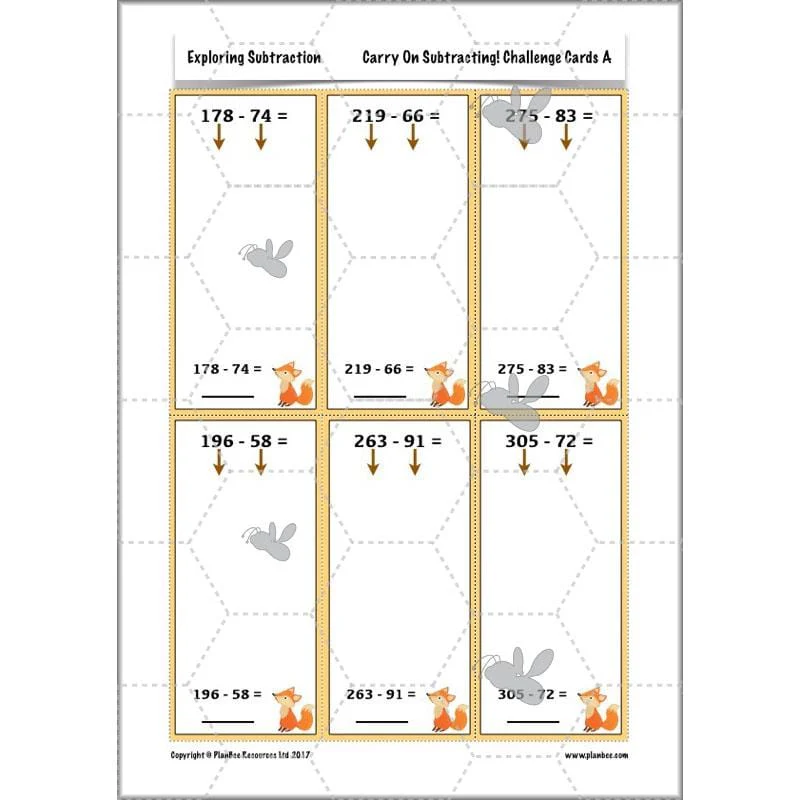
- Carry On Subtracting! Challenge Cards
The Decomposition Method
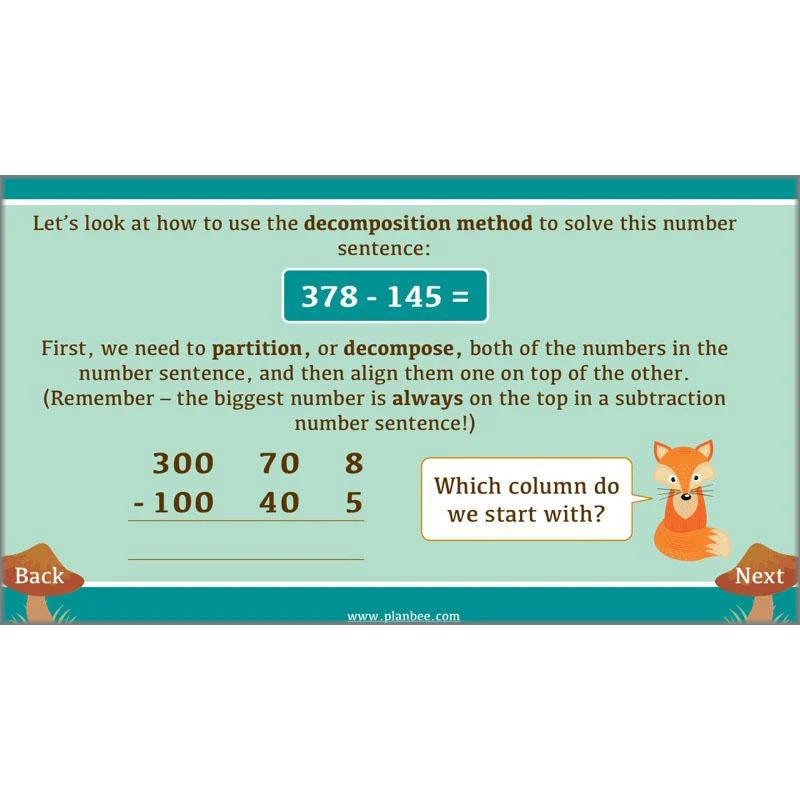
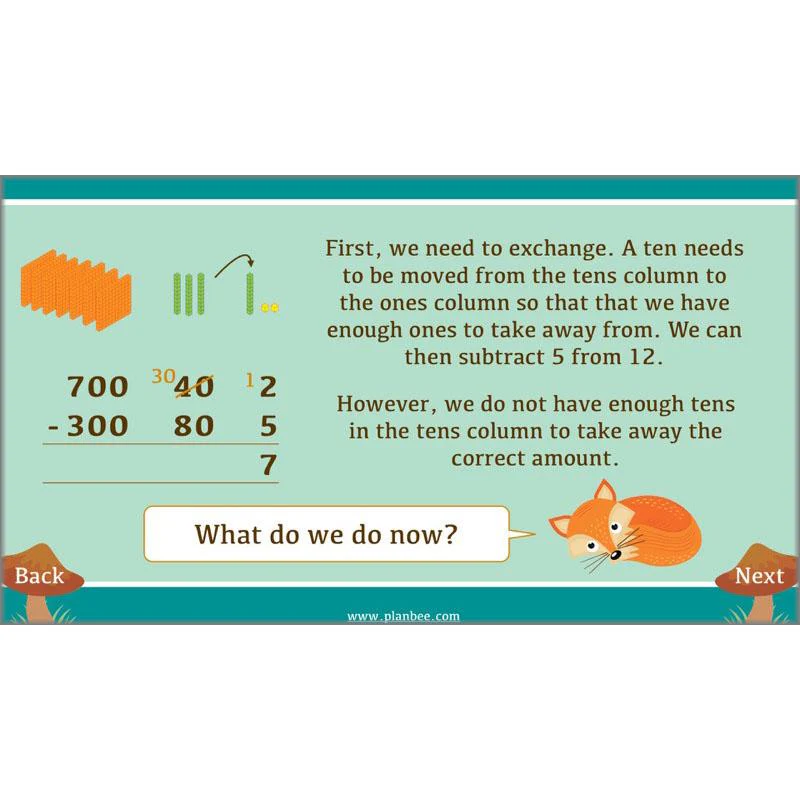
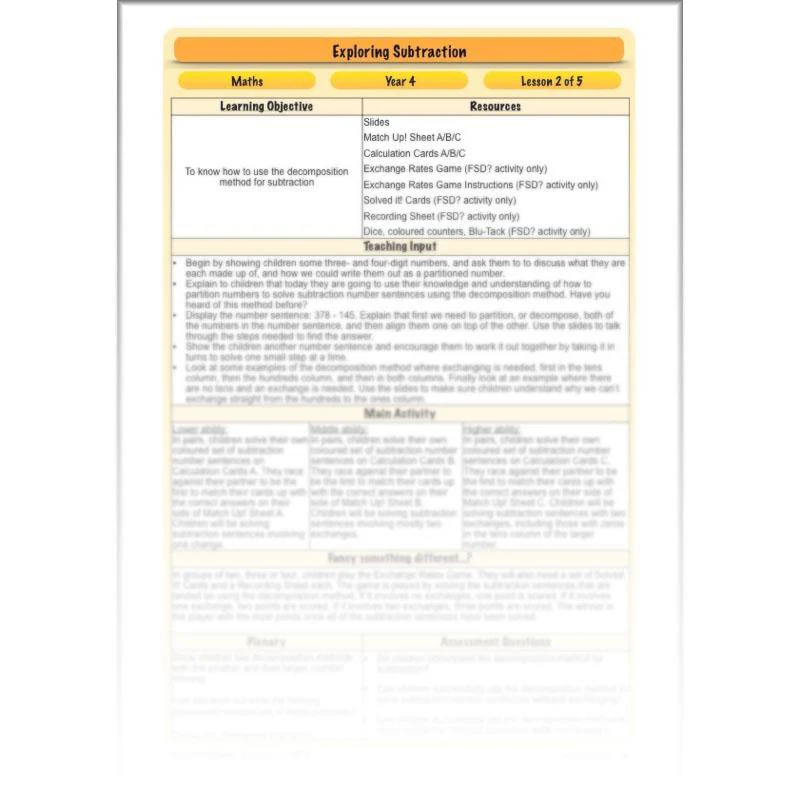
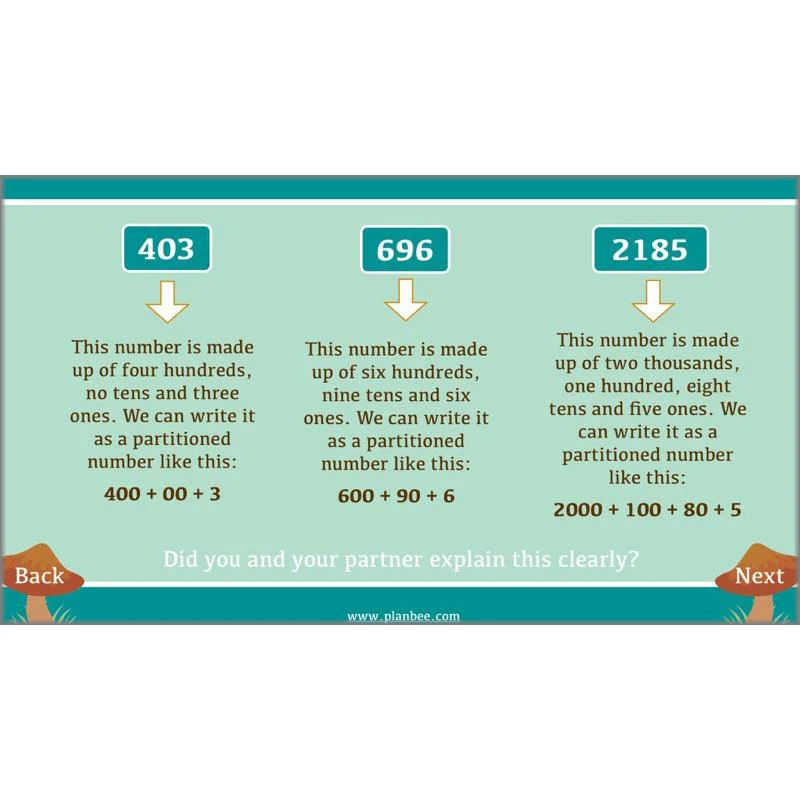
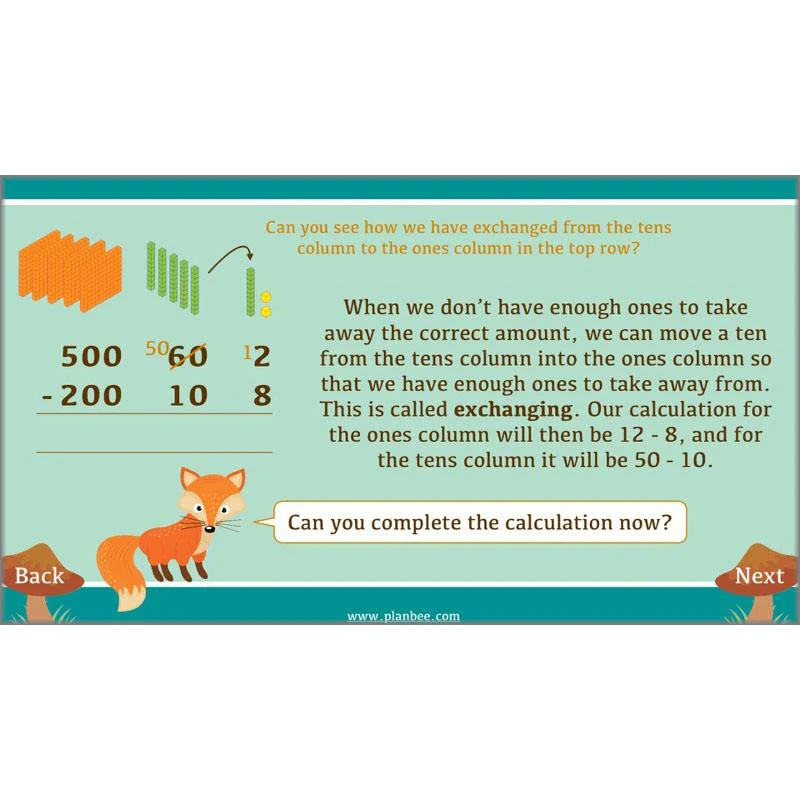
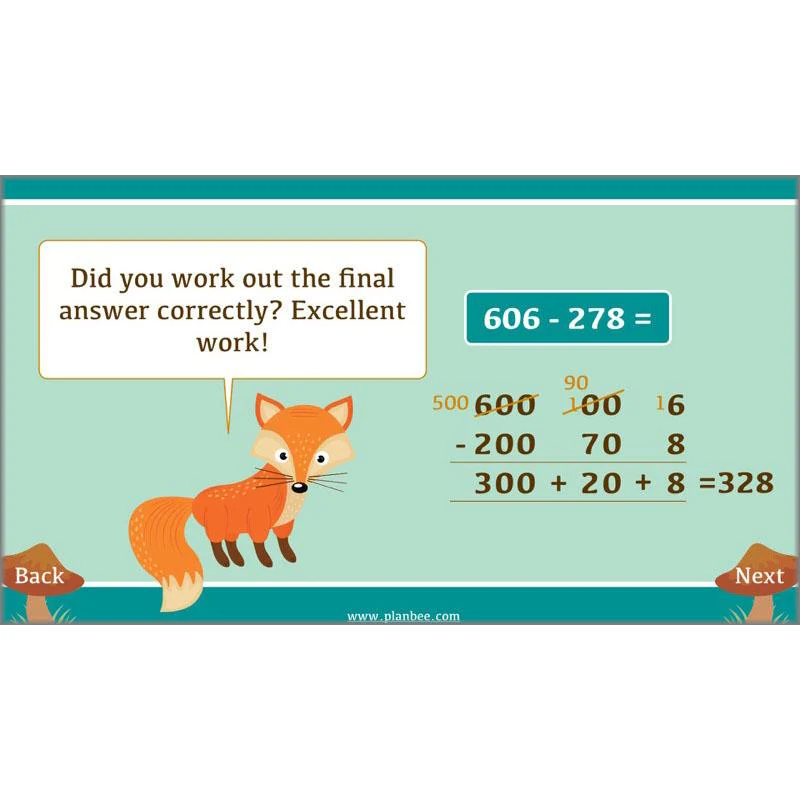
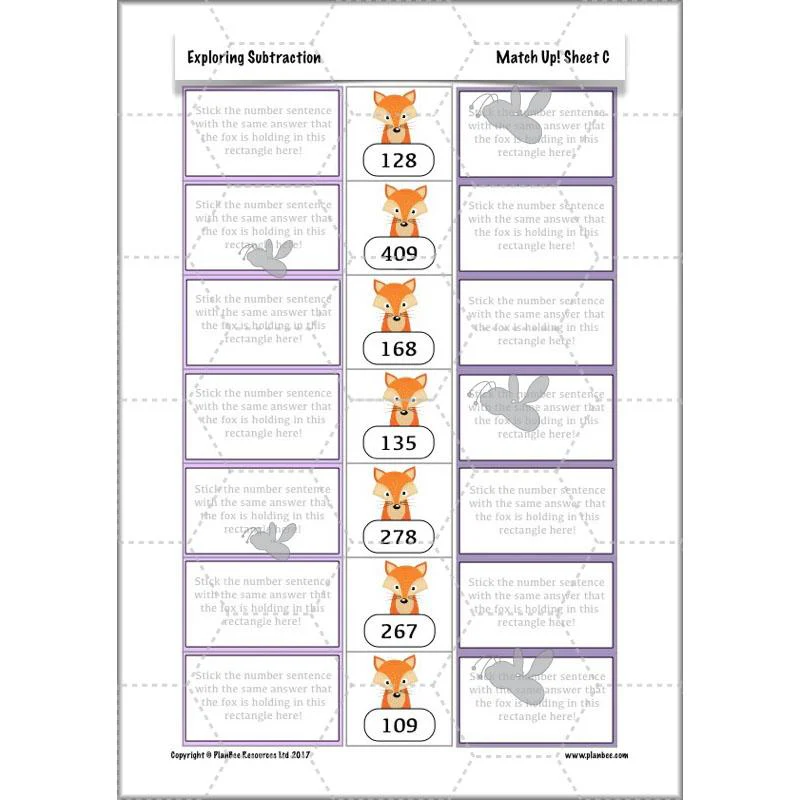
Children first recap on their partitioning skills, before applying them in order to solve subtraction problems using the decomposition method. They practise solving number sentences involving one and two exchanges. In their independent activities, children will race against a partner to solve questions quickly and accurately. Alternatively, they will play the Exchange Rates Game, where they are rewarded points according to the number of exchanges in the sentences they solve!
What's included:
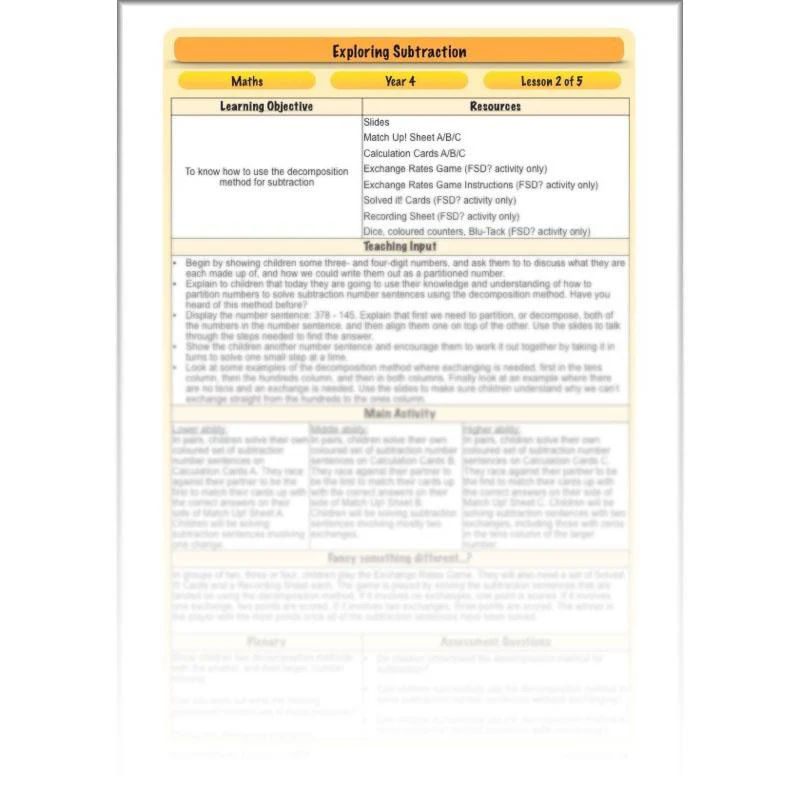
- Lesson plan
- Slides
- Activity ideas
- Match Up! Sheet
- Calculation Cards
- Exchange Rates Game
- Solved It! Cards
- Recording Sheet
The Expanded Column Method
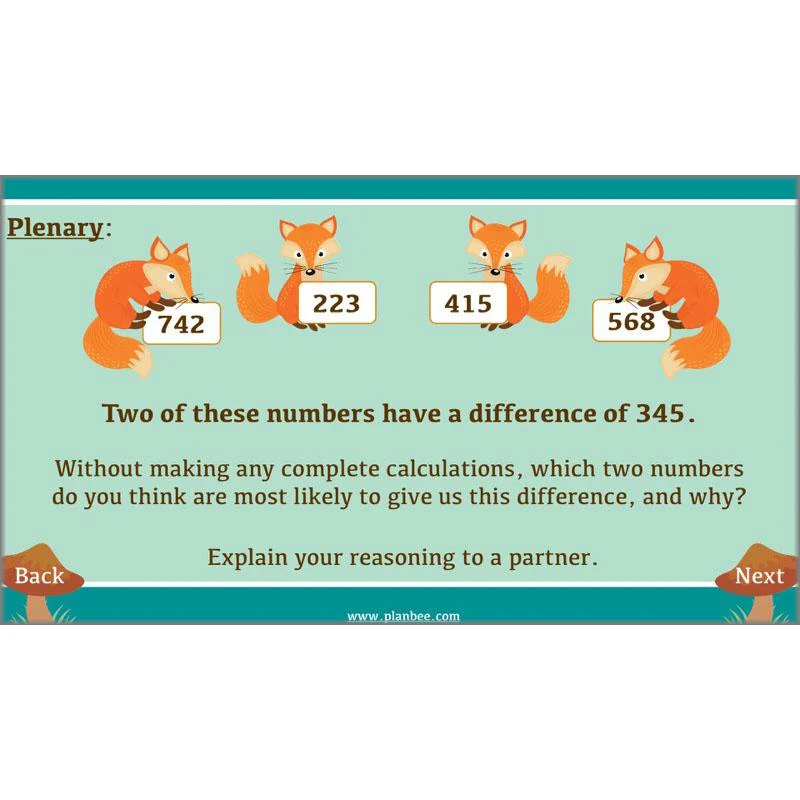
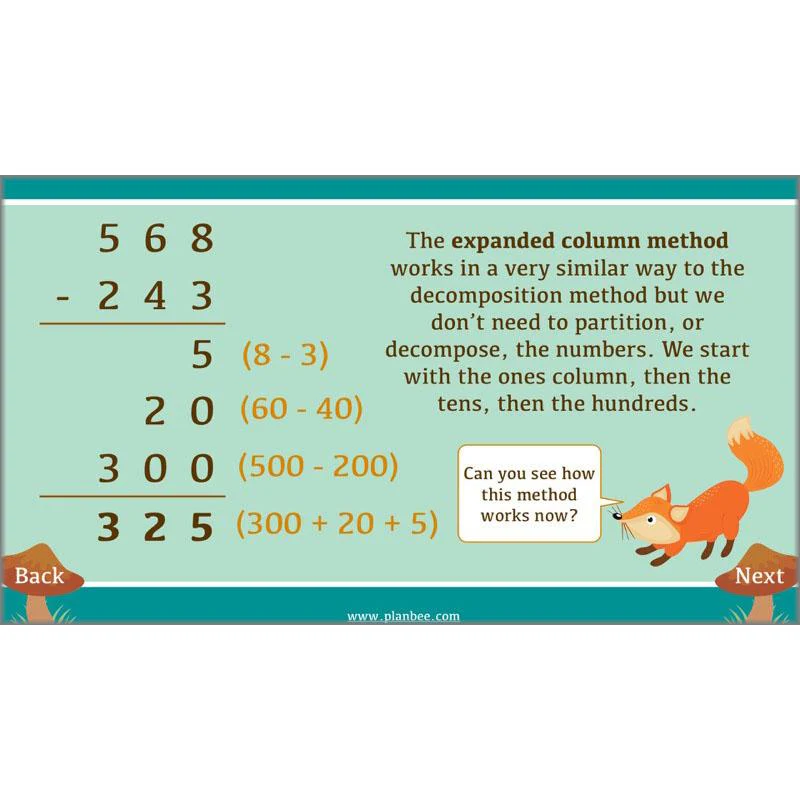
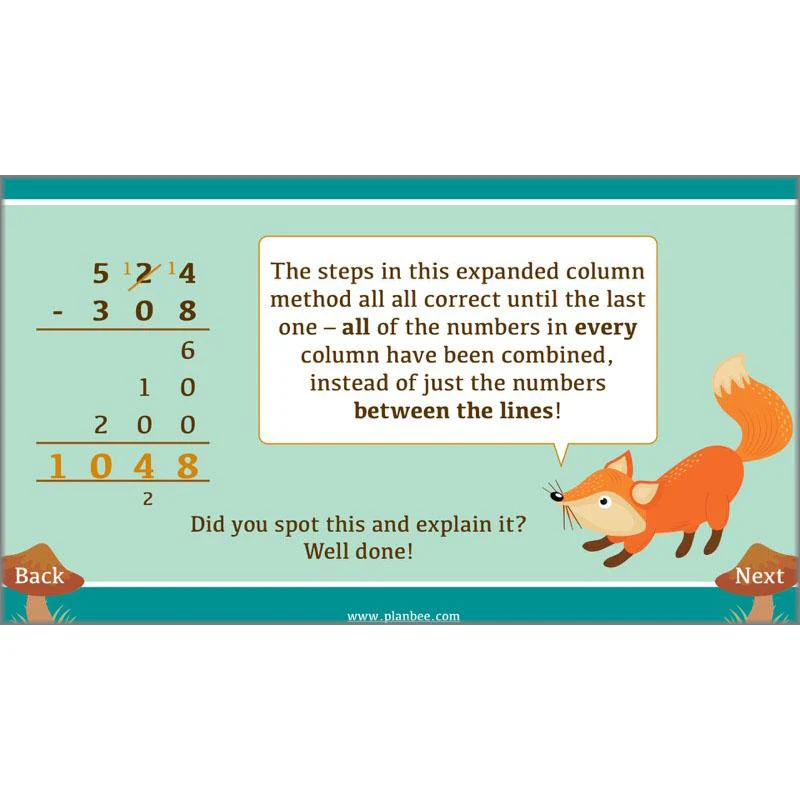
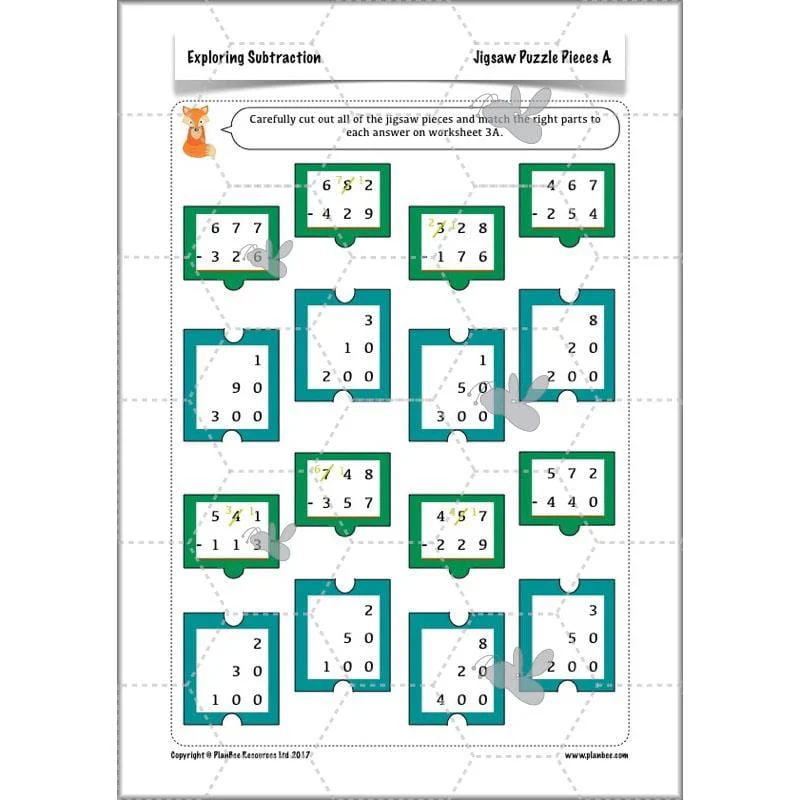
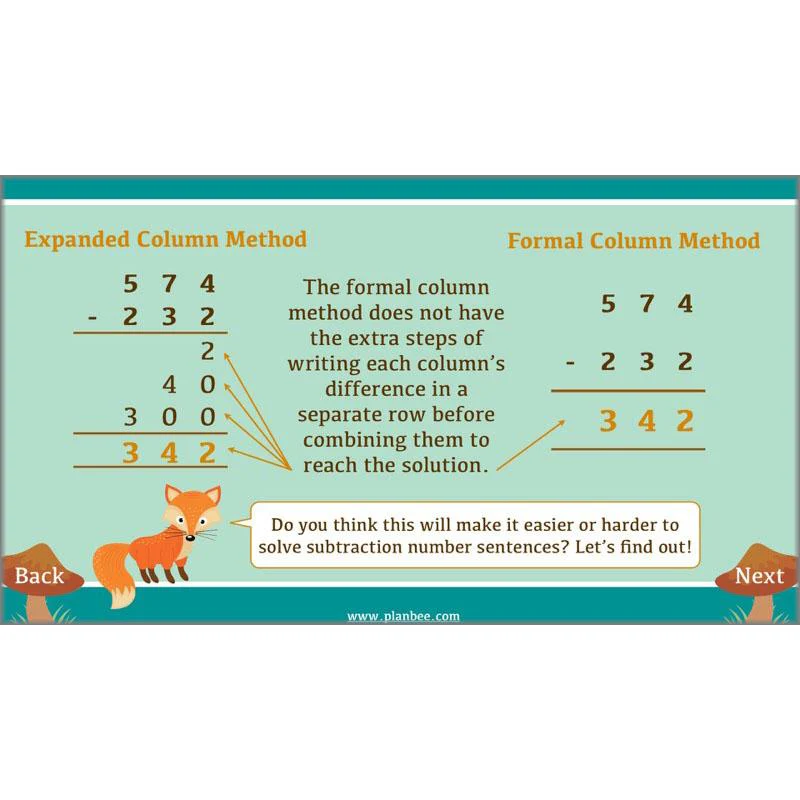
In this lesson, children look at the expanded column method for subtraction. They briefly compare it with the decomposition method, before using it to solve subtractions involving one and then two exchanges. Children are challenged to spot and explain mistakes in expanded column subtractions where the method has been used incorrectly. In their independent activities, children match up the different parts of given expanded column method solutions as jigsaws. In the alternate activity, they need to find what two numbers could be used to result in a given difference, according to set criteria.
What's included:
- Lesson plan
- Slides
- Activity ideas
- Differentiated worksheets
- Jigsaw Puzzle Pieces
- Blank Jigsaw Sheet
- Challenge Cards
The Formal Column Method
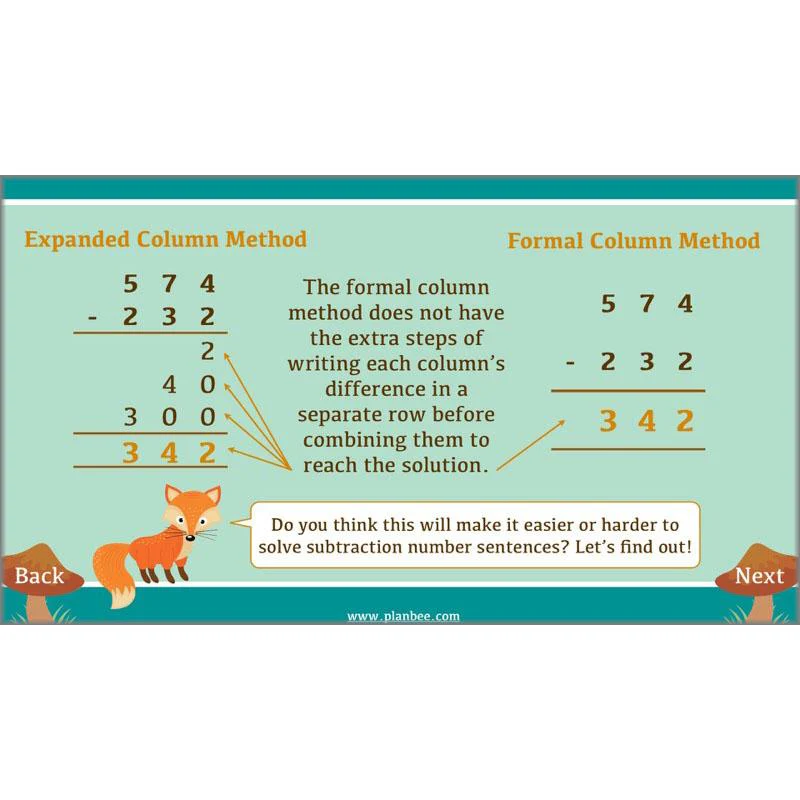
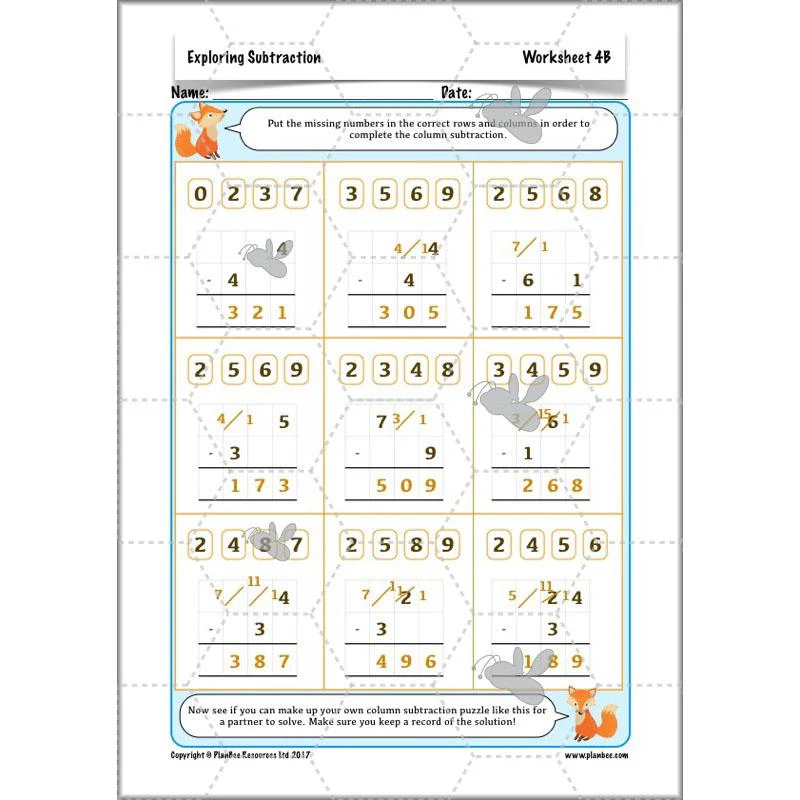
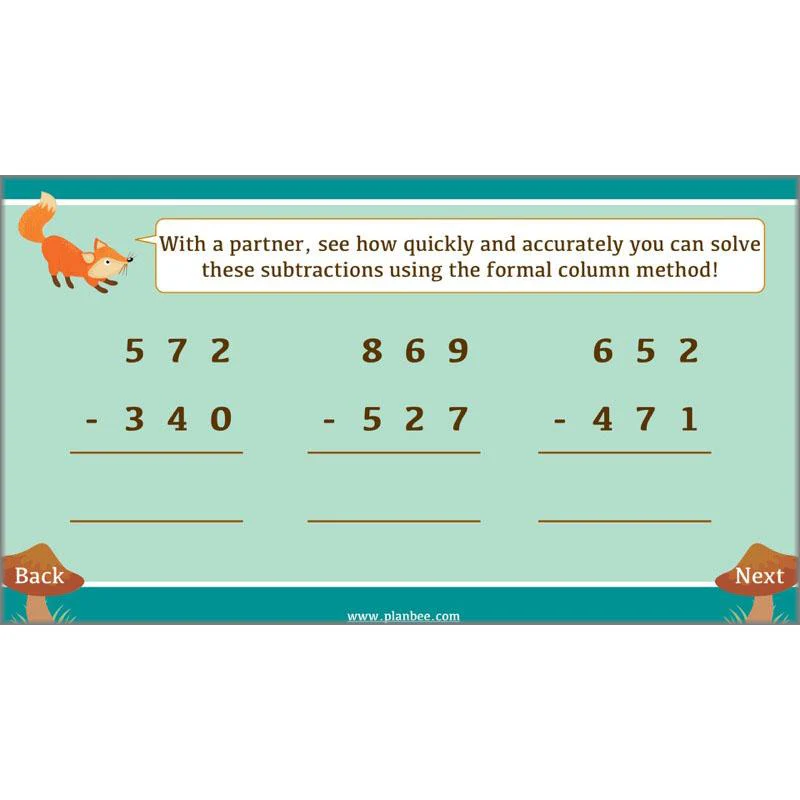
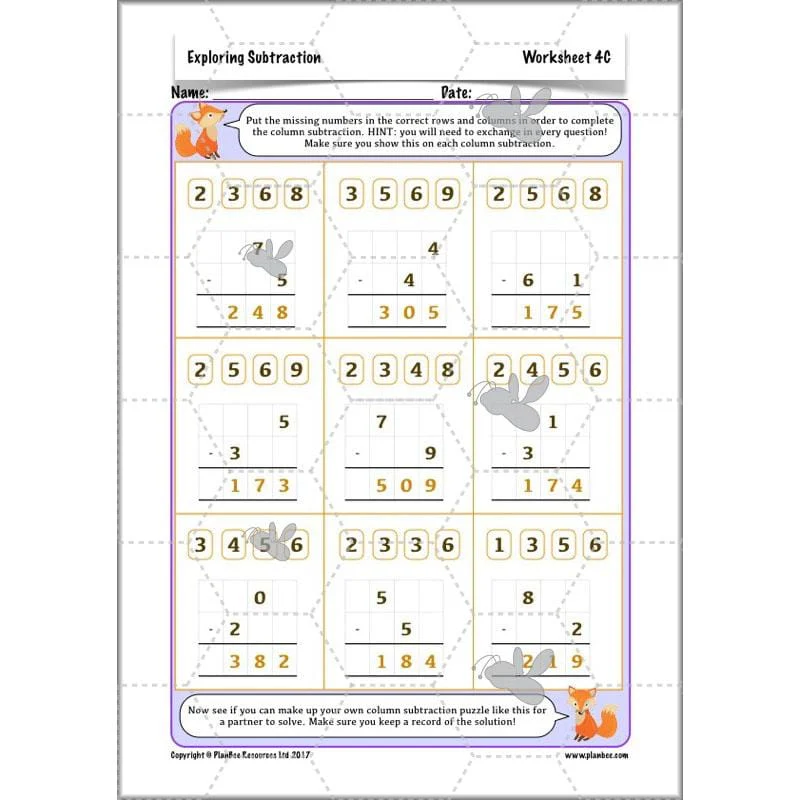
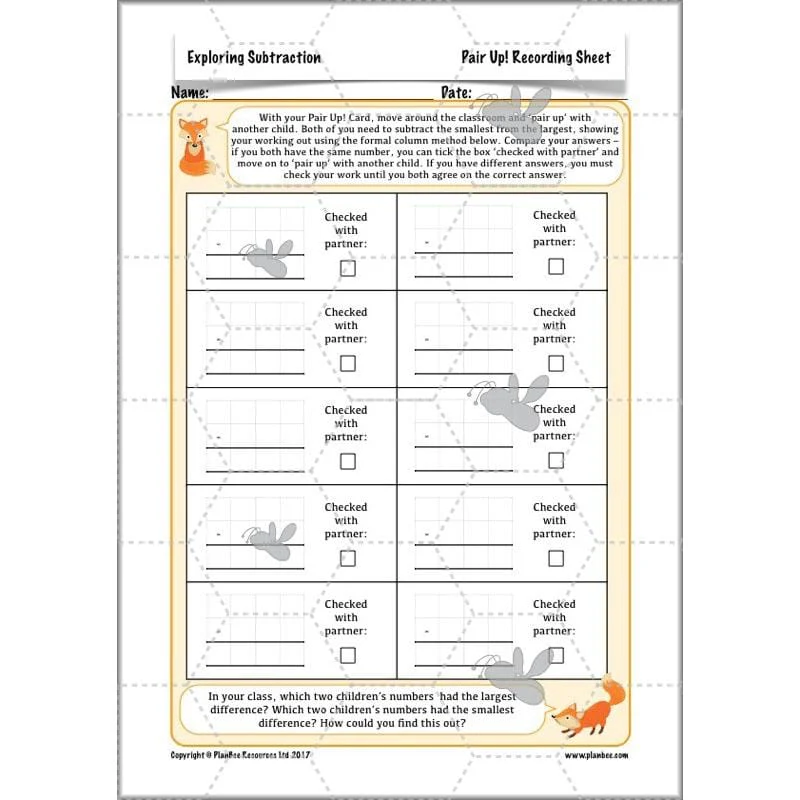
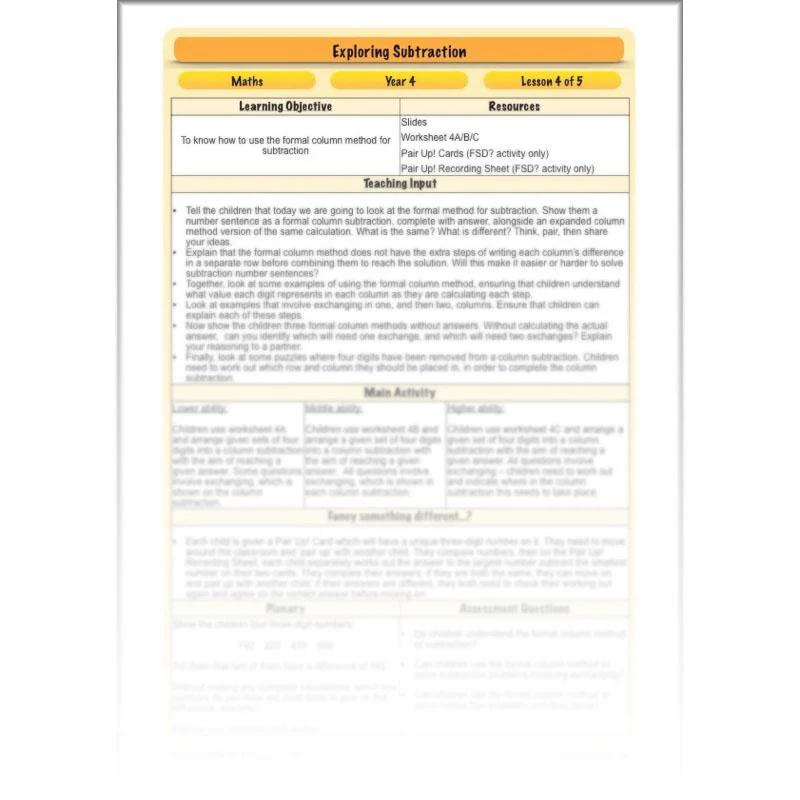
To begin, children briefly compare the expanded column method with the formal column method. They then use the formal method to look at how to solve subtraction number sentences involving no exchanges, one exchange and finally two exchanges. In their independent activities, children apply their knowledge of this method in order to complete column subtractions by placing missing digits in the correct row and column in order to give a specific difference. Alternatively, children are each given a unique three-digit number, then pair up with other children to make and solve subtractions with their numbers.
What's included:
- Lesson plan
- Slides
- Differentiated worksheets
- Pair Up! Cards
- Pair Up! Recording Sheet
The Formal Column Method and Zeros
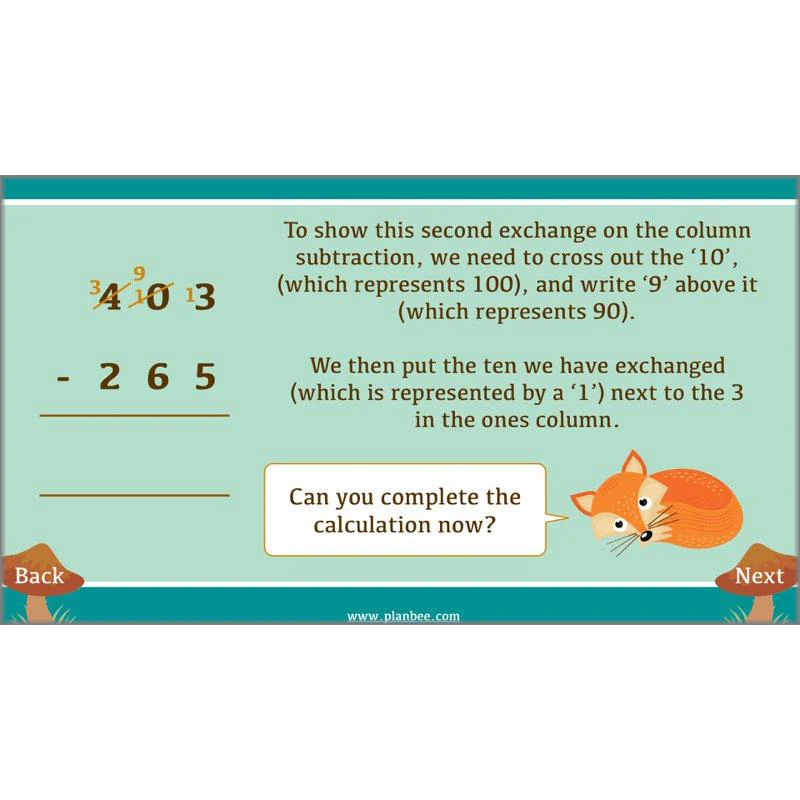
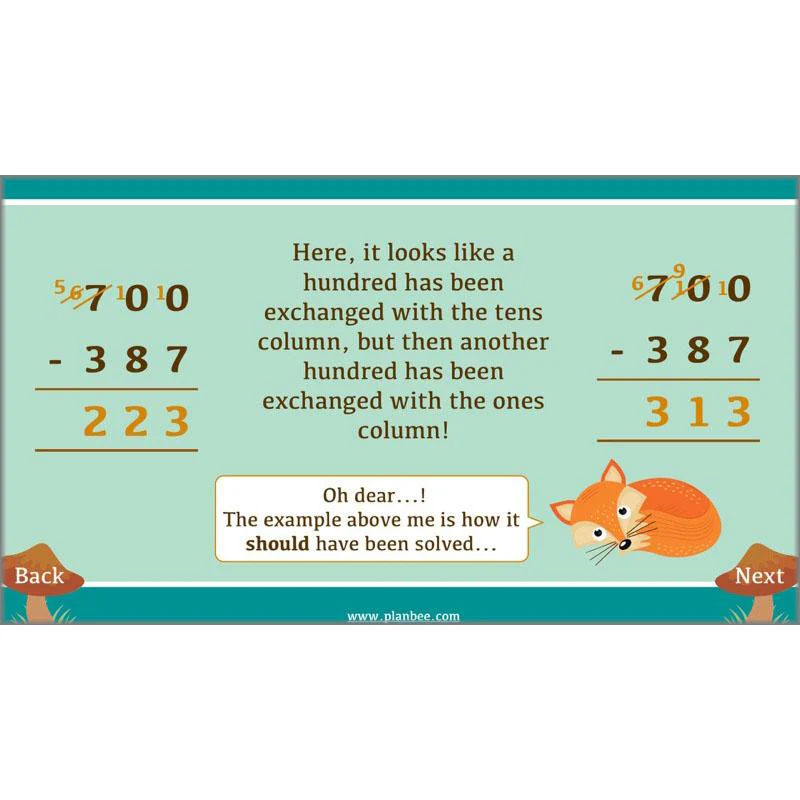
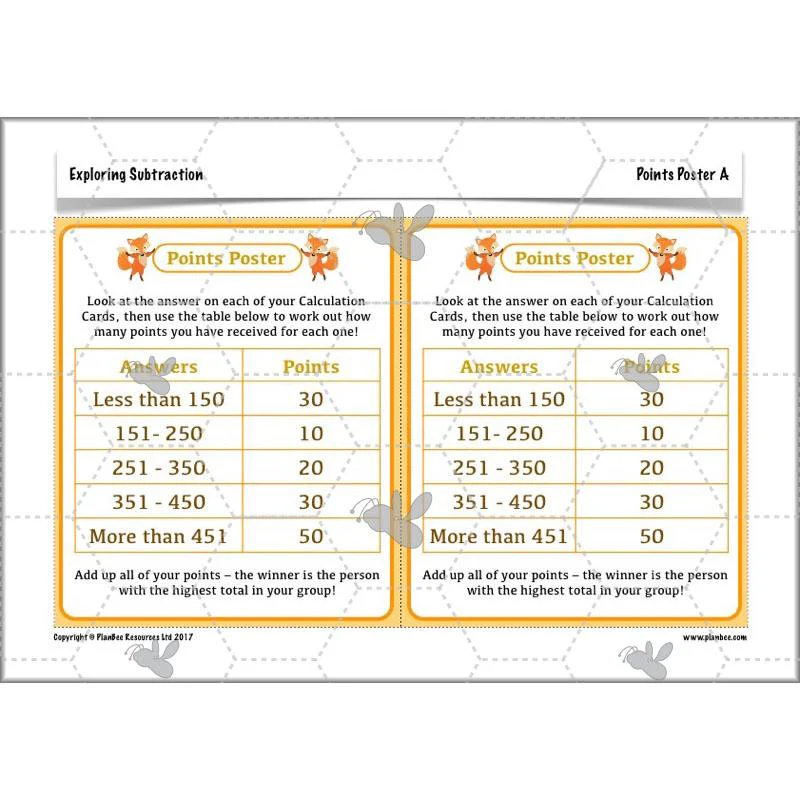
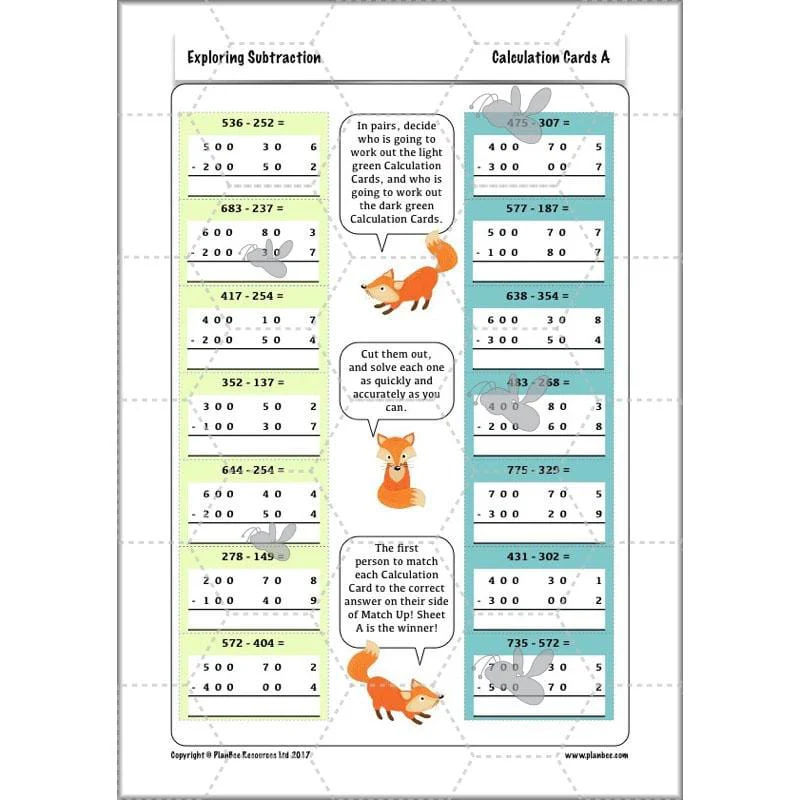
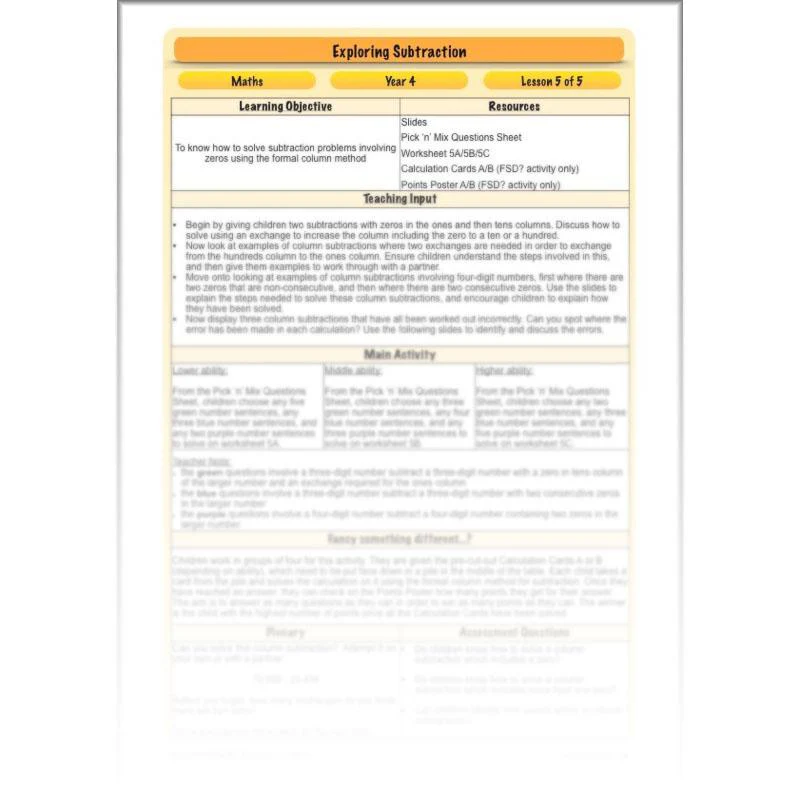
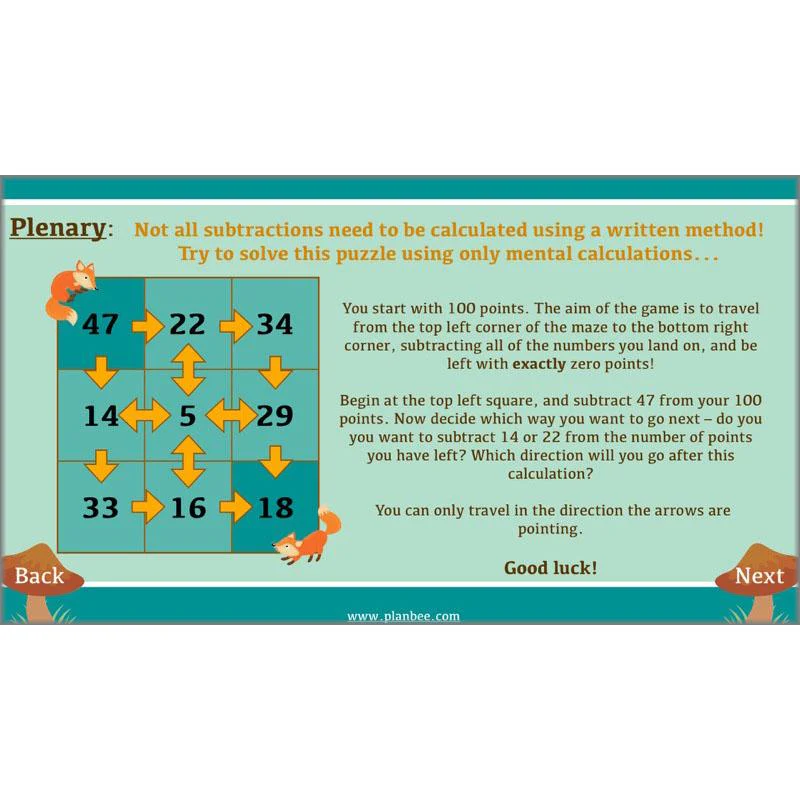
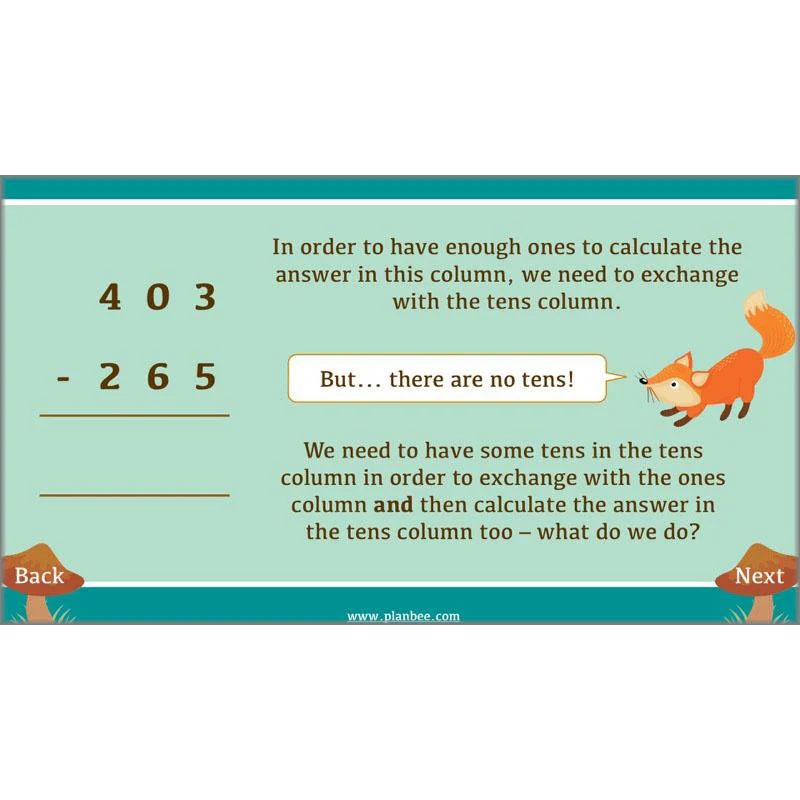
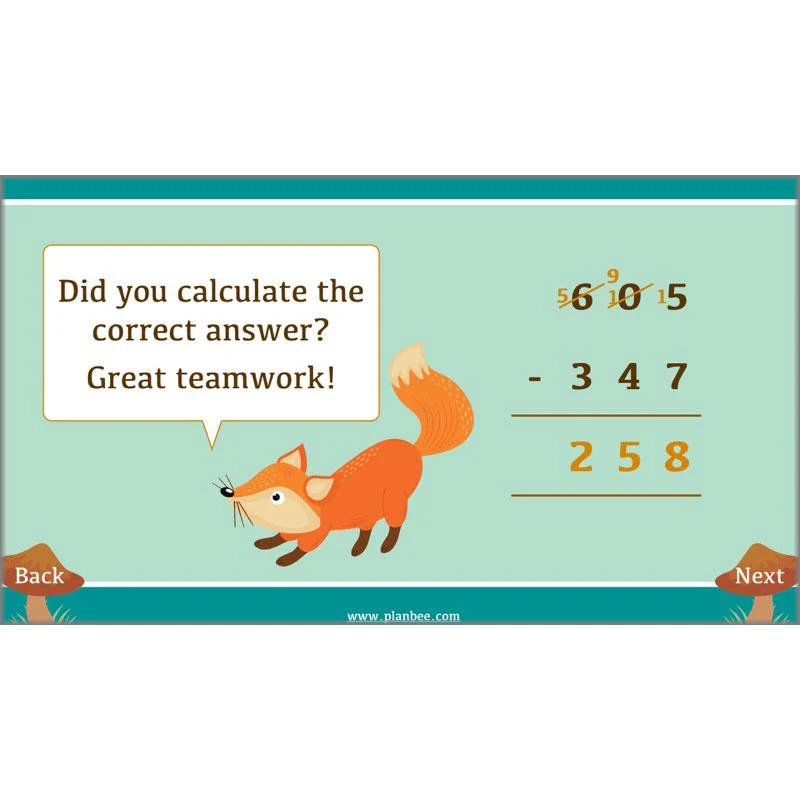
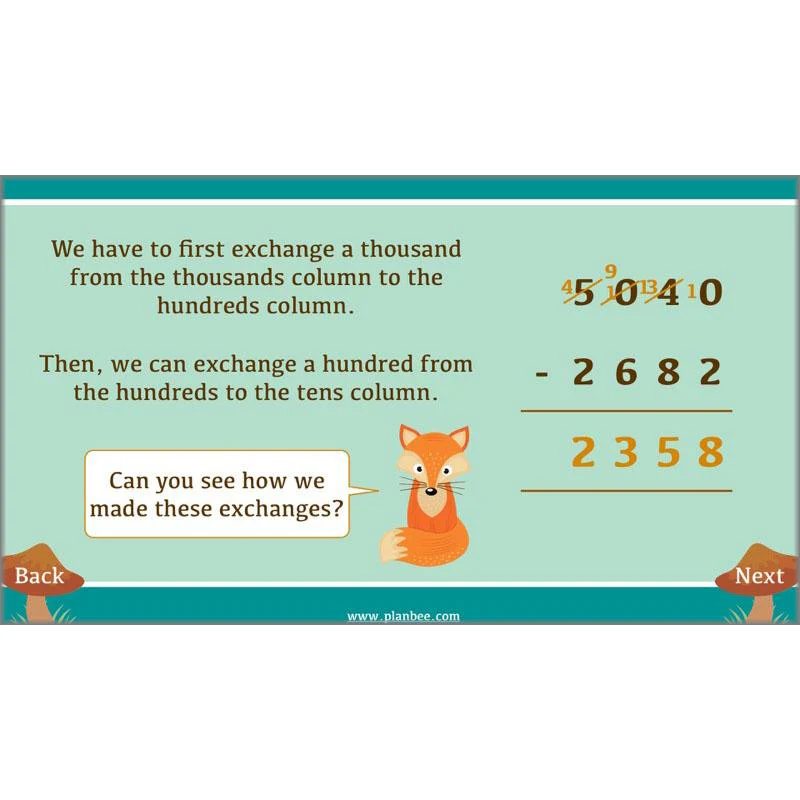
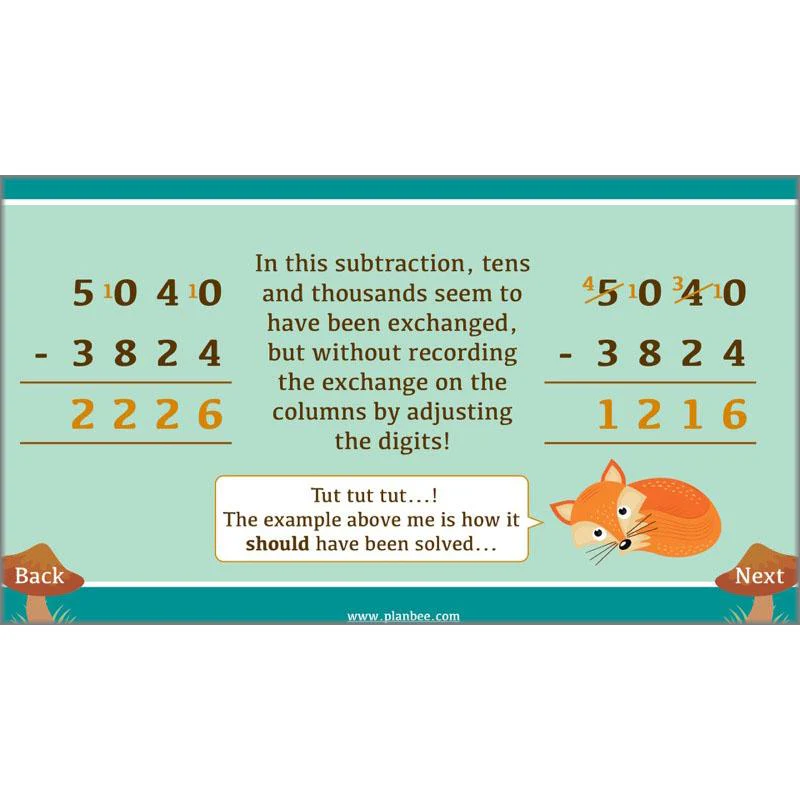
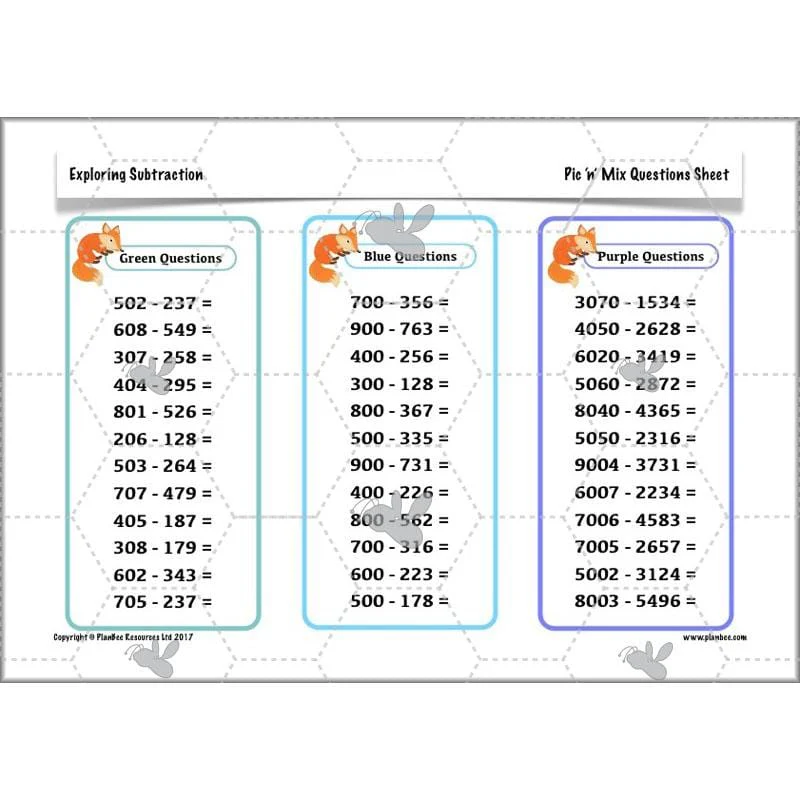
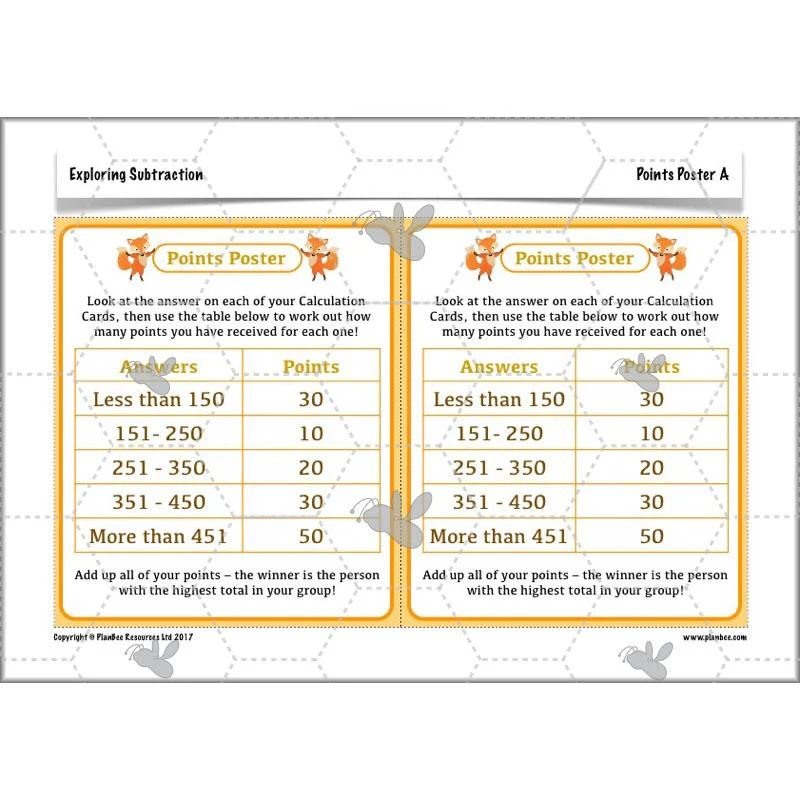
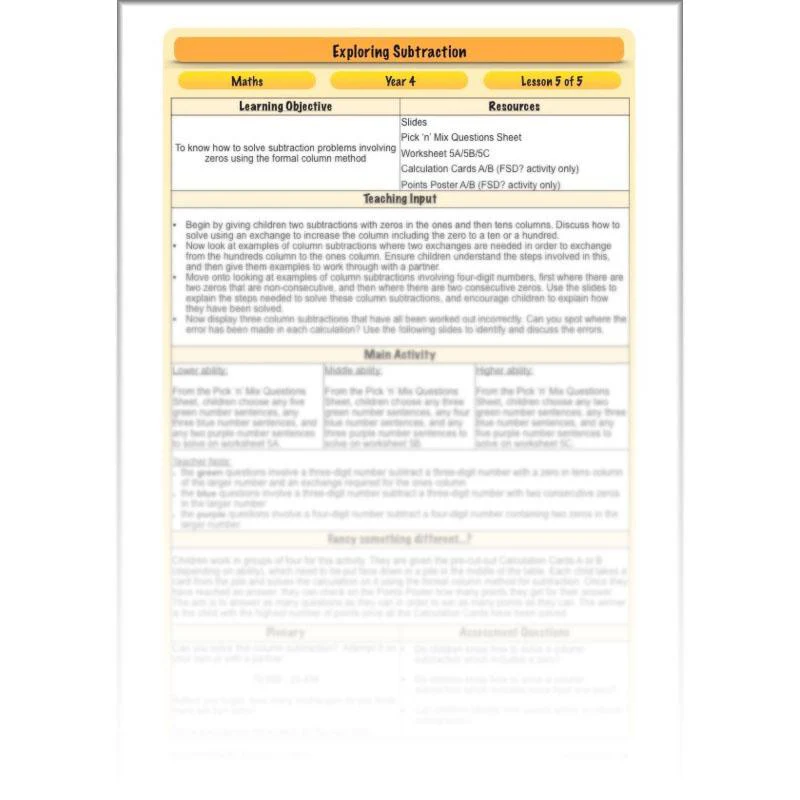
In this final lesson, focus is placed on the types of column subtractions which children often find tricky – those that involve one or more zeros in the larger number. They learn how to exchange across them in order to complete the calculation. In their independent activities, children choose and solve subtractions of varying levels of difficulty. Alternatively, in groups, they race to solve as many column subtractions as they can with the aim of accumulating the most points according to a given scoring system.
What's included:
- Lesson plan
- Slides
- Activity ideas
- Differentiated worksheets
- Pick ‘n’ Mix Questions Sheet
- Calculation Cards
- Points Poster
Original: $4.65
-65%$4.65
$1.63













Description
Use this scheme of work for Year 4 to increase your class’s knowledge and understanding of the different methods for subtraction.
Beginning by looking at the constant difference method for mental calculations, and then progressing to the decomposition method, the expanded column method, and finally exploring the formal column method for written calculations, your class will soon be experts on subtraction!
The Constant Difference Method
This first lesson begins with some quick-fire questions involving subtracting multiples of ten from two- and three-digit numbers. Children will then learn about the constant difference method, and how this can be used to adjust calculations to make them easier, allowing them to be solved mentally. In their independent activities, children apply this knowledge to sort and solve subtraction number sentences mentally. Or in the alternate activity, they can explore how to use the constant difference method repeatedly to reach a final solution to a subtraction number sentence.
What's included:
- Lesson plan
- Slides
- Activity ideas
- Differentiated worksheets
- Sort ‘n’ Solve Cards
- Sorting Sheet
- Carry on Subtracting! Example Sheet
- Carry On Subtracting! Challenge Cards
The Decomposition Method
Children first recap on their partitioning skills, before applying them in order to solve subtraction problems using the decomposition method. They practise solving number sentences involving one and two exchanges. In their independent activities, children will race against a partner to solve questions quickly and accurately. Alternatively, they will play the Exchange Rates Game, where they are rewarded points according to the number of exchanges in the sentences they solve!
What's included:
- Lesson plan
- Slides
- Activity ideas
- Match Up! Sheet
- Calculation Cards
- Exchange Rates Game
- Solved It! Cards
- Recording Sheet
The Expanded Column Method
In this lesson, children look at the expanded column method for subtraction. They briefly compare it with the decomposition method, before using it to solve subtractions involving one and then two exchanges. Children are challenged to spot and explain mistakes in expanded column subtractions where the method has been used incorrectly. In their independent activities, children match up the different parts of given expanded column method solutions as jigsaws. In the alternate activity, they need to find what two numbers could be used to result in a given difference, according to set criteria.
What's included:
- Lesson plan
- Slides
- Activity ideas
- Differentiated worksheets
- Jigsaw Puzzle Pieces
- Blank Jigsaw Sheet
- Challenge Cards
The Formal Column Method
To begin, children briefly compare the expanded column method with the formal column method. They then use the formal method to look at how to solve subtraction number sentences involving no exchanges, one exchange and finally two exchanges. In their independent activities, children apply their knowledge of this method in order to complete column subtractions by placing missing digits in the correct row and column in order to give a specific difference. Alternatively, children are each given a unique three-digit number, then pair up with other children to make and solve subtractions with their numbers.
What's included:
- Lesson plan
- Slides
- Differentiated worksheets
- Pair Up! Cards
- Pair Up! Recording Sheet
The Formal Column Method and Zeros
In this final lesson, focus is placed on the types of column subtractions which children often find tricky – those that involve one or more zeros in the larger number. They learn how to exchange across them in order to complete the calculation. In their independent activities, children choose and solve subtractions of varying levels of difficulty. Alternatively, in groups, they race to solve as many column subtractions as they can with the aim of accumulating the most points according to a given scoring system.
What's included:
- Lesson plan
- Slides
- Activity ideas
- Differentiated worksheets
- Pick ‘n’ Mix Questions Sheet
- Calculation Cards
- Points Poster


